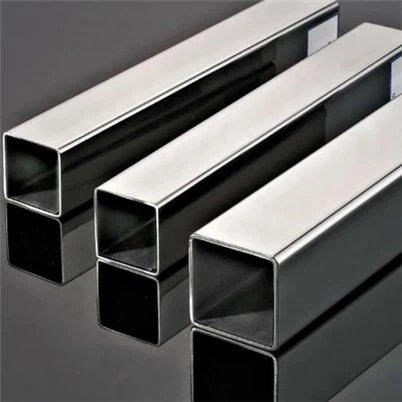
1.4306 Stainless Steel Technical Parameters
1.4306 Stainless Steel Technical Parameters
1.4306 stainless steel (equivalent to AISI 304L) is a low-carbon austenitic stainless steel widely used in chemical processing, food equipment, architectural structures, and welded components. This page provides key physical and mechanical parameters essential for engineers, designers, and procurement specialists.

1.4306 Stainless Steel Chemical Composition (EN 10088-1 Standard)
| Element | Content (%) |
|---|---|
| Carbon (C) | ≤ 0.030 |
| Silicon (Si) | ≤ 1.00 |
| Manganese (Mn) | ≤ 2.00 |
| Phosphorus (P) | ≤ 0.045 |
| Sulfur (S) | ≤ 0.015 |
| Chromium (Cr) | 17.5 – 19.5 |
| Nickel (Ni) | 10.0 – 12.5 |
1.4306 Stainless Steel Mechanical Properties
| Property | Value (Typical) |
|---|---|
| Tensile Strength (Rm) | 500–700 MPa |
| Yield Strength (Rp0.2) | ≥ 200 MPa |
| Elongation (A5) | ≥ 45% |
| Hardness (HB) | ≤ 215 |
| Density | 7.93 g/cm³ |
Comparison: 1.4306 vs 304L Stainless Steel
| Grade | Standard | Carbon Max (%) | Typical Use Case |
|---|---|---|---|
| 304L | ASTM | 0.035 | General-purpose corrosion resistance |
| 1.4306 | EN | 0.030 | Higher purity, better weldability |
Though both grades are considered low-carbon versions of 304, 1.4306 often contains a slightly higher nickel content, making it more suitable for high-purity and critical weld applications.
1.4306 Stainless Steel Corrosion Resistance and Applications
Thanks to its low carbon content and high chromium-nickel ratio, 1.4306 exhibits:
Excellent resistance to intergranular corrosion after welding
Good pitting and crevice corrosion resistance in mildly aggressive environments
High cleanliness, making it ideal for pharmaceutical, food processing, and dairy equipment
1.4306 Stainless Steel Standards
| Product Form | Standard |
|---|---|
| Plate/Sheet | ASTM A240 / EN 10088-2 |
| Pipe/Tube | ASTM A312, A269 |
| Bar | ASTM A276 |
1.4306 Stainless Steel Hardness Range
| Test Method | Typical Value |
|---|---|
| Brinell Hardness (HB) | ≤ 215 |
| Vickers Hardness (HV) | ~210 |
| Rockwell B (HRB) | ≤ 92 |
Key Features:
1.4306 is not heat-treatable for hardness.
Cold working increases strength and hardness.
Ideal for deep drawing, bending, and welding applications.
Thermal Expansion Coefficient of 1.4306 Stainless Steel
| Temperature Range (°C) | Coefficient (10⁻⁶ /K) |
|---|---|
| 20–100 | ~16.0 |
| 20–300 | ~17.5 |
| 20–500 | ~18.5 |
Notes:
The thermal expansion is higher than that of carbon steels.
Allowance should be made for thermal movement in structural or high-temperature environments.
Thermal Conductivity of 1.4306 (304L) Stainless Steel
| Temperature (°C) | Conductivity (W/m·K) |
|---|---|
| 20 | ~16 |
| 200 | ~18 |
| 500 | ~21 |
Characteristics:
Lower than that of ferritic stainless steels or carbon steel.
Should be considered when designing heat exchangers or thermally conductive systems.
Is 1.4306 Stainless Steel Magnetic?
In annealed condition: Non-magnetic (fully austenitic)
After cold working: May show slight magnetism
Post-annealing: Restores non-magnetic behavior
This makes 1.4306 ideal for non-magnetic environments such as MRI housings, precision instrumentation, or cleanroom equipment.
If your project requires cost-effective 1.4306 stainless steel (same material as 304) sheets/coils?
GNEE provides 7.93g/cm³ standard density precision cutting, supports 0.3mm-80mm full thickness customization, brushed/mirror/frosted surface optional, with EU CE certification and material test report, 24-hour proofing, 48-hour direct delivery, click to consult to get real-time quotation and processing plan! "