


Nickel Alloy Supplier - GNEE
With more than 18 years of experience in international metal supply, GNEE provides nickel and nickel-based alloys in pipe, tube, plate, sheet, coil, strip, bar, wire, fitting and forging forms. Our regular product range covers UNS N02200/N02201, N06600, N06601, N06625, N07718, N08800, N08810, N08811, N08825, N10276, N06022 and N04400, with material specifications matched to ASTM/ASME, EN, JIS and GB requirements. For project orders, we can provide heat-number traceability, PMI identification, chemical composition verification, dimensional inspection, mechanical testing and applicable NDT, together with EN 10204 3.1/3.2 material documentation where required. Each order can be reviewed against grade, UNS number, standard, size, heat treatment, testing and certification requirements before shipment.

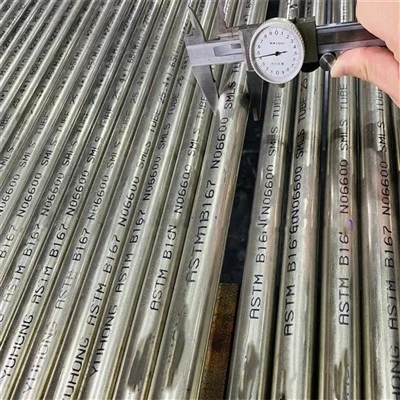
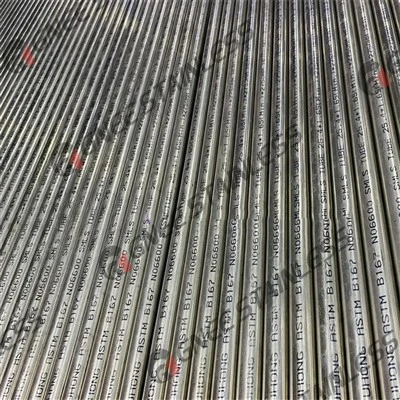
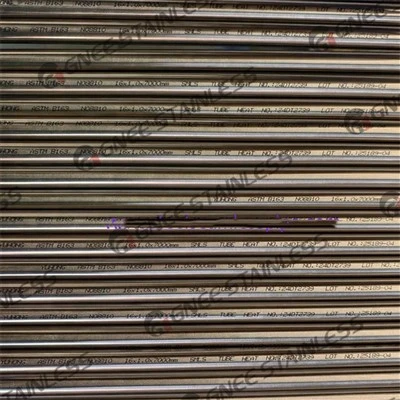
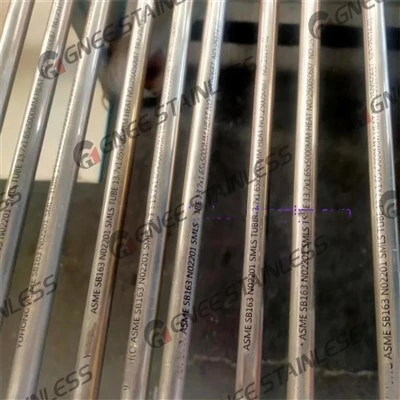
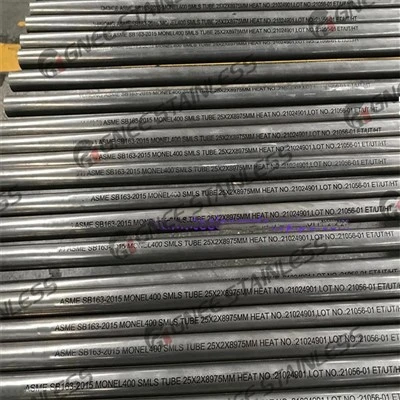


Our product range covers nickel alloy seamless & welded pipes/tubes, plates, sheets, coils, strips, round bars, wires, as well as pipe fittings and forgings. Manufactured in accordance with international standards such as ASTM, ASME, EN, JIS, and GB, we supply a wide selection of common nickel alloy grades, including Nickel 200, Nickel 201, Inconel 600, Inconel 601, Inconel 625, Inconel 718, Incoloy 800, Incoloy 800H, Incoloy 800HT, Incoloy 825, Hastelloy C-276, Hastelloy C-22, and Monel 400.


Nickel Alloy Standards and Specifications
| Standard | Product |
|---|---|
| ASTM B161 | Nickel seamless pipe and tube |
| ASTM B162 | Nickel plate |
| ASTM B163 | Nickel and nickel alloy condenser / heat exchanger tubes |
| ASTM B166 | Nickel-chromium alloy rod, bar and wire |
| ASTM B167 | Nickel-chromium alloy seamless pipe and tube |
| ASTM B407 | Nickel-iron-chromium alloy seamless pipe and tube |
| ASTM B444 | Nickel-chromium-molybdenum alloy pipe |
| ASTM B564 | Nickel alloy forgings |
| ASTM B366 | Nickel alloy fittings |
| ASTM B829 | General requirements for nickel alloy seamless pipe and tube |


Nickel Alloy Equivalent Materials
| Nickel Alloy Grade | UNS No. | ASTM / ASME Equivalent | EN / DIN Equivalent | JIS Equivalent |
|---|---|---|---|---|
| Nickel 200 | N02200 | ASTM B160 / B161 / B162 | 2.4066 / Ni 99.2 | NW 2200 |
| Nickel 201 | N02201 | ASTM B160 / B161 / B162 | 2.4068 / Ni 99.2 | NW 2201 |
| Monel 400 | N04400 | ASTM B127 / B163 / B164 / B165 | 2.4360 / NiCu30Fe | NW 4400 |
| Monel K-500 | N05500 | ASTM B865 | 2.4375 / NiCu30Al | NW 5500 |
| Inconel 600 | N06600 | ASTM B166 / B167 / B168 | 2.4816 / NiCr15Fe | NW 6600 |
| Inconel 601 | N06601 | ASTM B166 / B167 / B168 | 2.4851 / NiCr23Fe | NW 6601 |
| Inconel 625 | N06625 | ASTM B443 / B444 / B446 | 2.4856 / NiCr22Mo9Nb | NW 6625 |
| Inconel 690 | N06690 | ASTM B166 / B167 / B168 | 2.4642 / NiCr29Fe | NW 6690 |
| Inconel 718 | N07718 | ASTM B637 | 2.4668 / NiCr19Fe19Nb5Mo3 | N/A |
| Inconel X-750 | N07750 | ASTM B637 / B805 | 2.4669 / NiCr15Fe7TiAl | N/A |
| Incoloy 800 | N08800 | ASTM B409 / B407 / B163 | 1.4876 / X2NiCrAlTi3220 | NCF 2B |
| Incoloy 800H | N08810 | ASTM B409 / B407 | 1.4958 / X2NiCrAlTi3220 | NCF 2B |
| Incoloy 800HT | N08811 | ASTM B409 / B407 | 1.4959 / X10NiCrAlTi3220 | NCF 2B |
| Incoloy 825 | N08825 | ASTM B424 / B423 / B163 | 2.4858 / NiCr21Mo | NCF 2B |
| Hastelloy C-276 | N10276 | ASTM B575 / B622 / B626 | 2.4819 / NiMo16Cr15W | NW 6276 |
| Hastelloy C-22 | N06022 | ASTM B575 / B622 / B626 | 2.4602 / NiCr21Mo14W | NW 6022 |
| Hastelloy B-2 | N10665 | ASTM B333 / B626 / B622 | 2.4617 / NiMo28 | NW 6465 |
| Alloy 20 | N08020 | ASTM B463 / B473 | 2.4660 / X1NiCrMoCu25-20-5 | N/A |
| Alloy 59 | N06059 | ASTM B575 / B622 | 2.4605 / NiCr23Mo16 | N/A |
Nickel Alloy Surface Treatment
For Nickel Alloy Plate / Sheet:Hot Rolled + Pickled|Cold Rolled + Annealed|Bright Annealed (BA)|Polished|Brushed|Ground
For Nickel Alloy Pipe / Tube:Annealed & Pickled|Bright Annealed (BA)|Polished|Electropolished|Mechanically Polished|Ground
For Nickel Alloy Bar:Hot Rolled|Cold Drawn|Bright Bar|Centerless Ground|Polished|Machined
For Nickel Alloy Forgings:As-Forged|Solution Annealed|Pickled|Machined|Ground
If you'd like, let me know:The specific nickel alloy grade (e.g., Inconel 625, Hastelloy, Monel)The operational environment (e.g., high heat, marine, chemical)I can recommend the best treatment for your application.
Click to customize surface treatment
Nickel Alloy Steel Application Recommendations

Chemical Processing
Recommended Materials: Hastelloy C-276 / Hastelloy C-22 / Inconel 625 / Alloy 59
Recommended Products: Nickel-based alloy plates | Nickel-based alloy pipes | Bars | Flanges and forgings
Typical Applications: Chemical reactors | Distillation equipment | Scrubbers | Pumps and valves | Piping for corrosive media | Heat exchangers

Petrochemical
Recommended Products: Seamless pipes | Welded pipes | Plates/Sheets | Bars | Forgings | Heat exchanger tubes
Typical Applications: Oil refining units | Cracking furnaces | High-temperature furnace tubes | Heat exchangers | Pressure piping | Petrochemical equipment

Power Generation
Recommended Materials: Inconel 600 / Inconel 625 / Inconel 690 / Incoloy 800H / Incoloy 800HT
Recommended Products: Boiler tubes | Heat exchanger tubes | Seamless pipes | Plates/Sheets | Bars | Superalloy forgings
Typical Applications: Boiler systems | Superheaters | Reheaters | Steam generators | Combustion equipment | High-temperature piping

Aerospace
Recommended Materials: Inconel 718 / Inconel 625 / Inconel X-750 / Waspaloy
Recommended Products: Nickel-based alloy plates | bars | wires | tubes | forgings | precision machined materials
Typical Applications: Aircraft engines | turbine components | combustion chambers | engine fasteners | high-temperature structural components | aerospace propulsion systems

Marine & Offshore
Recommended Products: Nickel-based alloy pipes | Plates/Sheets | Bars | Welded pipes | Flanges | Forgings
Typical Applications: Offshore platforms | Seawater cooling systems | Marine pipelines | Desalination equipment | Marine equipment | Subsea engineering

Heat Exchanger
Recommended Materials: Inconel 625 / Inconel 690 / Inconel 600 / Incoloy 800H / Incoloy 825
Recommended Products: Heat exchanger tubes | Seamless pipes/tubes | Welded pipes/tubes | U-tubes | Coils | Cut-to-length tubes
Typical Applications: Condensers | Evaporators | Heat exchangers | Boiler heat exchangers | Chemical heat exchange equipment | High-temperature cooling systems
If you can share your specific operating environment (such as temperature, exposure to acids, or mechanical stress), I can recommend the exact nickel alloy grade and industry standard for your project.
Nickel-Based Alloy Supplier and Manufacturer – GNEE
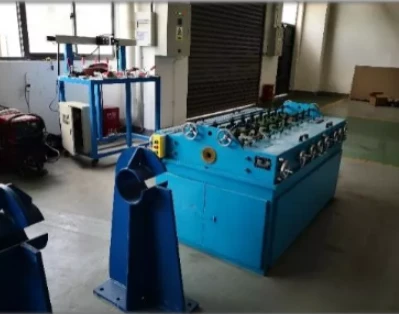
Our nickel alloy manufacturing system encompasses processes such as vacuum induction melting, vacuum consumable electrode melting, 2800mm four-high reversible rolling, vacuum annealing, hot/cold rolling, forging, cutting, and precision machining. Our production facilities are capable of manufacturing plates up to 2.6m × 16m and seamless pipes with single-piece lengths of up to 15m; we provide EN 10204 3.1/3.2 quality certificates and accommodate third-party inspections. Delivery times for standard stock items can be as short as seven days, while production orders are scheduled based on alloy grade, specifications, quantity, and inspection requirements.



Quality Inspection
We can arrange inspection according to the applicable ASTM, ASME, EN, DIN, JIS or customer-specific technical requirements.
| Inspection Item | Purpose |
|---|---|
| Chemical Composition Analysis | Verify Ni, Cr, Mo, Fe and other alloying elements |
| PMI (Positive Material Identification) | Confirm alloy grade and material identity |
| Tensile Test | Verify tensile strength, yield strength and elongation |
| Hardness Test | Verify hardness and heat-treatment condition |
| Dimensional Inspection | Check OD, ID, wall thickness, length and tolerances |
| Visual Inspection | Check surface condition, scratches, cracks and defects |
| Ultrasonic Testing (UT) | Detect internal discontinuities |
| Eddy Current Testing (ECT) | Commonly used for tubing and heat-exchanger tubes |
| Radiographic Testing (RT) | Inspect welds and internal weld quality where applicable |
| Hydrostatic Testing | Verify pressure resistance of applicable pipes and tubes |
| Intergranular Corrosion Testing | Evaluate susceptibility to intergranular corrosion where specified |
| Surface Roughness Testing | Verify surface finish for precision applications |


Standard export packaging
Nickel alloy products are carefully packaged according to their product form, dimensions, weight and transportation method to minimize the risk of surface damage, deformation and moisture contamination during international shipping.
| Product Form | Recommended Packaging |
|---|---|
| Nickel Alloy Plate / Sheet | Wooden pallets + waterproof paper + protective film + steel strapping |
| Nickel Alloy Pipe / Tube | Plastic caps + waterproof wrapping + wooden cases or bundles + steel straps |
| Nickel Alloy Bar / Rod | Bundles + waterproof paper + plastic wrapping + steel straps |
| Nickel Alloy Wire | Coils / spools + moisture-proof wrapping + wooden cases |
| Nickel Alloy Forgings | Individual protection where required + wooden cases or heavy-duty pallets |
| Precision / Machined Parts | PE film / individual wrapping + anti-collision protection + export wooden cases |


Our export record
GNEE supplies nickel-based alloy products to international markets for chemical processing, petrochemical, power generation, heat exchanger, marine & offshore, aerospace, automotive and energy applications. Export products include nickel alloy plates, sheets, seamless pipes, welded pipes, tubes, round bars and forged components, with material certificates and inspection documentation available according to project requirements
| Year | Destination Country | Product | Nickel Alloy Grade | Specification | Quantity | Application |
|---|---|---|---|---|---|---|
| 2026 | Germany | Nickel Alloy Seamless Pipes | Inconel 625 | OD 60.3 × WT 5.54 mm × 6000 mm | 12 Tons | Chemical Processing |
| 2026 | Saudi Arabia | Nickel Alloy Plates | Hastelloy C-276 | 6–20 mm × 1500 × 6000 mm | 18 Tons | Petrochemical Equipment |
| 2026 | India | Nickel Alloy Tubes | Inconel 600 | OD 25.4 × WT 2.11 mm | 8 Tons | Heat Exchanger |
| 2025 | United Arab Emirates | Nickel Alloy Pipes | Inconel 625 | NPS 2"–8", SCH 10S–40S | 15 Tons | Oil & Gas |
| 2025 | South Korea | Nickel Alloy Round Bars | Inconel 718 | Ø20–120 mm | 10 Tons | Aerospace Components |
| 2025 | Singapore | Nickel Alloy Tubes | Incoloy 825 | OD 19.05–38.1 mm | 7 Tons | Marine & Offshore |
| 2025 | Turkey | Nickel Alloy Plates | Inconel 601 | 8–25 mm × 1500 × 6000 mm | 20 Tons | High-Temperature Equipment |
| 2024 | Italy | Nickel Alloy Seamless Tubes | Hastelloy C-276 | OD 12–76 mm | 6 Tons | Chemical Processing |
| 2024 | Vietnam | Nickel Alloy Bars | Monel 400 | Ø25–150 mm | 9 Tons | Valves & Pumps |
| 2024 | Spain | Nickel Alloy Pipes | Inconel 625 | OD 33.4–168.3 mm | 14 Tons | Power Generation |
FAQ
1. What is the most corrosion-resistant nickel alloy?
There is no single “most corrosion-resistant” nickel alloy for every environment. Hastelloy C-276 (UNS N10276), containing approximately 15–17% Cr and 15–17% Mo, offers excellent resistance to pitting, crevice corrosion and many oxidizing or reducing acids, making it widely used in severe chemical-processing environments.
2. What is the difference between Inconel and Hastelloy?
Inconel alloys generally emphasize high-temperature strength, oxidation resistance and corrosion resistance, while Hastelloy alloys are particularly designed for aggressive chemical environments. For example, Inconel 625 (UNS N06625) contains about 9% Mo, while Hastelloy C-276 (UNS N10276) contains about 16% Mo and 4% W.
3. What is Inconel 625 used for?
Inconel 625 (UNS N06625) is a nickel-chromium-molybdenum alloy containing approximately 20–23% Cr and 8–10% Mo. Its combination of high strength and chloride corrosion resistance makes it suitable for offshore equipment, seawater systems, chemical processing, heat exchangers, aerospace components and exhaust systems.
4. What is Inconel 718 used for?
Inconel 718 (UNS N07718) is a precipitation-hardenable nickel alloy designed for high-strength applications. It can maintain useful mechanical properties at temperatures around 650°C, depending on condition and design requirements. Typical applications include aircraft engine components, gas turbines, fasteners, shafts and other high-temperature aerospace parts.
5. What is Hastelloy C276 used for?
Hastelloy C-276 (UNS N10276) is a nickel-chromium-molybdenum alloy containing approximately 15–17% Mo and 14.5–16.5% Cr. It provides excellent resistance to pitting, crevice corrosion and stress-corrosion cracking, making it suitable for reactors, scrubbers, heat exchangers, piping and chemical-processing equipment.
6. What is the difference between Inconel 625 and C276?
Inconel 625 (UNS N06625) contains approximately 20–23% Cr, 8–10% Mo and 3.15–4.15% Nb, providing an excellent balance of strength and corrosion resistance. Hastelloy C-276 (UNS N10276) contains higher Mo and W, making it particularly effective in severe reducing and localized corrosion environments.
7. What is Incoloy 800H?
Incoloy 800H (UNS N08810) is a nickel-iron-chromium alloy developed for high-temperature structural applications. Compared with standard Alloy 800, its controlled carbon content and grain structure provide improved creep and rupture strength. It is commonly used in petrochemical furnaces, heat exchangers, process heaters and high-temperature pressure equipment.
8. What is the difference between Incoloy 800 and 800H?
The main difference is their high-temperature mechanical performance. Incoloy 800 (UNS N08800) is commonly used for general high-temperature corrosion resistance, while 800H (UNS N08810) has controlled carbon and grain-size requirements designed to provide higher creep and rupture strength for elevated-temperature structural service.
9. What is Nickel 200?
Nickel 200 (UNS N02200) is commercially pure wrought nickel containing approximately 99% nickel or higher, with low carbon and low impurity levels. It offers excellent resistance to caustic alkalis and good electrical and thermal conductivity. Typical applications include chemical-processing equipment, food-processing equipment and alkali-handling systems.
10. What is the difference between Nickel 200 and Nickel 201?
Both Nickel 200 (UNS N02200) and Nickel 201 (UNS N02201) are commercially pure nickel. The key difference is carbon content: Nickel 201 has a maximum carbon content of approximately 0.02%, compared with about 0.15% maximum for Nickel 200, making 201 more suitable for elevated-temperature service where graphitization may be a concern.
11. What is Monel 400?
Monel 400 (UNS N04400) is a nickel-copper alloy containing approximately 63% minimum nickel and 28–34% copper. It combines good mechanical strength with excellent resistance to seawater, hydrofluoric acid and many neutral or alkaline environments. Typical applications include marine equipment, chemical processing, pumps, valves and heat exchangers.
12. What ASTM standards cover nickel alloy pipe?
Nickel alloy pipe is covered by different ASTM specifications depending on alloy and product type. Common examples include ASTM B161 for nickel seamless pipe and tube, ASTM B167 for nickel-chromium alloy seamless pipe and tube, ASTM B407 for nickel-iron-chromium alloys and ASTM B444 for nickel-chromium-molybdenum alloys.
13. What ASTM standard covers nickel alloy tube?
The applicable ASTM standard depends on the alloy, manufacturing method and application. ASTM B163 covers seamless nickel and nickel-alloy condenser and heat-exchanger tubes, while B161, B167, B407 and B444 cover specific nickel-alloy seamless tube and pipe families. The alloy UNS number should always be confirmed before selecting the specification.
14. Can nickel alloy products be supplied with MTC?
Yes. Nickel alloy products can be supplied with a Material Test Certificate (MTC), typically documenting heat number, chemical composition, mechanical properties, dimensions and applicable test results. For project procurement, EN 10204 3.1 or 3.2 certification can be requested when required by the purchase specification or end-user standard.
15. Can nickel alloy pipe be customized?
Yes. Nickel alloy pipe can generally be customized according to OD, wall thickness, length, alloy grade, manufacturing method, heat treatment and testing requirements. Depending on the grade and specification, suppliers can arrange seamless or welded pipe, cut-to-length dimensions, special tolerances and additional inspection such as UT, hydrostatic testing and PMI.
16. How do I choose the right nickel alloy?
Select the alloy based on operating temperature, pressure, corrosive medium, chloride concentration, pH, mechanical requirements and fabrication method. For example, Inconel 625 is widely selected for chloride-rich environments, Inconel 718 for high strength, and Hastelloy C-276 for severe chemical corrosion. Always verify the final selection against the applicable design standard.
17. How do I verify a nickel alloy grade?
Verify the UNS designation, chemical composition, heat number and material certificate against the purchase specification. PMI testing can rapidly confirm the major alloying elements, while laboratory chemical analysis provides more comprehensive verification. For critical applications, also compare tensile properties, hardness, heat treatment and applicable ASTM/ASME requirements with the MTC.
Gnee Steel (Tianjin) Co., Ltd. is well-known as one of the leading nickel alloy steel manufacturers and suppliers in China. Our factory offers customized nickel alloy steel made in China with competitive price. Welcome to contact us for wholesale service.
99 97 Pure Electrolytic NickelPlate, Alloy Manufacture Medical Devices, Steel Round Tube Nickel Pipe