310 stainless steel temperature limit
Leave a message
310 stainless steel is one of the most widely used heat-resistant austenitic stainless steels, known for its ability to withstand extreme temperatures in industrial furnaces, kilns, and thermal processing lines.
Temperature Limit of 310 Stainless Steel
Type 310 can resist oxidation in dry air up to 1150°C, but for mechanical strength and safety, it is best used below 1050°C in continuous service.
| Condition | Temperature Limit |
|---|---|
| Continuous Service | Up to 1,050°C (1,922°F) |
| Intermittent Service | Up to 1,100°C (2,012°F) |
| Oxidation Resistance Limit | Up to 1,150°C (2,102°F) |
| Creep Strength Consideration | Best below 980°C (1,796°F) for structural loads |
310 stainless steel temperature limit
310 SS max service temperature
The maximum service temperature of 310 stainless steel is approximately 1,050°C (1,922°F) for continuous operation and up to 1,100°C (2,012°F) for intermittent exposure. Thanks to its high chromium and nickel content, 310 SS offers excellent oxidation resistance up to 1,150°C, making it ideal for use in furnaces, heat treatment equipment, and high-temperature ducts. However, for applications involving sustained mechanical load, it is best used below 980°C to avoid creep deformation.
What is the heat capacity of 310 SS?
The specific heat capacity of Grade 310 is 0.12 Btu/lb ˚F. Under intermittent service, Grade 310 shows excellent resistance to oxidation up to 1035°. In continuous service, it shows resistance to oxidation up to 1050°C. It is also resistant to sulfidation and carburisation.
What are the differences between 310 stainless steel and 310S in high temperature use?
In high temperature environments, both 310 stainless steel and 310S stainless steel have excellent oxidation resistance and heat stability, and are suitable for continuous use temperatures up to 1050°C and intermittent use temperatures up to 1100°C.
The main difference between the two is the carbon content: 310 has a higher carbon content (≤0.25%), which is prone to intergranular corrosion after high-temperature welding, while the low-carbon design of 310S (≤0.08%) significantly improves weldability and intergranular corrosion resistance, and is more suitable for high-temperature structural parts that need to be welded or pressurized.
Is 310 better than 316 for high temperature?
SS 310: Designed for high-temperature applications, offering excellent strength and oxidation resistance at elevated temperatures. SS 316: While suitable for moderate temperatures, SS 316 may experience reduced corrosion resistance compared to SS 310 in high-temperature environments.
Application of 310 stainless heat-resistant steel
| Industry | Application Examples |
|---|---|
| Heat Treatment | Furnace linings, muffles, radiant tubes |
| Petrochemical Plants | Reformer tubes, high-temp process piping |
| Cement / Lime | Kiln linings, burner nozzles |
| Incineration |
Waste burners, exhaust gas zones |

Need Heat-Resistant 310/310S Stainless Steel?
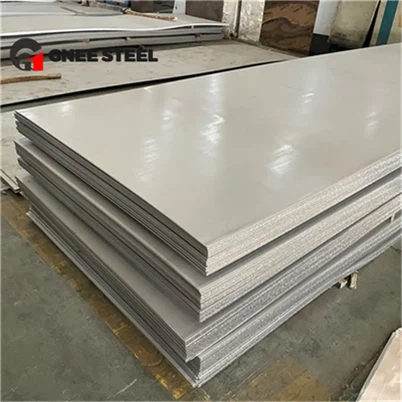
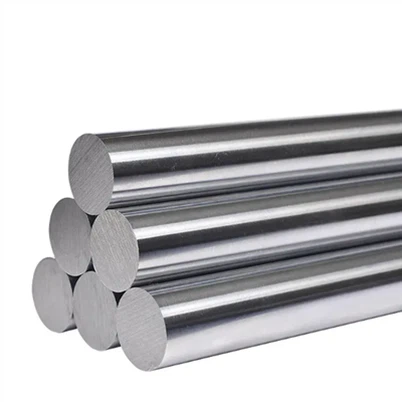
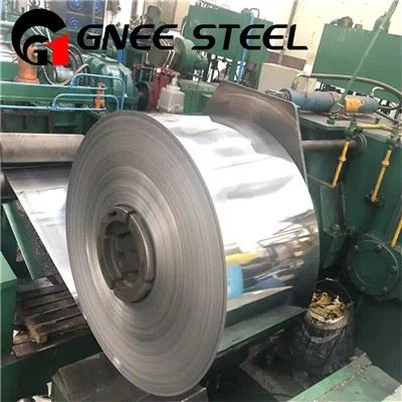
At Gnee Steel, we supply high-performance 310/310S stainless steel in sheet, plate, pipe, and tube forms - certified to ASTM A240, A312, and EN 1.4845 standards.
🔹 Material traceability with EN10204 3.1 certificates
🔹 Ultrasonic, PMI, intergranular corrosion testing
🔹 Global shipping, cut-to-size service, fast delivery
📩 Contact us today for a free quote or technical datasheet!