316 vs T316 Stainless Steel: Differences
Leave a message
What is 316 stainless steel?
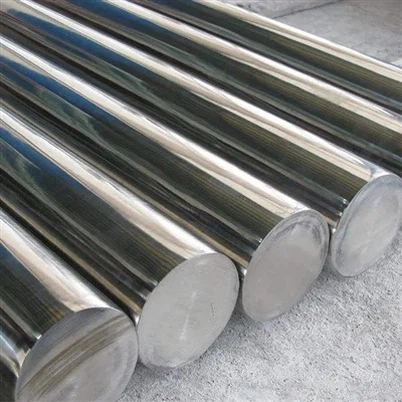
316 stainless steel is a high-chromium-nickel stainless steel alloy. The carbon content is typically no more than 0.08%, and it contains molybdenum (2.0%–3.0%), providing excellent corrosion resistance, especially against chloride corrosion. It also exhibits excellent strength at high temperatures and is easy to process. Common applications include marine and chemical equipment, medical devices, and construction components in coastal areas.
What is T316 stainless steel meaning?
"T" stands for "low carbon": T316 is a low-carbon version of 316 stainless steel. "T" indicates "titanium stabilized" (also known as 316L or 316Ti), with a carbon content ≤0.03%. It is ideal for applications with high requirements for weldability and resistance to intergranular corrosion, such as pharmaceutical equipment and high-temperature applications.
What Is the Difference Between 316 and T316 Stainless Steel?
316 stainless steel has a carbon content that can be as high as 0.08%. It has good corrosion resistance, but is prone to sensitization (weld corrosion) when heated between 425°C and 815°C.
316L stainless steel (0.03% carbon content). The lower carbon content prevents carbide precipitation during welding, making it ideal for machining and room-temperature welding applications.
316Ti stainless steel is a titanium-stabilized version. The titanium is combined with carbon to prevent chromium loss during high-temperature exposure. Its strength and creep resistance are significantly better than 316L at continuous temperatures above 600°C.
316 vs 316L vs 316Ti:Key differences
| Feature | Grade 316 (Standard) | Grade 316L (Low Carbon) | Grade 316Ti (Ti-Stabilized) |
| ASTM Standard | ASTM A240 / A276 | ASTM A240 / A276 | ASTM A240 / A240M |
| Carbon (C) % | ≤ 0.08 | ≤ 0.03 | ≤ 0.08 |
| Chromium (Cr) % | 16.0 – 18.0 | 16.0 – 18.0 | 16.0 – 18.0 |
| Nickel (Ni) % | 10.0 – 14.0 | 10.0 – 14.0 | 10.0 – 14.0 |
| Molybdenum (Mo) % | 2.0 – 3.0 | 2.0 – 3.0 | 2.0 – 3.0 |
| Titanium (Ti) % | - | - | 5 x (C+N) to 0.70% |
| Tensile Strength | ≥ 515 MPa | ≥ 485 MPa | ≥ 515 MPa |
| Yield Strength | ≥ 205 MPa | ≥ 170 MPa | ≥ 205 MPa |
| Corrosion Resistance | Excellent (Pitting resistant) | Superior (Intergranular) | Superior (Intergranular) |
| Weldability | Good (Risk of sensitization) | Excellent (No sensitization) | Good (Post-weld stable) |
| Operating Temp. | Up to 450°C | Up to 450°C | Up to 800°C |
Can I use 316 for high-temperature applications?
Yes, 316 can be used at temperatures up to 870°C for intermittent service and 925°C for continuous service. However, T316 may be preferred for high-temperature applications requiring post-weld heat treatment.
316 Vs 316L Vs 316Ti: Which is more corrosion resistant?
316L has a lower carbon content (≤0.03%), which significantly reduces the risk of chromium carbide precipitation. This makes it more resistant than standard 316 in welded or sensitized conditions. 316Ti achieves a similar improvement through titanium stabilization, where titanium binds carbon to form TiC, preventing chromium depletion along grain boundaries. Therefore, under real-world service conditions involving welding or thermal exposure, both 316L and 316Ti typically offer better long-term corrosion resistance than standard 316, although their intrinsic pitting corrosion resistance in solution is nearly identical.
316 Vs 316L Vs 316Ti: Which is suitable for welding?
In welding applications, 316 stainless steel is weldable but is more susceptible to sensitization in the temperature range of 450–850°C, which may lead to intergranular corrosion. 316L stainless steel is generally considered the preferred welding grade because its low carbon content (≤0.03%) minimizes carbide precipitation, and it typically does not require post-weld heat treatment in most industrial applications. In practice, 316L is widely used in thin-wall piping and general fabrication. 316Ti stainless steel, on the other hand, is more suitable for thicker sections or high-temperature welded structures such as heat exchangers and chemical processing equipment, where long-term thermal stability is critical.
316 Vs 316L Vs 316Ti: Which is used in seawater?
Compared with 316 and 316L, 316Ti stainless steel does not significantly improve pitting corrosion resistance in seawater environments. However, it can provide better structural stability in welded offshore components exposed to cyclic temperature changes or mechanical stress. 316 stainless steel and 316L stainless steel offer similar performance in seawater, but both are still limited in long-term full immersion conditions due to chloride-induced pitting and crevice corrosion risks. For full seawater immersion, duplex stainless steels with a PREN value above 35 are generally recommended, as they provide significantly better resistance to pitting corrosion and stress corrosion cracking than all 316-series grades.

Reviewer: Senior Metallurgical Engineer, Gnee Stainless Steel Technology Team

Data sources:
ASTM A240 / A312 standard specifications
ISO 15510 stainless steel chemical composition standard
Industrial field applications in seawater and chemical environments
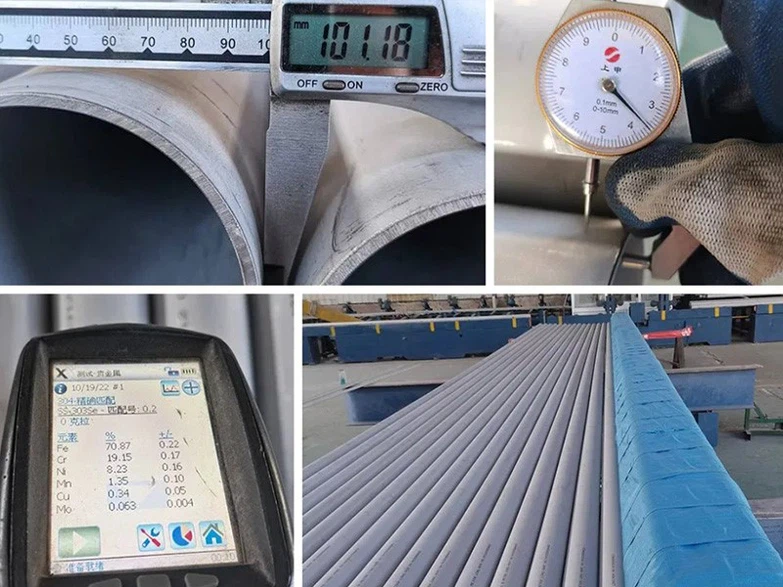
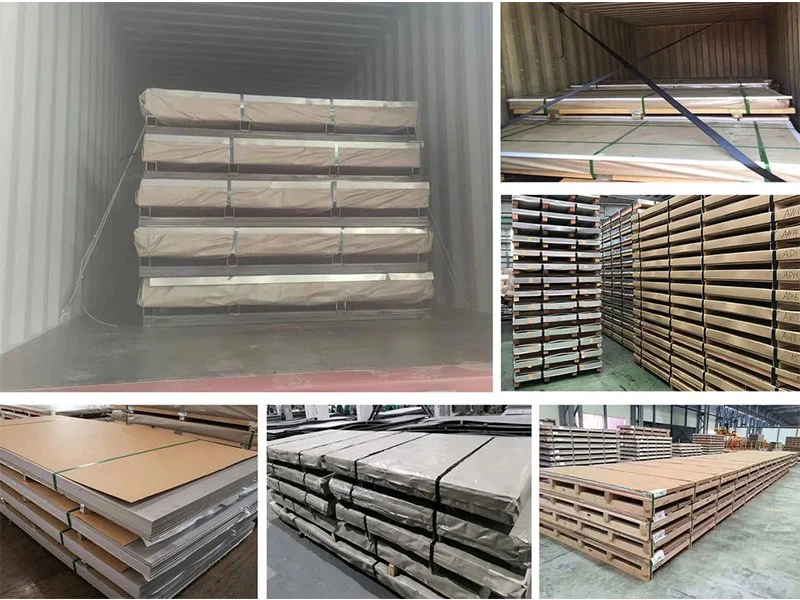
At Gnee, we offer a wide range of 316 and T316 stainless steel products, including pipes, tubes, sheets, and rods, designed to meet international standards and industry-specific requirements. Whether you need a solution for corrosion resistance, high-temperature tolerance, or strength under stress, our products are crafted to deliver optimal performance.
✅ Comprehensive Stock: 316 & T316 stainless steel plates, tubes, and fittings.
✅ Fast Delivery: Worldwide shipping within 7–15 days with flexible payment options.
✅ High-Quality Processing: CNC cutting, welding, bending, and polishing services.
✅ Certificates: ISO, BV, SGS certified, and mill test reports available.
Email: info@gneestainless.com
FAQ
Is T316 the same as 316?
No, T316 is not the same as 316, as "T" often designates the material as a "Type" for a specific standard like ASTM, and "316" is the actual grade number for the stainless steel. However, in some contexts, like industrial applications, the terms may be used interchangeably when referring to 316 or 316L (low carbon) stainless steel.
What is the difference between t304 and t316?
304 stainless steel is an 18/8 steel, meaning it contains 18% chromium and 8% nickel. 316 stainless steel has slightly less chromium, but contains 10% nickel. It also has 2% molybdenum, which is not found in 304. This additional molybdenum gives 316 superior corrosion resistance in many environments
Does T316 stainless steel rust?
Yes, T316 stainless steel can rust, though it is highly resistant to corrosion and will not rust in most common environments. Rusting occurs only under extreme conditions, such as prolonged exposure to high concentrations of chlorides (like in warm seawater) or if the protective passive layer is compromised by physical damage or manufacturing defects.
Is T316 stainless steel more expensive than 316?
Yes, T316 is typically more expensive than 316 due to its low carbon content and enhanced welding properties.