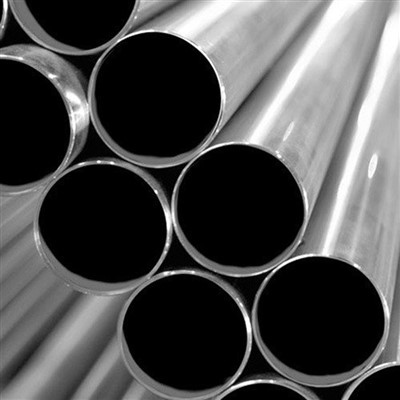
ASTM A240 UNS S32304 Duplex Stainless Steel Plate
Leave a message
What is ASTM A240 UNS S32304 stainless steel sheet?
ASTM A240 UNS S32304 is an economical standard for duplex stainless steel sheet, commonly referred to as Alloy 2304 or EN 1.4362. This steel grade has a duplex microstructure consisting of approximately 50% ferrite and 50% austenite, and is specifically designed to replace traditional 304L and 316L austenitic stainless steels.
UNS S32304 Stainless Steel Sheet Manufacturers and Suppliers
Our S32304 duplex stainless steel is produced using strict AOD/VOD refining processes to ensure precise control of its chemical composition. It contains 21.5%–24.5% chromium (Cr), 3.0%–5.5% nickel (Ni), 0.05%–0.60% molybdenum (Mo), and 0.05%–0.20% nitrogen (N). The material maintains a stable Pitting Resistance Equivalent Number (PREN) of 24–28, providing excellent resistance to pitting corrosion and stress corrosion cracking (SCC) in chloride-containing and mildly acidic environments, with performance significantly exceeding that of conventional 316L stainless steel.
In terms of mechanical properties, S32304 offers a minimum room-temperature yield strength (Rp0.2) of 400 MPa, more than twice that of typical 304/316L stainless steel, while its tensile strength (Rm) reaches 600–820 MPa and elongation (A5) is ≥25%. Under equivalent load-bearing requirements, the use of S32304 can potentially reduce structural weight by approximately 20%–40%. It is therefore an ideal and cost-effective duplex stainless steel choice for petrochemical storage tanks, pulp and paper equipment, seawater desalination facilities, and load-bearing bridge structures.
GNEE supplies UNS S32304 duplex stainless steel plates in delivery conditions including 2B, No.1, pickled, and polished surface finishes, while supporting deep processing services such as high-precision waterjet cutting, plasma cutting, bending, and beveling. All plates undergo solution annealing at 950°C–1050°C followed by water quenching to ensure phase balance and corrosion resistance, and are delivered with fully traceable quality inspection certificates complying with EN 10204 3.1/3.2 standards, comprehensively meeting the rigorous requirements of high-load and moderately corrosive environments.


ASTM A240 UNS S32304 Stainless Steel Plate Specification
| Item | Specification |
|---|---|
| Grade | UNS S32304 / 2304 Duplex Stainless Steel |
| Standard | ASTM A240 / ASME SA240 |
| Plate Definition | Thickness ≥ 3/16 in. (4.76 mm) and width > 10 in. (254 mm) |
| Standard Plate Thickness | 3/16 in. (5 mm) to 1-1/2 in. (38 mm) |
| Maximum Special Thickness | Up to 100 mm, subject to special order |
| Sheet Definition | Thickness < 3/16 in. (4.76 mm) and width ≥ 24 in. (600 mm) |
| Standard Widths | 48, 60, 72, and 96 in. (1,200–2,440 mm) |
| Typical Lengths | 96–252 in. (2,400–6,400 mm) |
| Custom Lengths | Longer lengths available for specific projects, subject to production capability |
| Plate Surface Finish | No. 1 - Hot Rolled, Annealed & Pickled |
| Sheet Surface Finish | 2B - Cold Rolled, Annealed, Pickled & Skin Passed |
| Product Form | Stainless Steel Plate / Sheet |
| Applications | Chemical Processing, Oil & Gas, Marine Equipment, Pressure Vessels, Structural Components |
Chemical Composition of Duplex Steel 2304 Plates
| WEIGHT% | C | SI | MN | S | P | CR | NI | MO | N | CU |
| MIN. | 22,00 | 3,50 | 0,10 | 0,05 | 0,10 | |||||
| MAX. | 0,030 | 1,00 | 2,00 | 0,015 | 0,035 | 24,00 | 5,50 | 0,60 | 0,20 | 0,60 |
Mechanical Composition of Duplex Steel 2304 Plates
| YIELD STRENGTHRP0.2MPa | TENSILE STRENGTHRmMPa | ELONGATION[%] | HARDNESS[HB] | IMPACT,CHARPY‑V,‑46℃[J] | PRE | |
|---|---|---|---|---|---|---|
| PLATE CR | (T<13MM) ≥ 500 | ≥ 690 | ≥ 25 | ≥ 45 | ≥ 28 | |
| PLATE HR | (T≥13MM) ≥ 420 | ≥ 630 | ≥ 25 | ≤ 290 | ≥ 45 | ≥ 28 |
Duplex Steel 2304 Plates Applications
Pressure Vessels & Tanks: Allows for thinner walls and weight reduction compared to 316L while maintaining pressure ratings.
Structural Components: Bridges, beams, and supports in corrosive environments (e.g., coastal architecture).
Heat Exchangers: Shells and tubes in chemical processing and marine applications.
Pulp & Paper Industry: Digesters and bleach washers.


If you'd like, let me know:
What thickness or dimensions you need
Whether you require hot-rolled or cold-rolled finishI can help find more specific availability or design guidance for your project.
Compliance and Testing
Manufacturers must provide a Mill Test Report (MTR) certifying compliance with ASTM A240. This includes verification of:
Chemical composition (spectrometric analysis).
Mechanical properties (tensile and yield strength tests).
Heat treatment records.
Non-destructive testing (if specified, e.g., ultrasonic inspection for laminations).
For ASME pressure vessel applications, the material must also comply with SA-240, which is technically identical but includes additional traceability requirements for the "U" stamp.


Standard export packaging
ASTM A240 UNS S32304 Duplex Stainless Steel Plates are packed for safe international transportation and long-term storage. Each plate is protected with waterproof paper and PVC film, then secured with steel straps on seaworthy wooden pallets. Plates are normally stacked with a maximum bundle weight of 2–3 tons, while container loading is arranged to maximize space utilization. For export orders, packaging can support 20-ft and 40-ft containers, with plate identification, heat number, size, grade, and quantity clearly marked on each bundle. Custom packaging is available according to customer requirements.


FAQ
Q: What is the difference between S32304 and S32205 (2205)?
A: S32304 is known as a "Lean Duplex" stainless steel. Grade 2205 contains higher levels of molybdenum (3%) and nickel (5%), whereas S32304 contains almost no molybdenum (<0.6%).
Corrosion resistance: The PREN (Pitting Resistance Equivalent Number) for 2205 is approximately 35, while for S32304 it is around 24–26. Grade 2205 is suitable for more demanding chemical environments, whereas S32304 is suited for general industrial corrosion applications and structural uses such as bridges and water tanks.
Q: Is S32304 duplex stainless steel plate easy to weld?
A: Yes, it has good weldability.
Welding consumables: Over-alloyed consumables (such as 2209 filler wire or electrodes) are generally recommended to ensure a balanced ferrite-austenite phase ratio in the weld zone.
Note: Preheating or post-weld heat treatment is not required; however, interpass temperature should be controlled to prevent excessive heat input, which could lead to an overly high ferrite content.
Q: Can S32304 be cold-formed or bent?
A: Yes. However, due to its high yield strength, bending requires greater force than that needed for standard austenitic grades (like 304 or 316), and there is significant springback. Increasing the bend radius is recommended.
Q: Is S32304 stainless steel plate magnetic?
A: Yes, it is magnetic. Unlike the 300 series (which are non-magnetic or weakly magnetic), duplex stainless steels contain approximately 50% ferrite and therefore exhibit distinct magnetic properties. This characteristic should not be used as a criterion for judging quality.