


ASTM A312 TP304 Pickled & Passivated Pipes for Food Processing
Leave a message
With more than 18 years of stainless steel export experience and customers in over 60 countries worldwide, GNEE understands the strict hygiene and quality requirements of the food processing, beverage, dairy, and pharmaceutical industries. When sourcing ASTM A312 TP304 stainless steel pipes for sanitary applications, buyers are concerned not only about material certification but also about surface finish, weld integrity, cleanability, and long-term corrosion resistance.
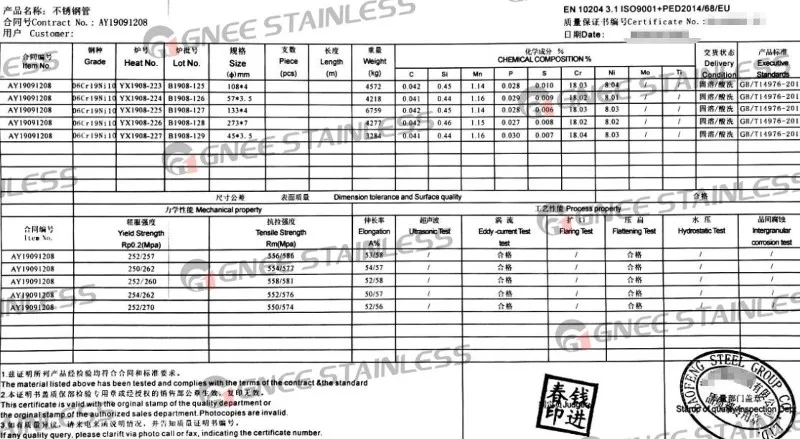
Material reliability is equally critical for food-contact applications. Every production batch can be supplied with an EN 10204 3.1 Mill Test Certificate (MTC), providing full traceability of chemical composition and mechanical properties. In addition, our SS 304 pipes comply with food-contact material requirements such as FDA regulations and EU Regulation 1935/2004, making them suitable for hygienic processing systems.
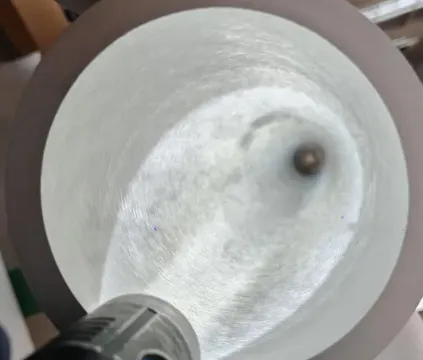
To meet different sanitary requirements, we offer internal polishing services with a standard surface roughness of Ra ≤0.8 μm and Ra ≤0.4 μm for high-purity applications. The smooth internal surface minimizes product residue and facilitates efficient cleaning. All pipes undergo strict surface inspection to ensure they are free from scratches, pits, scale, and contaminants that could compromise hygienic performance.
For welded ASTM A312 Grade 304 pipes, weld quality has a direct impact on hygiene and service life. Our welded 304 stainless steel pipes undergo internal weld bead removal and polishing, creating a uniform inner surface with no noticeable ridges or depressions. This helps prevent product buildup and bacterial growth in the weld area. In addition, all welded pipes are subjected to full solution annealing to eliminate welding stresses and restore the corrosion resistance of the heat-affected zone.
Food processing facilities frequently use acidic, alkaline, and chloride-containing cleaning agents during daily CIP (Clean-in-Place) operations. For applications involving higher chloride concentrations or particularly aggressive cleaning environments, our technical team can recommend upgrading from TP304L to TP316L stainless steel, providing customers with a more suitable and cost-effective long-term solution based on their actual operating conditions.
ASTM A312 TP304 Stainless Steel Pipe Data Sheet
| Property | Specification |
|---|---|
| Standard | ASTM A312 / ASME SA312 |
| Material Grade | TP304 (304 Stainless Steel) |
| Form | Seamless (SMLS) / Welded (WLD) Pipes |
| Outer Diameter (OD) | 6 mm – 508 mm |
| Wall Thickness | 0.5 mm – 40 mm |
| Length | 4000 mm – 12000 mm (custom cut available) |
| Surface Finish | Pickled & Passivated, 2B, BA, Polished |
| Temperature Range | Up to 870°C in continuous service |
ASTM A312 TP304 Round pipe Chemical Composition
| Element | Symbol | Composition (%) |
| Carbon | C | ≤ 0.08 |
| Manganese | Mn | ≤ 2.00 |
| Silicon | Si | ≤ 1.00 |
| Chromium | Cr | 18.0 – 20.0 |
| Nickel | Ni | 8.0 – 11.0 |
| Phosphorus | P | ≤ 0.045 |
| Sulfur | S | ≤ 0.030 |
Mechanical Properties
| Property | Value | Unit |
| Tensile Strength (min) | 515 | MPa (75 ksi) |
| Yield Strength (min) | 205 | MPa (30 ksi) |
| Elongation (min) | 35 | % |
| Hardness (Rockwell B) | ≤ 90 | HRB |
ASTM A312 Pipe Size Tolerances
| NPS Designator | Over (+) % | Under (-) % |
|---|---|---|
| 1/8 to 2 1/2 incl., all t/D ratios | 20.0 | 12.5 |
| 3 to 18 incl., t/D up to 5 % incl. | 22.5 | 12.5 |
| 3 to 18 incl., t/D > 5 % | 15.0 | 12.5 |
| 20 and larger, weldedall t/D ratios | 17.5 | 12.5 |
| 20 and larger, seamlesst/D up to 5 % incl. | 22.5 | 12.5 |
| 20 and larger, seamlesst/D >5 % | 15.0 | 12.5 |
If you are looking to source or specify these pipes for a project, let me know:Are you looking for Seamless or Welded pipe?What is the Nominal Pipe Size (NPS) and Schedule (Wall Thickness) required?Do you need standard 6-meter (20ft) or 12-meter (40ft) lengths?
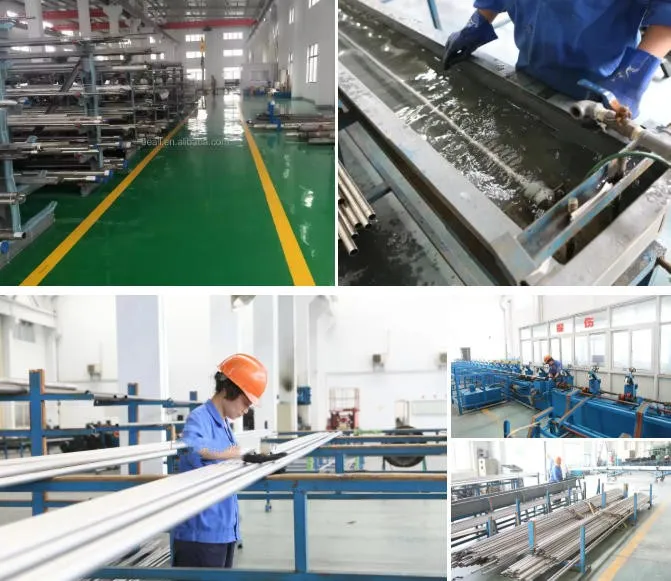
Testing and Quality Control
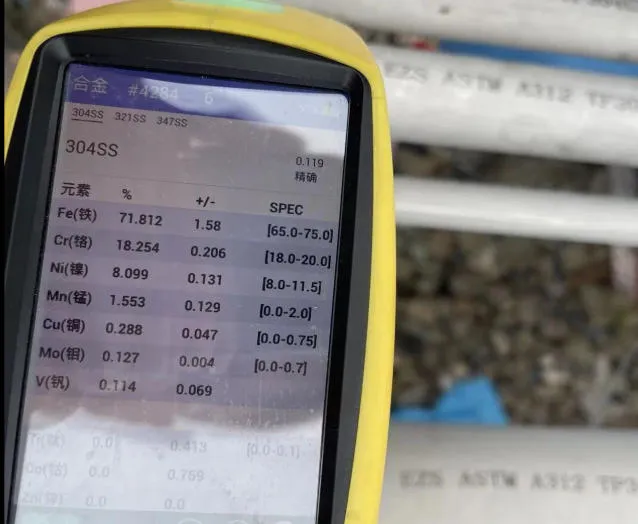
100% PMI Testing: Material composition identification, verifying chromium/nickel content.
Hydraulic Pressure Testing: Ensures 100% leak-proof performance under pressure.
Eddy Current Testing: Non-destructive testing for surface defects/cracks.
Intergranular Corrosion Testing: Complies with ASTM A262 E specifications (ensuring weld integrity).
Flattening and Flaring Testing: Ensures ductility during installation/expansion.
Packaging and Hygiene Protection
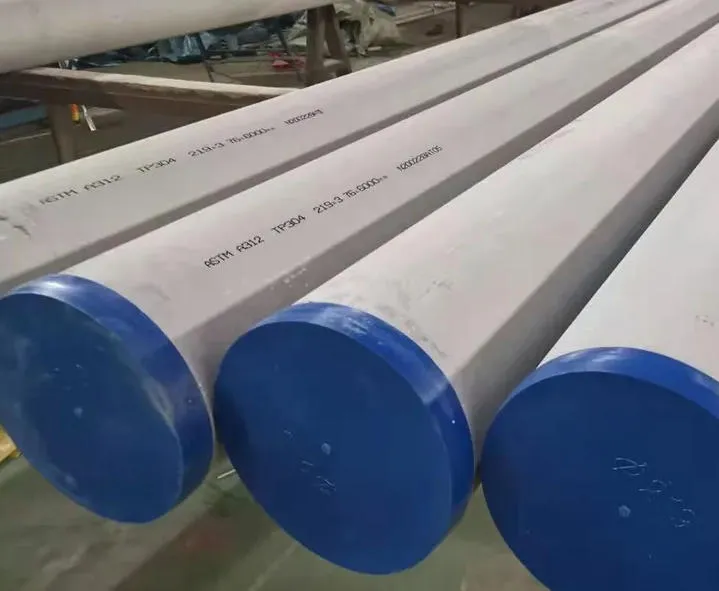
End Caps: Plastic plugs at both ends prevent debris/dust from entering.
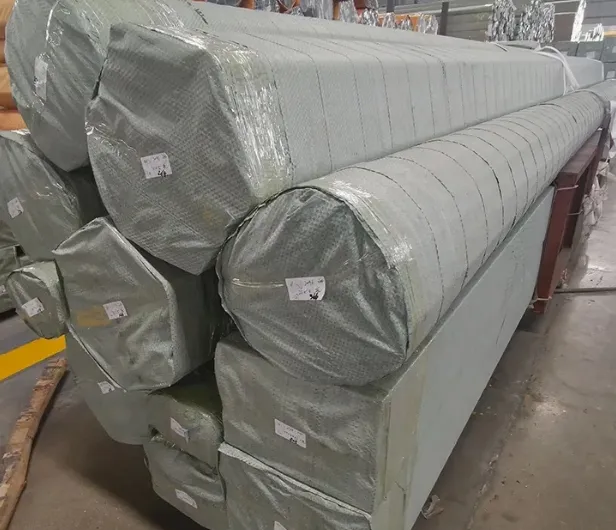
Individual Packaging: Plastic sleeves prevent surface scratches during transport.
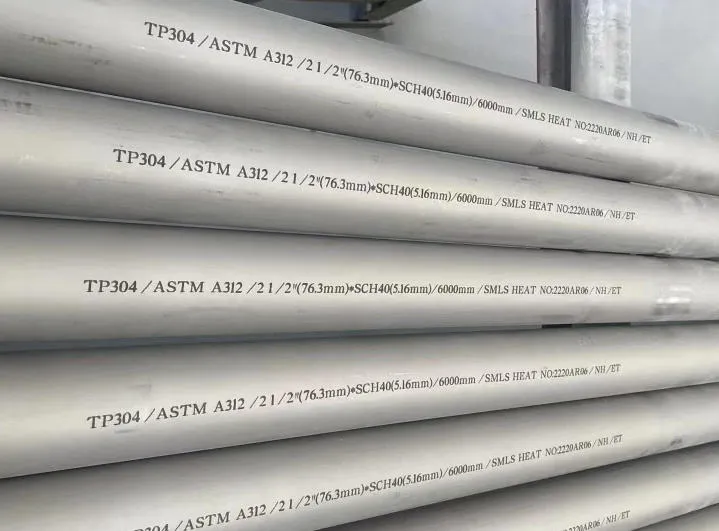
Marking: Continuous inkjet marking (furnace number, grade, size, standard, packaging conditions).
FAQ
When Should the Food Processing Industry Upgrade from TP304 to TP316L?
If your food has a high salt content (e.g., brine, sauces, salted butter), or if you use strong chlorine disinfectants, you should choose TP316L. TP316L contains molybdenum, which prevents pitting corrosion caused by salt.
How Can the Quality of the Passivation Layer Be Verified?
You can request a ferrous oxide test or a copper sulfate test. These tests detect "free iron" on the surface. If the test result is negative, the passivation treatment is successful. We also provide a material testing certificate (MTC 3.1) to prove that its chemical and mechanical properties meet the requirements.
Can ASTM A312 TP304 Be Used in High-Temperature Steam Environments in Food Processing Plants?
Of course. ASTM A312 TP304 meets the high-temperature application standard. Pickling and passivation ensures that steam remains clean, preventing metal scale from clogging valves or contaminating equipment.


