Is A2 steel the same as 304?
Leave a message
In the world of stainless steel, there are many grades that can sometimes be confusing. A common question that arises is whether A2 steel is the same as 304 stainless steel. While both materials share some similarities, they are not exactly the same. Understanding the differences and similarities between A2 steel and 304 stainless steel is essential for making the right choice for your applications.
What is A2 Steel?
A2 steel is a designation used in the European standard ISO 3506, referring to 304 stainless steel. In other words, A2 is simply the European equivalent of 304 stainless steel, which is commonly used in the AISI (American Iron and Steel Institute) standard. Both A2 and 304 stainless steel are austenitic alloys, meaning they are part of the same family of steels with similar properties.
What is 304 Stainless Steel?
304 stainless steel is one of the most widely used austenitic stainless steels. It is composed primarily of 18% chromium and 8% nickel, with excellent resistance to corrosion and oxidation. It is also known for its strength, ease of fabrication, and high formability. Due to these characteristics, 304 stainless steel is commonly used in applications such as food processing, kitchen equipment, medical devices, and architectural applications.
Are A2 Steel and 304 Stainless Steel the Same?
A2 steel and 304 stainless steel are essentially the same material, with A2 being the European equivalent of 304. Both have the same chemical composition and offer similar mechanical properties. The only difference lies in the naming conventions, with A2 being used in the ISO standard and 304 being the more commonly used term in the AISI system.
A2 stainless steel vs. 304stainless steel
| Property | A2 Stainless Steel | 304 Stainless Steel |
|---|---|---|
| Standard Designation | A2 (ISO 3506) | 304 (AISI) |
| Chemical Composition | 18% Chromium, 8% Nickel | 18% Chromium, 8% Nickel |
| Corrosion Resistance | Excellent | Excellent |
| Magnetic Properties | Non-magnetic | Non-magnetic |
| Applications | Marine, food processing, medical equipment | Marine, food processing, kitchenware |
| Strength | Moderate (depending on heat treatment) | Moderate (depending on heat treatment) |
| Weldability | Excellent | Excellent |
| Durability | High resistance to corrosion and oxidation | High resistance to corrosion and oxidation |
Key Advantages of A2/304 Stainless Steel
1.Corrosion Resistance: The addition of chromium and nickel in both A2 and 304 stainless steel provides excellent resistance to oxidation and corrosion in most environments, including many food and chemical processing applications.
2.Easy to Fabricate: A2/304 stainless steel is easy to weld, machine, and form, which makes it highly adaptable to custom shapes and configurations for different industrial needs.
3.Non-Magnetic: Both A2 and 304 stainless steel are non-magnetic in the annealed state, which is important for specific applications like food processing or medical equipment.
Applications of A2/304 Stainless Steel
Food Processing: Equipment such as tanks, mixers, and conveyor belts.
Architectural Applications: Structural components, railings, and cladding.
Medical Equipment: Surgical instruments, implants, and devices that require sterilization.
Marine: Boat fittings, offshore platforms, and hardware exposed to salty environments.
Kitchenware: Sinks, countertops, utensils, and appliances.
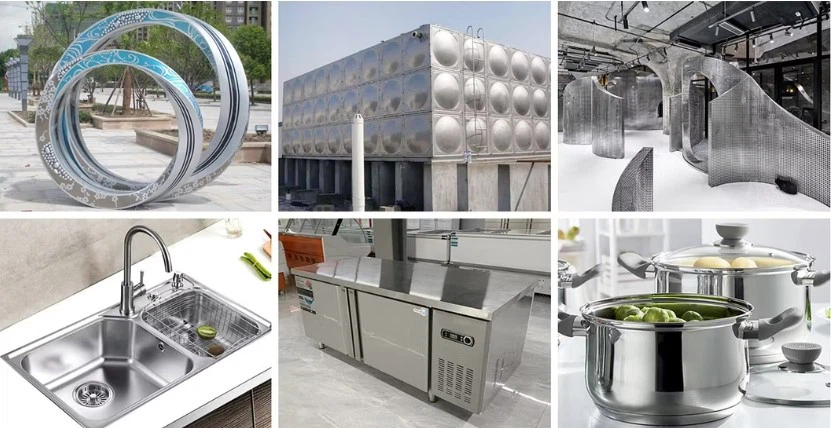
As a supplier specializing in stainless steel fasteners for 18 years, GNEE provides A2 stainless steel fasteners (AISI 304) to customers worldwide. Leveraging our comprehensive offering from materials to service, GNEE has become a trusted partner in the industrial sector.
1.We offer a full range of A4 fasteners, including bolts, nuts, screws, and washers, in a full range of metric and imperial specifications (M3-M30, 1/4"-1"), compatible with various industrial equipment interfaces.
2.We support non-standard dimensions (special threads, special head shapes), surface treatments, respond to customer requests within 72 hours, and deliver samples within 15 days.