


SUS420J2 Cold Rolled Stainless Steel Sheet for Knife
Leave a message
What is SUS420J2 Stainless Steel?
SUS420J2 is a martensitic stainless steel grade under the JIS standard, known for its excellent hardness, wear resistance, and good corrosion resistance after heat treatment. It is widely used in the production of cutting tools, especially knife blades.
GNEE supplies high-quality SUS420J2 cold rolled stainless steel sheets specially designed for knife and cutting tool applications. Our products have been exported to more than 50 countries, including Europe, Southeast Asia, the Middle East, and the Americas, and have been widely used in hardware, kitchen knife, and industrial tool manufacturing, with hundreds of successful cases.
We hold authoritative certifications such as ISO 9001, SGS, and Mill Test Certificates (MTC), ensuring strict quality traceability and stable batch performance.
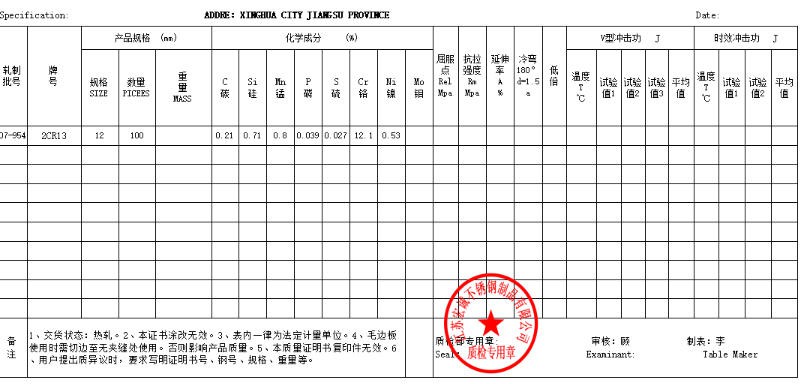
The chemical composition of SUS420J2 stainless steel sheets is strictly controlled, with carbon content of 0.26–0.35% and chromium content of 12.0–14.0%, providing excellent hardenability and edge retention. After proper quenching and tempering, the hardness can reach HRC 52–58, the tensile strength can reach 750–900 MPa, and the material maintains good toughness with low risk of chipping.
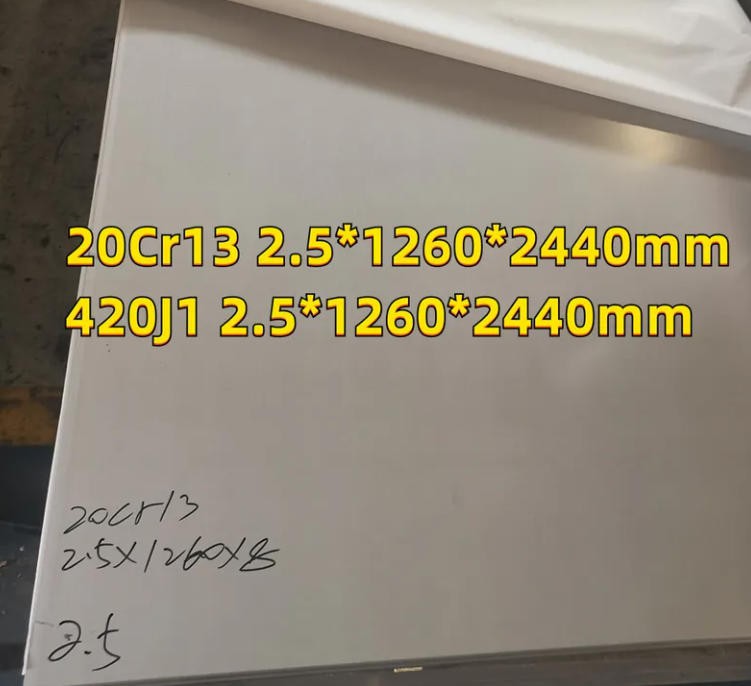
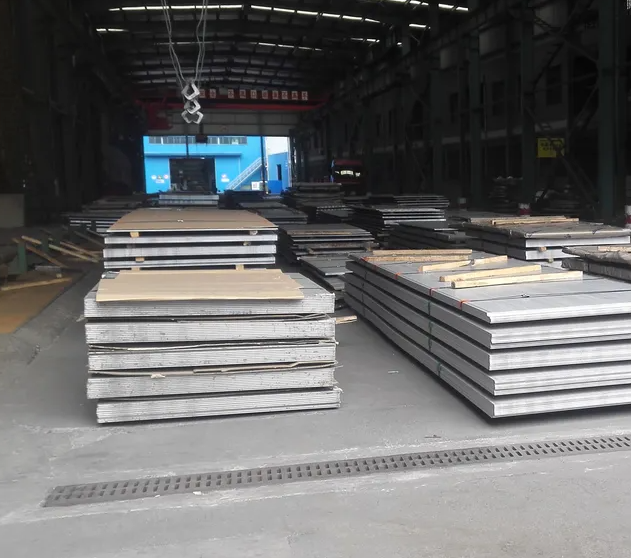
SUS420J2 sheets are produced using a cold rolling process, ensuring precise dimensional control. The thickness ranges from 0.4 mm to 6.0 mm, with tolerance controlled within ±0.02 mm. The sheets have minimal thickness variation, fully released internal stress, no deformation during laser cutting, and reduced grinding allowance. Surface finishes include 2B, BA, and No.4 polishing (Ra ≤ 0.6 μm), offering excellent grinding and polishing performance.Each sheet undergoes flatness testing, hardness testing, and ultrasonic inspection to ensure it is free from inclusions and cracks.
SUS420J2 Steel Coil Specifications
| Item | Specification |
|---|---|
| Product Type | Cold Rolled Stainless Steel Coil / Sheet |
| Standard | JIS G 4305 |
| Material Grade | SUS420J2 |
| Surface Treatment | 2B Finish |
| Protection Grade | With Paper Interleaving / Paper Lining |
| Max Coil Weight | 2.5 tons |
| Width | 1,000 mm |
| Thickness | 1.0 mm |
| Inner Diameter (ID) | 508 mm (20 inches) |
| Outer Diameter (OD) | Max. 1,200 mm |
| Edge Treatment | Slit / Deburred / Trimmed |
| Heat Treatment | Supplied in Annealed Condition |
| Application Field | Manufacturing of Kitchen Knives / Utensils |
| Quantity |
20 tons per month |
| Lead Time | 45–60 days |
Chemical Composition (Mass Fraction, wt.%)
| Element | Carbon (C) | Silicon (Si) | Manganese (Mn) | Phosphorus (P) | Sulfur (S) | Chromium (Cr) | Nickel (Ni)* |
| Standard Value | 0.26 – 0.40 | ≤ 1.00 | ≤ 1.00 | ≤ 0.040 | ≤ 0.030 | 12.00 – 14.00 | ≤ 0.60 |
| Typical Value | 0.33 | 0.45 | 0.50 | 0.025 | 0.002 | 13.20 | 0.15 |
*Nickel is a residual element unless otherwise specified.
Mechanical Properties (Annealed Condition Delivery State)
The material is typically supplied in an annealed (soft) condition, making it suitable for blanking and laser cutting.
| Property | Value | Unit |
|---|---|---|
| Tensile Strength (Rm) | ≥ 520 | MPa |
| Yield Strength (Rp0.2) | ≥ 225 | MPa |
| Elongation (A50mm) | ≥ 18 | % |
| Hardness (HV) | ≤ 235 | Vickers |
| Hardness (HRB) | ≤ 99 | Rockwell B |
Heat Treatment Process of SUS420J2 Stainless Steel for Knife
| Process | Temperature Range | Cooling Method | Typical Hardness |
|---|---|---|---|
| Annealing | 750 – 800°C | Furnace cooling | ≤ 235 HV |
| Hardening (Quenching) | 980 – 1050°C | Oil quenching or air cooling | 52 – 55 HRC (as-quenched) |
| Tempering | 150 – 250°C | Air cooling | 50 – 54 HRC (final hardness) |
SUS420J2 Stainless plate Physical Properties
| Property | Value | Unit |
|---|---|---|
| Density | 7.75 | g/cm³ |
| Modulus of Elasticity | 200 | GPa |
| Thermal Conductivity (at 100°C) | 24.9 | W/(m·K) |
| Specific Heat | 460 | J/(kg·K) |
| Magnetic Properties | Ferromagnetic | Strongly magnetic |
Surface Finish Options
| Finish Code | Description | Typical Use in Knives |
| 2B | Smooth, cold-rolled, heat treated, pickled, skin passed | General purpose, semi-finished blades |
| BA | Bright Annealed (Mirror-like) | Decorative blades, high-end kitchenware |
| No.4 | Polished with 150-180 mesh abrasive | Brushed finish for handles or utility blades |
| HL (Hairline) | Continuous linear polishing | Aesthetic architectural or tool surfaces |
SUS420J2 Stainless sheets Dimensional Tolerance (Cold Rolled Sheet)
| Thickness (mm) | Tolerance (mm) | Width Tolerance (mm) | Camber (mm/2m) |
| 0.50 – 1.00 | ± 0.04 | + 0.30 / - 0 | ≤ 2.0 |
| 1.01 – 2.00 | ± 0.06 | + 0.50 / - 0 | ≤ 1.5 |
| 2.01 – 3.00 | ± 0.08 | + 0.70 / - 0 | ≤ 1.5 |
420J2 vs. 420J1 Sheets: Differences
The primary difference between 420J1 and 420J2 stainless steel sheets lies in their carbon content, which directly impacts their hardness, strength, and intended applications. Generally, 420J2 has a higher carbon content (0.26–0.40%) compared to 420J1 (0.16–0.25%), resulting in greater hardness and edge retention for the J2 grade.
420J2 vs 440C Stainless Steel Sheets: Knives
440C stainless steel is better suited for blades than 420J2. It has a higher hardness (58-60 HRC), better edge retention, and greater wear resistance, making it ideal for high-performance hunting knives or EDC (Everyday Carry) knives. 420J2 is an affordable, corrosion-resistant steel, but due to its poorer edge retention and easier sharpening, it's better suited for diving knives, kitchen knives, or entry-level tools.
For packaging and transportation, all stainless steel sheets are treated for moisture resistance and securely sealed using wooden crates, pallets, or bubble wrap. Standard containers or dedicated transport vehicles are used during transportation to ensure the integrity and safety of the goods during transit. We offer worldwide shipping, with a typical delivery cycle of 7-15 days from production to delivery, ensuring on-time delivery to our customers.
After bundling, the sheets are packed with waterproof paper and wooden pallets. The packaging is robust to prevent damage during transportation and can be customized according to regulations and customer requirements. Furthermore, clear labels are affixed to the exterior of the product packaging for easy identification of product and quality information.


