


What Is 440C Stainless Steel? Properties, Heat Treatment and Uses
Leave a message
What Is 440C Stainless Steel?
Grade 440C stainless steel is a high-carbon steel that, after heat treatment, can achieve the highest hardness, wear resistance and strength of all stainless steel grades. These characteristics make the grade suitable for applications such as valve assemblies and ball bearings. It belongs to the martensitic stainless family, which is manufactured using techniques that require quenching and tempering treatments.
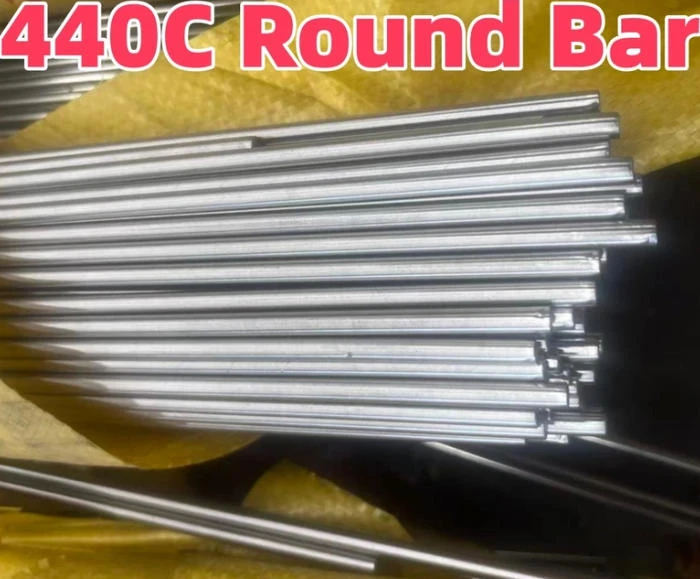

440A VS. 440B VS. 440C VS.440F
440A and 440B have similar properties to 440C, except that the percentage of carbon in grade 440A is slightly lower.
440C is the most widely used of the three forms and is easier to obtain than other standard levels.
440F is an easy-to-process variant of the 440 series that adds a free-machining addition (typically sulfur) while offering a similar high carbon content to 440C; it is intended for automatic lathe work.
These grades have lower corrosion resistance than austenitic grades. Their application is limited by the loss of strength due to excessive tempering at high temperatures and the loss of ductility at temperatures below zero.
440C Stainless Steel Chemical Composition
| Element | Content (%) |
|---|---|
| Carbon (C) | 0.95–1.20 |
| Silicon (Si) | ≤ 1.00 |
| Manganese (Mn) | ≤ 1.00 |
| Sulfur (S) | ≤ 0.030 |
| Phosphorus (P) | ≤ 0.035 |
| Chromium (Cr) | 16.00–18.00 |
| Nickel (Ni) | ≤ 0.60 |
440C Stainless Steel Mechanical Properties
| Condition | Value |
|---|---|
| Annealed hardness | ≤ 269 HB |
| Tempered hardness | ≥ 58 HRC |
| Tensile strength (annealed, typical) | ~560 N/mm² (approx.) |
| Elongation (annealed, typical) | ~18% |
440C Stainless Steel Heat Treatment Process
| Step | Temperature | Cooling |
|---|---|---|
| Preheating | 649–816 °C | - |
| Annealing | 800–920 °C | Slow cooling |
| Quenching (hardening) | 1010–1070 °C | Oil cooling |
| Tempering | 100–180 °C | Rapid cooling |
Quenching and tempering develop the martensitic structure that gives 440C its extreme hardness; a low-temperature temper retains maximum hardness while relieving quench stresses.
440C vs D2 vs VG-10: Hardness and Corrosion Resistance Comparison
| Property | 440C Stainless Steel | D2 Tool Steel | VG-10 Stainless Steel |
|---|---|---|---|
| Steel Type | High-carbon martensitic stainless steel | High-carbon, high-chromium tool steel | Japanese stainless cutlery steel |
| Typical Carbon (C) | 0.95–1.20% | 1.40–1.60% | ~0.95–1.05% |
| Typical Chromium (Cr) | 16.0–18.0% | 11.0–13.0% | ~14.0–15.5% |
| Typical Hardness | ~58–60 HRC | ~58–62 HRC | ~58–61 HRC |
| Maximum Practical Hardness | ~60–62 HRC | ~60–64 HRC | ~61–62 HRC |
| Corrosion Resistance | Excellent | Moderate to Good | Excellent |
| Typical Applications | Bearings, valves, knives, surgical instruments, wear-resistant parts | Dies, punches, industrial knives, molds, cutting tools | Kitchen knives, chef knives, premium cutlery |
440C Stainless Steel Applications
440C is mainly used to manufacture bearing parts that work in corrosive environments and strong oxidizing atmospheres without lubrication. It has good dimensional stability at high temperatures, so it can also be used as a corrosion-resistant high-temperature bearing steel. In addition, it is used to manufacture high-quality cutting tools such as medical scalpels, scissors, nozzles, dies and ball bearings. Note: 440C has a relatively low ability to withstand dynamic (impact) loads, so design applications accordingly.
440C vs. 304 Stainless Steel: Which is better?
It depends on the use:Choose 304 for kitchen sinks, pipes, and outdoor structures where corrosion resistance and weldability are more important than hardness.
Choose 440C for tools, knives, and bearings where you need the metal to stay sharp and hard.
If you have project requirements for 440C stainless steel bars, we welcome your orders. GNEE maintains a large inventory of popular products for you to choose from. Materials can be processed into various practical forms, including plates, coils, pipes, bars, and wires. Please contact our factory today for detailed chemical composition specifications and free samples. We offer competitive prices and excellent service.
FAQ
Q: Is 440C stainless steel easy to machine?
A: In its annealed (soft) state, it is relatively easy to machine, similar to high-speed tool steel. However, once it is heat-treated (hardened), it can only be processed by grinding.
Q: Can you weld 440C stainless steel?
A: Not recommended. 440C is prone to "air hardening" and cracking during welding. If welding is absolutely necessary, the material must be pre-heated to 250°C and post-weld annealed.
Q: Is 440C hard to sharpen?
A: It is more difficult than lower-carbon steels because of its high hardness. You will likely need a diamond or ceramic sharpener to get a razor edge, but once sharpened, it will hold that edge for a very long time.


