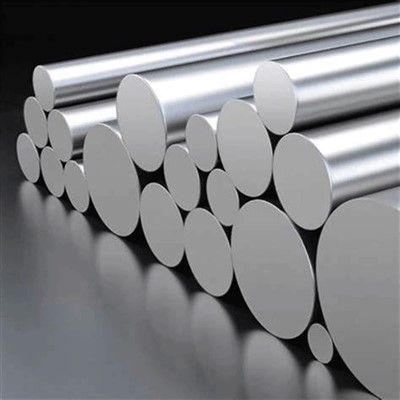
What Is Stainless Steel Plate? Grades, Specifications and Uses
Leave a message
If you are sourcing stainless steel plate for construction, chemical processing, food equipment, pressure vessels, marine applications, or industrial fabrication, understanding the grade, specification, thickness, surface finish, and mechanical properties is essential before placing an order. Stainless steel plate is not a single material,it covers a wide range of austenitic, ferritic, martensitic, duplex, and precipitation-hardening grades, each designed for different service conditions.
This guide explains what stainless steel plate is, the most common grades, key specifications, applications, selection criteria, and purchasing considerations so buyers can make a more accurate material decision.
What Is Stainless Steel Plate?
Stainless steel plate is a flat-rolled steel product containing sufficient chromium to form a passive oxide layer that provides resistance to corrosion. Commercial stainless steel typically contains at least about 10.5% chromium, while many engineering grades also contain nickel, molybdenum, nitrogen, manganese, or other alloying elements to improve corrosion resistance, strength, weldability, or high-temperature performance.
What are the standards for stainless steel plates?
ASTM A240 / ASME SA240 - Standard for chromium and chromium-nickel stainless steel plate, sheet, and strip for pressure vessels and general applications.
EN 10088 - European standard for stainless steel materials.
JIS G4304 / JIS G4305 - Japanese standards for hot-rolled and cold-rolled stainless steel products.
GB/T 4237 / GB/T 3280 - Common Chinese standards for stainless steel plates and sheets.
How Is Stainless Steel Plate Manufactured?
Raw materials → melting → refining → continuous casting → hot rolling → annealing → pickling → cold rolling (when required) → heat treatment → surface finishing → cutting → inspection → packaging
For hot-rolled plate, the material is rolled at elevated temperatures to achieve the required thickness and dimensions. Cold rolling may be used when tighter dimensional control and a smoother surface are required.
The final process depends on the grade, thickness, standard, and required surface finish.

Common Stainless Steel Plate Grades
Choosing the right grade is one of the most important decisions when purchasing stainless steel plate.
| Grade | EN Equivalent | Typical Applications |
|---|---|---|
| 304 / 304L | 1.4301/4.4306/1.4307 | Food equipment, tanks, architectural fabrication, piping |
| 316 / 316L | 1.4401/1.4404 | Chemical processing, marine equipment, pharmaceutical equipment |
| 321 | 1.4541 | Heat exchangers, exhaust systems, high-temperature equipment |
| 310S | 1.4845 | Furnaces, heat-treatment equipment, high-temperature components |
| 410 | 1.4006 | Valves, pumps, mechanical components |
| 430 | 1.4016 | Appliances, automotive trim, architectural applications |
| 2205 | 1.4462 | Offshore, chemical processing, pressure equipment |
| 2507 | 1.4410 | Offshore, seawater, desalination, severe chloride environments |
| 17-4 PH | 1.4542 | Aerospace, shafts, valves, high-strength components |
Stainless Steel Plate Specifications
| Item | Description |
| Product Name | Stainless Steel Plate / Sheet / Coil |
| Manufacturing Process | Hot Rolled (HR), Cold Rolled (CR) |
| Applicable Standards | ASTM A240, ASME SA240, EN 10088-2, JIS G4304/4305 |
| Thickness Range | Cold Rolled: 0.3mm - 6.0mm <br> Hot Rolled: 3.0mm - 100mm |
Stainless Steel Plate Dimension & Tolerance
| Parameter | Standard Range (Customizable) | Tolerance Standard |
| Thickness | 0.3mm to 100mm | ASTM A480 / EN 10051 |
| Width | 1000mm, 1219mm, 1250mm, 1500mm, 2000mm | +/- 2.0mm |
| Length | 2000mm, 2438mm, 3000mm, 6000mm | +/- 5.0mm |
| Edge Condition | Mill Edge (untrimmed) or Slit Edge (trimmed) | - |
Stainless Steel Plate Surface Finishes
| Finish Code | Description | Application |
| No. 1 | Hot rolled, annealed and pickled (White surface) | Industrial tanks, chemical plants |
| 2B | Cold rolled, bright annealed (Smooth, slightly reflective) | Kitchenware, medical equipment |
| BA | Bright Annealed (Mirror-like, highly reflective) | Decorative trim, appliances |
| No. 4 / HL | Brushed / Hairline (Linear texture) | Elevators, architectural panels |
| 8K / Mirror | Super mirror finish | Luxury interior design, mirrors |

304 316LStainless Steel Plate Chemical Composition
Unit: wt% (Max unless range specified)
| Grade | C | Si | Mn | P | S | Cr | Ni | Mo |
| 304 | ≤0.08 | ≤0.75 | ≤2.00 | ≤0.045 | ≤0.030 | 18.0-20.0 | 8.0-10.5 | - |
| 316L | ≤0.03 | ≤0.75 | ≤2.00 | ≤0.045 | ≤0.030 | 16.0-18.0 | 10.0-14.0 | 2.0-3.0 |
304 316LStainless Steel Plate Mechanical Properties
| Property | Typical Value (304) | Typical Value (316L) | Test Method |
| Tensile Strength (Rm) | ≥ 515 MPa | ≥ 485 MPa | ASTM E8 |
| Yield Strength (Rp0.2) | ≥ 205 MPa | ≥ 170 MPa | ASTM E8 |
| Elongation (A50mm) | ≥ 40% | ≥ 40% | ASTM E8 |
| Hardness (Rockwell B) | ≤ 92 HRB | ≤ 95 HRB | ASTM E18 |
Stainless Steel Plate Price: What Determines The Cost?
Stainless steel plate price is not determined by grade alone.
The main cost factors include:
Grade + thickness + width/length + surface finish + quantity + market alloy prices + testing requirements + packaging + delivery terms
Nickel- and molybdenum-containing grades such as 316L, 904L, 2205 and 2507 can cost considerably more than 304 because of their alloying content and performance characteristics.
For an accurate quotation, provide the supplier with:
Grade + standard + thickness + width + length + surface finish + quantity + destination + required certification.
This allowsGNEE to calculate a much more realistic FOB, CIF or other delivered price.
When selecting stainless steel plates, one should comprehensively consider the operating environment, grade, standards, thickness, surface finish, mechanical property requirements, corrosion resistance, inspection requirements, and total delivery cost, rather than focusing solely on price.
FAQ
Is stainless steel plate stronger than stainless steel sheet?
Not necessarily. "Plate" and "sheet" primarily describe product thickness classifications, while strength depends mainly on the grade, condition, heat treatment, and applicable standard.
Is 316 stainless steel better than 304?
Not universally. 316 is generally better for chloride and marine environments because of its molybdenum content, while 304 is often more economical for general-purpose applications.
What is the difference between 304 and 304L plate?
The main difference between 304 and 304L stainless steel plate is carbon content. Grade 304 has a maximum of 0.08% carbon, while 304L (the "L" stands for low carbon) has a maximum of 0.03%. This lower carbon level stops carbide precipitation during welding.
What is the difference between 316 and 316L?
The main difference between 316 and 316L stainless steel is carbon content. Grade 316 has a maximum carbon content of 0.08%, while 316L (the "L" stands for low carbon) has a maximum of 0.03%. This lower carbon level prevents harmful carbide precipitation during welding, making 316L much more resistant to weld decay.
What is 2B stainless steel plate?
2B is a common cold-rolled stainless steel surface finish with a relatively smooth and reflective appearance. It is widely used in general industrial, food-processing, architectural, and fabrication applications.
Which stainless steel plate is best for seawater?
There is no universal answer because seawater exposure varies. 316L may be suitable for many moderate marine applications, while 2205 duplex or 2507 super duplex may be considered for more severe chloride environments where higher pitting resistance and strength are required.
How do I calculate stainless steel plate weight?
A commonly used engineering calculation is:
Weight (kg) = Length (m) × Width (m) × Thickness (mm) × Density (kg/m³) ÷ 1000
For quick estimation, 304 stainless steel is commonly calculated using a density of approximately 7.93 g/cm³, while 316/316L is approximately 7.98 g/cm³. Actual supplied weight should be based on the applicable dimensional tolerances and commercial weighing method.