What is the ASTM A666 standard?
Leave a message
What is ASTM A666 material?
ASTM A666 is a specification standard for austenitic stainless steel in the form of sheet, strip, plate, and flat bar, which can be either annealed or cold-worked. It covers the material's chemical composition, mechanical properties, and the required heat treatments and testing to ensure its suitability for various applications. These can include structural, architectural, pressure vessel, and heat-resisting uses.
1. Scope
1.1 This specification covers austenitic stainless steel in the annealed and normally required cold-worked states, suitable for a wide range of structural, pressure vessel, magnetic, cryogenic, and heat-resistant applications.
1.2 Application of this specification or use of materials covered by this specification does not automatically permit their use in pressure vessels. Only annealed materials of grades expressly approved by ASME Code are permitted for use in pressure vessels.
2. Reference Documents
2.1 ASTM Standards:
A240/A240M Specification for Pressure Vessels and General Purpose Chromium and Chromium-Nickel Stainless Steel Plates, Sheets and Strips;
A370 Test Methods and Definitions for Mechanical Properties of Steel Products;
A480/A480M General Requirements Specification for Flat Rolled Stainless Steel and Heat-Resistant Steel Plates, Sheets and Strips;
A484/A484M General Requirements Specification for Stainless Steel Bars, Billets and Forgings
3. Material Test Report and Certification
3.1 In addition to the reguirements of Specification A480/A480M, the cold-worked condition (annealed, y H, ½ H, and so forth) shall be noted.
ASTM A666 Chemical Composition Requirements
The steel shall conform to the requirements as tochemical composition specified in Table , and shall conformto applicable requirements specifed in the current edition ofSpecification A480/A480M.

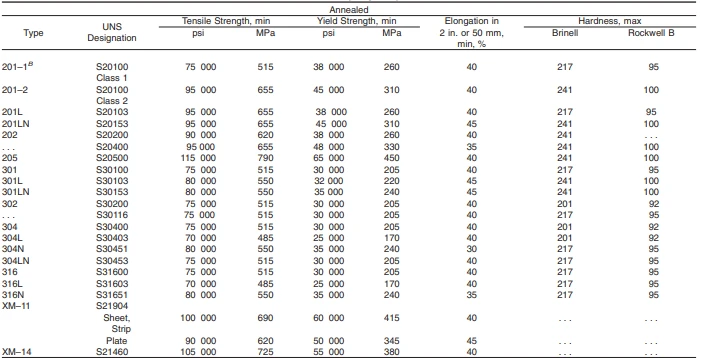
ASTM A666 Tensile Property Requirements
ASTM A666 Free Bend Requlrements

For cold‐worked tempers the values increase significantly. For example, for Type 301 stainless steel (also covered by A666) the following typical values are given:
| Condition | Tensile Strength Min | Yield Strength Min | Elongation Min |
|---|---|---|---|
| ¼ Hard | ~862 MPa (≈ 125 ksi) | ~517 MPa | ~25% |
| ½ Hard | ~1034 MPa (≈ 150 ksi) | ~758 MPa | ~18% |
| Full Hard | ~1276 MPa (≈ 185 ksi) | ~965 MPa | ~9% |
astm a666 vs astm a240
ASTM A240 covers stainless steel plate, sheet, and strip for general and pressure vessel applications, while ASTM A666 specifies requirements for austenitic stainless steel in the annealed and cold-worked conditions for structural, architectural, and other applications. The key differences are their intended applications and the specified conditions (annealed/cold-worked vs. general). ASTM A240 is often used for equipment, while ASTM A666 is for more formed or shaped products like architectural panels and structural components.