


What is the best material for a heat exchanger tube?
Leave a message
A Practical Guide for Stainless Steel Heat Exchanger Buyers
Choosing the best material for heat exchanger tubes is a critical decision that directly affects equipment efficiency, service life, maintenance cost, and safety. For buyers involved in chemical processing, oil & gas, power generation, food & beverage, and marine applications, material selection is not only a technical issue but also a long-term investment decision.
This guide provides a clear, data-driven comparison of common heat exchanger tube materials, with a strong focus on stainless steel grades, helping procurement professionals select the most cost-effective and reliable solution for their projects.
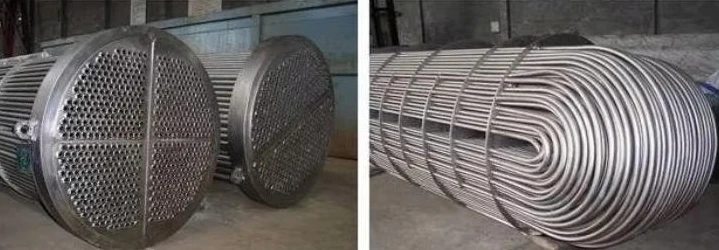
Key Requirements for Heat Exchanger Tube Materials
🔹Before comparing materials, it is essential to understand the core performance requirements of heat exchanger tubes:
| Requirement | Why It Matters |
|---|---|
| Corrosion resistance | Prevents leakage, contamination, and premature failure |
| Heat transfer efficiency | Directly impacts system performance and energy cost |
| Mechanical strength | Ensures safety under pressure and thermal cycling |
| Fabrication & weldability | Affects installation time and manufacturing cost |
| Lifecycle cost | Total cost over 10–30 years, not just initial price |
Why Stainless Steel Is The Best Material For Heat Exchanger Tubes?

🔹Stainless steel tubes are widely recognized as the optimal material for heat exchanger tubes due to their superior thermal conductivity, corrosion resistance, mechanical strength, and service life. Compared to carbon steel, austenitic stainless steels (such as 304, 316L, and 904L) maintain stable heat transfer efficiency even under cycling temperature conditions and can extend their service life by 5-10 times in corrosive environments, including seawater, acidic process fluids, and high-humidity gases.
🔹Stainless steel heat exchanger tubes exhibit excellent creep resistance over an operating temperature range of -196°C to 400°C and possess superior resistance to pitting and crevice corrosion, especially in high-chloride and high-pressure applications, thus significantly reducing scaling, maintenance downtime, and replacement costs.
Common Materials Used for Heat Exchanger Tubes
| Material | Corrosion Resistance | Temperature Capability | Strength | Cost Level | Typical Applications |
|---|---|---|---|---|---|
| Carbon Steel | Low–Medium | Medium | Medium | Low | Clean water, non-corrosive fluids |
| Copper / Copper Alloys | Medium | Low–Medium | Low | Medium | HVAC, condensers |
| Titanium | Excellent | High | Medium | Very High | Seawater, desalination |
| Nickel Alloys | Excellent | Very High | High | Extremely High | Severe chemical environments |
| Stainless Steel | High–Excellent | High | High | Balanced | Most industrial heat exchangers |
🔹 Based on the above comparison of heat exchanger tube materials, we found that stainless steel, as a material for heat exchanger tubes, has 2-5 times higher corrosion resistance than carbon steel and copper alloys, stable thermal conductivity at high temperatures, and a service life 15-50% longer than carbon steel and copper alloys, effectively reducing scaling, maintenance frequency, and long-term operating costs.
What is the best stainless steel for a heat exchanger?
🔹The best stainless steel for a heat exchanger depends on the environment, with 316/316L being the standard for moderate corrosion resistance (especially chlorides). Duplex 2205 is superior for high-strength, high-pressure, or highly corrosive applications. For extreme heat, grades like 310 or 446 are preferred.
| Grade | Standard | Key Features | Best Use Cases |
|---|---|---|---|
| TP304 / 304L | ASTM A213 / A269 | Good corrosion resistance, economical | Water, steam, food processing |
| TP316 / 316L | ASTM A213 | Superior chloride resistance | Chemical, marine, offshore |
| TP321 | ASTM A213 | Stabilized for high temperature | Power plants, thermal exchangers |
| TP347 / 347H | ASTM A213 | Nb-stabilized, excellent high-temp strength | Refineries, petrochemical heat exchangers |
| Duplex 2205 | ASTM A790 | High strength, strong pitting resistance | Seawater, aggressive environments |
What are the standards for stainless steel heat exchangers?
🔹Stainless steel heat exchanger standards focus on material integrity, design pressure, and hygienic requirements, primarily governed by ASME Section VIII for pressure vessels, TEMA for shell-and-tube construction, and ASTM for material specifications (304/304L, 316/316L). Key standards include ASTM A213/A269 for tubes, API 660 for petrochemicals, and 3-A/FDA for sanitary applications.
What is the ASME Code for heat exchangers?
🔹Pressure vessels, heat exchangers use ASME code VIII-1, while hot water heaters and boilers use ASME code I.
Practical Buying Tips for Heat Exchanger Tube Procurement
When sourcing stainless steel heat exchanger tubes, always confirm:
✅ Correct ASTM / ASME grade
✅ Dimensional tolerances (OD, WT, ovality)
✅ Heat treatment condition (solution annealed)
✅ Eddy current / hydrostatic testing
✅ Mill Test Certificate (EN 10204 3.1)
✅ Traceability & third-party inspection (SGS / BV / TUV if required)
Click to get the stainless steel heat exchanger tube material list
As a professional supplier, each of our heat exchanger tubes comes with the following quality assurance:
🔹Dimensional Accuracy:Precision cold drawing/rolling process, with outer diameter tolerance controlled within ±0.03mm, ensuring zero-gap fit during tube sheet assembly.
🔹Pressure Safety:100% hydrostatic and airtightness tested, with a maximum pressure rating ≥ 20MPa (3000 PSI).
🔹Surface Treatment:Bright annealed or mechanically polished inner wall, Ra ≤ 0.4μm.
🔹Non-Destructive Testing:100% online eddy current testing according to ASTM E426, eliminating any weld cracks or substrate defects invisible to the naked eye.
The following is information about the products we can provide.
| Material Category | Common Grades (ASTM/UNS) | Execution Standards | Available Shapes | Dimension Range (OD & WT) |
| General Purpose | 304 / 304L (S30400/03) | ASTM A213 / A249 / A269 | Straight / U-Bent | OD: 6.0 - 76.2 mm<br>WT: 0.5 - 3.0 mm |
| Corrosion Resistant | 316 / 316L (S31600/03) | ASTM A213 / A249 / EN 10217-7 | Straight / U-Bent / Finned | OD Tolerance: ± 0.03 mm |
| High-Strength Duplex | 2205 / 2507 (S31803 / S32750) | ASTM A789 / A790 | Straight / Corrugated | WT: 0.8 - 2.5 mm |
| Super Alloys | 904L / S31254 (Super Austenitic) | ASTM A213 / B677 | Straight / Extra-long | Length: Up to 30m |
Click to view our project examples


