


What is the difference between 17-4PH H1150 and H900?
Leave a message
If you are sourcing 17-4PH stainless steel (UNS S17400 / ASTM A564 Type 630), one of the most important decisions is selecting the correct aging condition. Although H900 and H1150 are made from the same precipitation hardening stainless steel grade, their final performance is significantly different because of different aging temperatures.
The H designation refers to the aging temperature in Fahrenheit. H900 represents aging at approximately 900°F (482°C), while H1150 represents aging at approximately 1150°F (621°C).
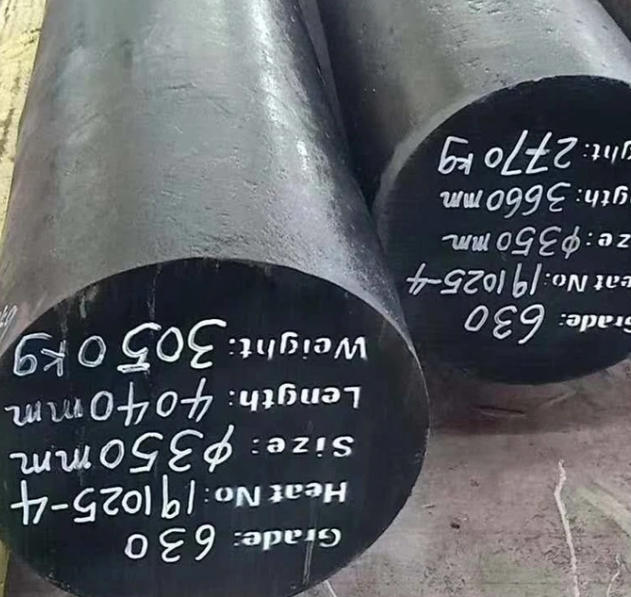
What is 17-4PH H1150 Stainless Steel Bar?
17-4PH H1150 stainless steel bar is a chromium-copper precipitation-hardening martensitic stainless steel. The "H1150" heat treatment condition involves holding the material at 1150°F for 4 hours followed by air cooling; compared to conditions aged at lower temperatures, it offers high toughness, lower hardness (approximately 27–35 HRC), and good stress resistance, making it easier to form, weld, and machine. It is commonly used for components in chemical and petrochemical processing, as well as for fasteners, gears, and bushings.
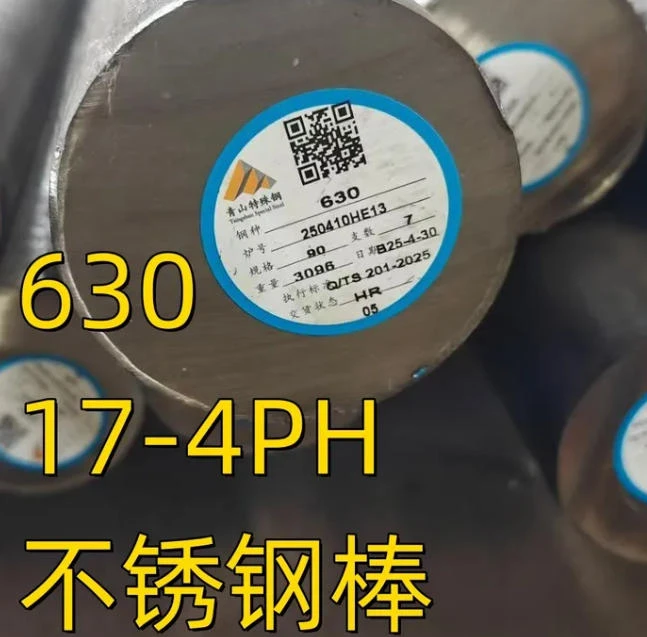
What Is 17-4PH H900 Stainless Steel Bar?
17-4PH H900 stainless steel bar belongs to the precipitation-hardening martensitic stainless steel category (Grade 630 / UNS S17400) and is heat-treated at 900°F (482°C). This specific "H900" aging condition endows the material with extremely high tensile strength (approximately 190–200 ksi) and high hardness (40–48 HRC), offering a level of corrosion resistance comparable to standard 304 stainless steel. While its toughness is lower-with a reduction in impact strength and ductility compared to high-temperature aging processes like H1150-these properties make it an ideal choice for high-stress industrial applications.
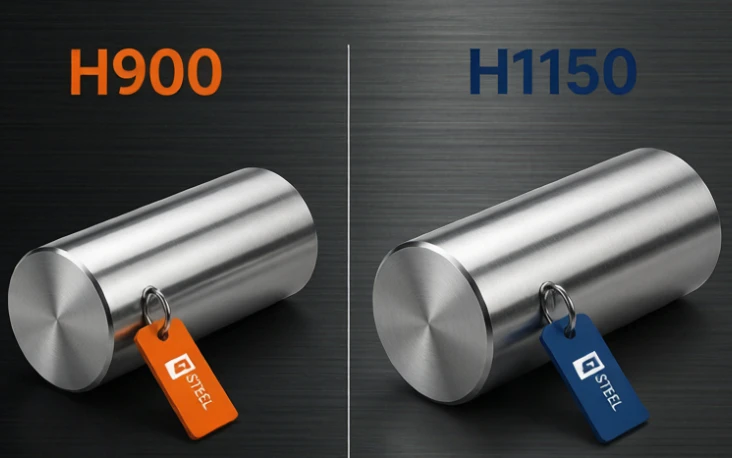
What is the difference between 17-4PH H1150 and H900?
The primary difference between 17-4PH stainless steel in the H900 and H1150 conditions lies in the aging temperature used during heat treatment. The H900 condition is aged at 900°F (482°C) to achieve maximum strength and hardness, whereas the H1150 condition is aged at 1150°F (621°C), resulting in superior toughness and ductility but lower strength and hardness.
17-4PH H900 vs. H1150: Key Differences
| Property | Condition H900 (Peak Aged) | Condition H1150 (Overaged) |
| Heat Treatment Process | Aged at 900°F (482°C) for 1 hour, air cool. | Aged at 1150°F (621°C) for 4 hours, air cool. |
| Tensile Strength, Ultimate | 190 - 200 ksi (1310 MPa) min | 135 - 145 ksi (930 - 1000 MPa) min |
| Yield Strength (0.2% Offset) | 170 - 185 ksi (1170 MPa) min | 105 - 125 ksi (724 - 860 MPa) min |
| Hardness (Rockwell C) | 40 - 45 HRC | 28 - 35 HRC |
| Elongation (in 2") | 10% min | 16% - 18% min |
| Reduction of Area | 35% - 40% | 50% - 60% |
| Impact Strength (Charpy V-Notch) | Approx. 5 - 15 ft-lb (Low) | Approx. 30 - 50 ft-lb (High) |
17-4PH H900 vs. H1150: Dimensional Stability
17-4PH undergoes slight contraction during the aging process.
Transition from Condition A to H900: approximately 0.0004 to 0.0006 in/in.
Transition from Condition A to H1150: approximately 0.0009 to 0.0012 in/in.
17-4PH H900 vs. H1150:Machinability
H1150 is significantly easier to machine than H900. Many machine shops prefer to purchase H1150 or solution-annealed (Condition A) bar stock, complete the majority of machining operations, and then perform heat treatment to achieve the final required condition (although post-machining heat treatment may result in slight dimensional changes).
Is H900 stronger than H1150?
Yes, H900 is significantly stronger and harder than H1150. In 17-4 PH stainless steel, lower aging temperatures produce higher strength and hardness, while higher temperatures like 1150°F trade strength for better toughness and ductility.
Is H1150 more corrosion resistant than H900?
Yes, 17-4 PH stainless steel in the H1150 condition exhibits superior corrosion resistance compared to the H900 condition, particularly regarding resistance to stress corrosion cracking. The higher aging temperature (such as 1150°F) causes the alloy to over-age, thereby reducing internal stress and hardness; compared to the H900 condition-which achieves peak strength-this treatment significantly enhances the material's toughness, ductility, and resilience in corrosive environments.
17-4 PH H1150 vs. H900: How to Choose?
Select the H900 condition if the following criteria are met:
The primary objective is to achieve the highest possible tensile strength, and high surface hardness is required for wear resistance.
The operating environment is non-corrosive and free of impact loads (e.g., small fasteners, high-load aerospace pins).
Select the H1150 condition if the following criteria are met:
The component will be subjected to impact loads, or extensive machining is required.
The environment contains corrosive media, and prevention of stress corrosion cracking (SCC) risk is critical (e.g., valves and pump shafts in the oil and gas industry).
17-4PH H900, H1025, and H1150 Stainless Steel Supplier and Manufacturer
For customers purchasing 17-4PH (H900 or H1150 grade) stainless steel plates, bars, and machined parts, controlling the material condition is critical.
Prior to shipment, documentation is available for every batch, including heat number traceability, tensile test reports, and hardness test results. Surface inspection records help customers avoid common procurement risks-such as incorrect aging conditions, insufficient hardness, or discrepancies between the supplied material and drawing specifications.

17-4PH H900/H1150 Stainless Steel Specification
| Product Forms | Round Bar, Hexagonal Bar, Square Bar, Flat Bar, Plate, Sheet, and Custom Forgings |
| Manufacturing Process | Hot Rolled, Cold Drawn, Centerless Grinded, or Forged |
| Standard Compliance | ASTM A564 (Bars & Shapes), ASTM A693 (Plates & Sheets), AMS 5643 |
| Available Conditions |
H900: Aged at 900°F (High Strength, 40-45 HRC) H1150: Aged at 1150°F (High Toughness, 28-35 HRC) Condition A: Solution Annealed (Ready for customer heat treatment) |
| Size Range (Bars) |
Diameter: 5.0 mm – 500 mm (Cold Drawn or Hot Rolled/Forged) Length: 3000 mm – 6000 mm (or custom cut-to-size) |
| Size Range (Plates) |
Thickness: 3.0 mm – 100 mm Width: 1000 mm, 1219 mm, 1500 mm, 2000 mm |
| Surface Finish | Black (Hot Rolled), Bright (Peeled/Polished/Grinded), No.1 (Pickled) |
| Inspection (Optional/NDT) |
Ultrasonic Testing (UT): According to SEP 1921 or ASTM A388 Impact Test: Charpy V-Notch (Essential for H1150) Dimensional Check: Laser micrometer for precision bars |
| Certification | Mill Test Certificate (MTC) according to EN 10204 3.1 (3.2 optional) |
| Packaging |
Bundles: Secured with steel strips for bars Protection: Plastic end caps and waterproof paper/plastic film wrapping Outer Packing: Reinforced Plywood Cases or Steel Crates for sea freight |
| Shipping Marks | Heat No., Grade, Size, Net/Gross Weight, Made in China |
RFQ Information Required:
To provide an accurate quote, please specify the following details:
Product Form: (e.g., Round Bar)
Dimensions: (e.g., Diameter 50mm x Length 6000mm)
Condition: (H900 or H1150)
Surface Finish: (e.g., Bright/Polished)
Quantity: (e.g., 5 tons)
Surface Quality
For bright bars (H900/H1150), we offer centerless grinding with tolerance grades of h8 or h9, ensuring the bars are ready for immediate use in high-speed CNC machining.
Inspection and Reliability
Ultrasonic Testing (UT): For large-diameter forged bars (e.g., >200mm), we conduct 100% ultrasonic testing to ensure the absence of internal voids or cracks.
Full Traceability: Each bar or plate is marked with a unique Heat Number, allowing for traceability back to the raw material melt report.


Export Packaging
Anti-rust Protection: Bar surfaces are coated with anti-rust oil prior to plastic wrapping.
Plywood Cases: We use fumigation-free plywood cases to prevent physical damage (such as bending or scratching) during long-distance ocean transport.


