


Austenitic Stainless Steel Pipes For Oxygen Pipelines
Leave a message
Austenitic stainless steel pipe, particularly grades like 304L and 316L, is an ideal material for oxygen piping due to its hygienic, durable, corrosion-resistant, and flame-resistant properties. Key requirements include strict adherence to cleanliness and degreasing procedures to prevent combustion hazards associated with oxygen and high-pressure fluids.
However, the specific grade of stainless steel, the cleanliness of the pipe (in compliance with standards such as ASTM-G93 and ISO 15001), and the type of pipe (seamless pipe is preferred for high-pressure piping) must be carefully selected to ensure safety and performance, especially in high-pressure or high-purity oxygen applications.
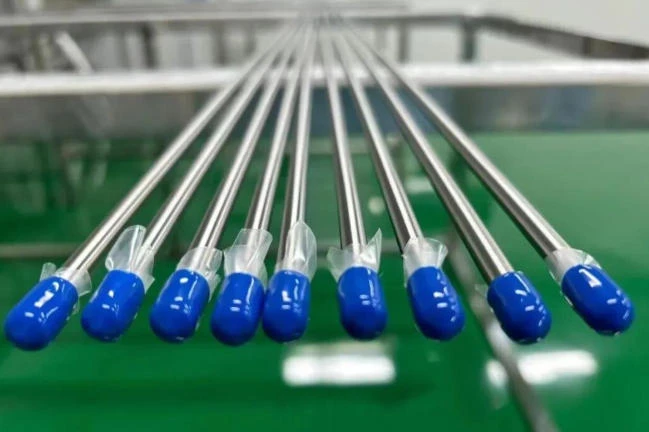

Austenitic stainless steel pipes for oxygen pipelines shall comply with the following requirements:
Steel pipes for low-temperature oxygen service shall be subjected to Charpy V-notch (KV) impact tests at a test temperature of 196°C. The test results shall comply with the requirements of Table 1. Impact specimens shall be selected from the largest possible size specimens in Table 1. When the steel pipe size is insufficient to obtain a 10mmx2.5m impact specimen, no impact test is required.
| Specimen Size (Width × Thickness) mm×mm |
Average Impact Absorption Energy of 3 Specimens (KV₂) J | Individual Specimen Impact Absorption Energy (KV₂) J | Lateral Expansion Value (LE) mm | ||
|---|---|---|---|---|---|
| Longitudinal | Transverse | Longitudinal | Transverse | ||
| 10×10 | 60 | 48 | Not less than 42 | Not less than 34 | 0.38 |
| 10×7.5 | 45 | 36 | Not less than 31 | Not less than 25 | 0.38 |
| 10×5 | 30 | 24 | Not less than 21 | Not less than 17 | 0.38 |
| 10×3.3 | 20 | 16 | Not less than 14 | Not less than 12 | 0.38 |
| 10×2.5 | 15 | 12 | Not less than 10 | Not less than 8 | 0.38 |
Processing Performance
1. Flattened steel pipes should undergo a flattening test. The test is conducted as follows. In the first step, the ductility test, the specimen is compressed until the distance between the two flat plates is H. No cracks or splits should appear on the specimen. H is calculated according to the formula.
Where:

H-the distance between the two flat plates, in millimeters (mm);
a-the coefficient of deformation per unit length, taken as 0.09;
S-the nominal wall thickness or average wall thickness of the steel pipe (when delivered based on the minimum wall thickness), in millimeters (mm);
D-the nominal outer diameter or calculated outer diameter of the steel pipe (when delivered based on the nominal inner diameter), in millimeters (mm).
Surface Quality
1. The inner and outer surfaces of the steel pipe shall be free of cracks, folds, folds, delamination, scars, burrs, straight lines, and rust. These defects shall be completely removed to a depth not exceeding 10% of the wall thickness. The actual wall thickness at the site of defect removal shall be no less than the minimum permitted wall thickness. Welding repairs are not permitted at the site of defect removal, and the transition shall be smooth.
2. The inner surface roughness Ra of the steel pipe shall comply with the requirements of Table 2. When the roughness grade is not specified in the contract, the steel pipe shall be delivered as standard grade.
| Table 2 Inner Surface Roughness of Steel Pipe | ||
|---|---|---|
| Serial Number | Inner Surface Roughness (Ra) μm | |
| Ordinary Grade (PA) | High Grade (PC) | |
| 1 | ||
| 2 | ≤6.3 | ≤3.2 |
Degreased steel pipes must be degreased both inside and outside. Suppliers must select one of the following methods for surface inspection, meeting the corresponding requirements:
1. Inspect the steel pipe surface using ultraviolet light with a wavelength of 320nm-380nm. Acceptance is determined by the absence of grease fluorescence.
2. Wipe the steel pipe surface with clean, dry white filter paper or silk cloth. Acceptance is determined by the absence of grease traces.
3. Blow the steel pipe with oil-free steam. Collect the condensate in a clean container and drop a pellet of pure camphor (less than 1mm in diameter) into the container. Rotate the pellet continuously to determine acceptance.
4. Quantitatively analyze the residual grease on the degreased steel pipe surface. Acceptance is determined by a value of no more than 120mg/m².
GNEE provides austenitic stainless steel pipes for oxygen pipelines. Made from high-purity austenitic stainless steels such as 304L and 316L, these pipes have a carbon content ≤0.03%, a sulfur content ≤0.015%, and a phosphorus content ≤0.030%. They effectively resist oxidation and corrosion, reducing the risk of ignition.
Austenitic stainless steel pipes are available in seamless and welded constructions and conform to ASTM A312, ASME B31.3, or EN 10216-5 standards. The surface is pickled, electrolytically polished (Ra ≤0.4μm), or mechanically polished. Dimensional tolerances include an outer diameter tolerance of ±0.05mm and a wall thickness tolerance of ±0.03mm. Mechanical properties include tensile strength of 515-690MPa, yield strength ≥205MPa, and elongation ≥35%. Quality assurance is provided by EN 10204 3.1/3.2 inspection certificates.Email: info@gneestainless.com


