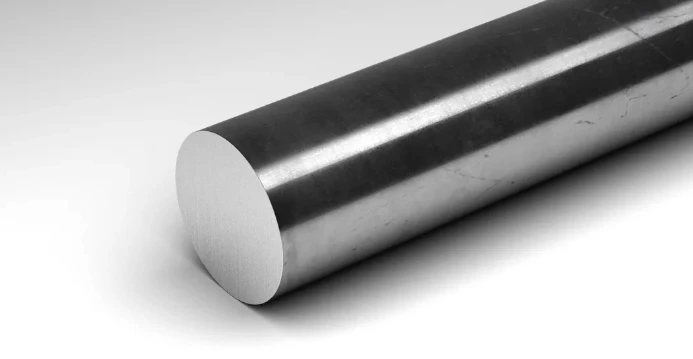
Unbreakable Bonds: Exploring The Chemistry Behind Stainless Round Bars
Leave a message
Stainless round bars, renowned for their exceptional strength and corrosion resistance, owe their remarkable properties to the intricate chemistry that occurs during their production. These unbreakable bonds formed at the molecular level are at the heart of their durability, making stainless round bars a critical component in various industries and applications.
The key to stainless round bars' exceptional performance lies in the composition of stainless steel—an alloy primarily made up of iron, carbon, and chromium, with the addition of other elements such as nickel, molybdenum, and titanium in specific grades. It is the presence of chromium that plays a transformative role, giving stainless steel its inherent resistance to corrosion.
When chromium is introduced into the steel alloy, it reacts with oxygen in the surrounding environment to form a thin, invisible layer of chromium oxide on the surface of the metal. This layer acts as a protective shield, preventing the underlying steel from coming into direct contact with corrosive agents, such as water or chemicals. The result is stainless steel's remarkable ability to resist rust and corrosion, even in harsh and corrosive environments.
Furthermore, the addition of other alloying elements further enhances the strength and mechanical properties of stainless round bars. For example, nickel and molybdenum increase the steel's resistance to specific forms of corrosion, such as pitting and crevice corrosion, while also improving its high-temperature performance. These alloying elements contribute to the versatility of stainless round bars, enabling them to thrive in diverse applications, from construction and transportation to chemical processing and marine environments.
The manufacturing process also influences the final chemistry of stainless round bars. Techniques such as vacuum melting and controlled cooling are employed to achieve precise chemical compositions and microstructures. These processes ensure uniformity in the material's properties, allowing for consistent performance in high-stress applications.
As technology advances, researchers and metallurgists continue to delve deeper into the chemistry of stainless round bars, seeking to improve their properties further and create new grades tailored to specific needs. The quest for stronger, more durable, and sustainable materials drives the innovation that will shape the future of various industries and revolutionize the way we build and engineer.
In conclusion, the chemistry behind stainless round bars is the bedrock of their unbreakable bonds. Their unique composition, with a strategic blend of alloying elements, imparts remarkable strength, corrosion resistance, and versatility. As we continue to unlock the secrets of this enduring material, stainless round bars will undoubtedly remain a steadfast ally in constructing a stronger and more resilient world.