

What is the coefficient of thermal expansion of stainless steel square pipes?
Leave a message

As a leading supplier of stainless steel square pipes, I often encounter inquiries from customers regarding various technical aspects of our products. One question that comes up quite frequently is, "What is the coefficient of thermal expansion of stainless steel square pipes?" In this blog post, I'll delve into this topic in detail, explaining what the coefficient of thermal expansion is, how it affects stainless steel square pipes, and the factors that can influence this coefficient.
Understanding the Coefficient of Thermal Expansion
The coefficient of thermal expansion (CTE) is a material property that describes how the size of an object changes with a change in temperature. It is defined as the fractional change in length or volume per degree change in temperature. Mathematically, the linear coefficient of thermal expansion (α) is expressed as:
α = (ΔL / L₀) / ΔT
where ΔL is the change in length, L₀ is the original length, and ΔT is the change in temperature. The volumetric coefficient of thermal expansion (β) is approximately three times the linear coefficient for isotropic materials.
The CTE is an important parameter in engineering and design, especially when dealing with materials that are subjected to temperature variations. If two materials with different CTEs are joined together and then heated or cooled, the difference in expansion or contraction can cause stress, deformation, or even failure of the joint.
Coefficient of Thermal Expansion of Stainless Steel Square Pipes
Stainless steel is an alloy composed primarily of iron, chromium, and nickel, with small amounts of other elements such as carbon, manganese, and silicon. The exact composition of stainless steel can vary depending on the grade, which affects its properties, including the coefficient of thermal expansion.
The CTE of stainless steel square pipes typically ranges from about 10 to 17 x 10⁻⁶ /°C (5.5 to 9.4 x 10⁻⁶ /°F) for common grades. For example, the linear coefficient of thermal expansion for Type 304 stainless steel is approximately 17.2 x 10⁻⁶ /°C (9.6 x 10⁻⁶ /°F) at room temperature. Type 316 stainless steel, which contains molybdenum for increased corrosion resistance, has a slightly lower CTE of about 16.0 x 10⁻⁶ /°C (8.9 x 10⁻⁶ /°F).
These values may seem small, but over a large temperature range or in applications where precise dimensional control is required, the expansion or contraction of stainless steel square pipes can have a significant impact. For instance, in a long pipeline system that experiences large temperature fluctuations, the thermal expansion of the pipes can cause buckling or stress on the joints if not properly accounted for.
Factors Affecting the Coefficient of Thermal Expansion
Several factors can influence the coefficient of thermal expansion of stainless steel square pipes:
1. Chemical Composition
As mentioned earlier, the chemical composition of stainless steel plays a crucial role in determining its CTE. Different elements have different atomic sizes and bonding characteristics, which affect how the material expands or contracts with temperature changes. For example, increasing the nickel content in stainless steel generally increases its CTE, while adding elements like chromium can have the opposite effect.
2. Heat Treatment
The heat treatment process can also affect the CTE of stainless steel. Annealing, for instance, can relieve internal stresses and change the microstructure of the material, which may result in a different CTE. Quenching and tempering can also alter the mechanical and thermal properties of stainless steel.
3. Temperature Range
The CTE of stainless steel is not constant over all temperature ranges. It typically increases with increasing temperature. Therefore, when designing a system using stainless steel square pipes, it's important to consider the operating temperature range and use the appropriate CTE values for that range.
Importance of Considering the Coefficient of Thermal Expansion in Applications
Understanding the coefficient of thermal expansion is crucial in various applications of stainless steel square pipes:
1. Construction
In construction projects, stainless steel square pipes are often used for structural support, handrails, and decorative elements. Temperature changes can cause the pipes to expand or contract, which may lead to issues such as warping, cracking, or loosening of connections. By accounting for the CTE, engineers can design structures that can accommodate the thermal movement without compromising their integrity. Check out our 431 Stainless Steel Pipe For Construction for high-quality options suitable for construction applications.
2. Automotive Industry
In the automotive industry, stainless steel square pipes are used in exhaust systems, chassis components, and other parts that are exposed to high temperatures. The CTE of the pipes must be considered to ensure proper fit and function, especially when designing joints and connections. Our 410J1 Stainless Steel Pipe For Automotive Industry is specifically designed to meet the requirements of this industry.
3. Industrial Processes
In industrial processes such as chemical processing, food and beverage production, and power generation, stainless steel square pipes are used for transporting fluids and gases. Temperature variations during operation can cause thermal expansion and contraction, which may affect the flow rate, pressure, and overall performance of the system. By selecting the appropriate grade of stainless steel with the right CTE, engineers can minimize these effects and ensure the reliable operation of the process.
Selecting the Right Stainless Steel Square Pipe Based on CTE
When choosing a stainless steel square pipe for a particular application, it's important to consider the coefficient of thermal expansion along with other factors such as corrosion resistance, mechanical strength, and cost. Here are some tips to help you make the right selection:
1. Determine the Operating Temperature Range
First, identify the minimum and maximum temperatures that the pipe will be exposed to during its service life. This will help you select a stainless steel grade with a CTE that is suitable for that temperature range.
2. Consider the Application Requirements
If the application involves joining the stainless steel pipe to other materials, make sure to choose a grade with a CTE that is compatible with the other materials to minimize thermal stress. For example, if you are connecting a stainless steel pipe to a copper fitting, you need to ensure that the difference in CTE between the two materials is not too large.

3. Consult with an Expert
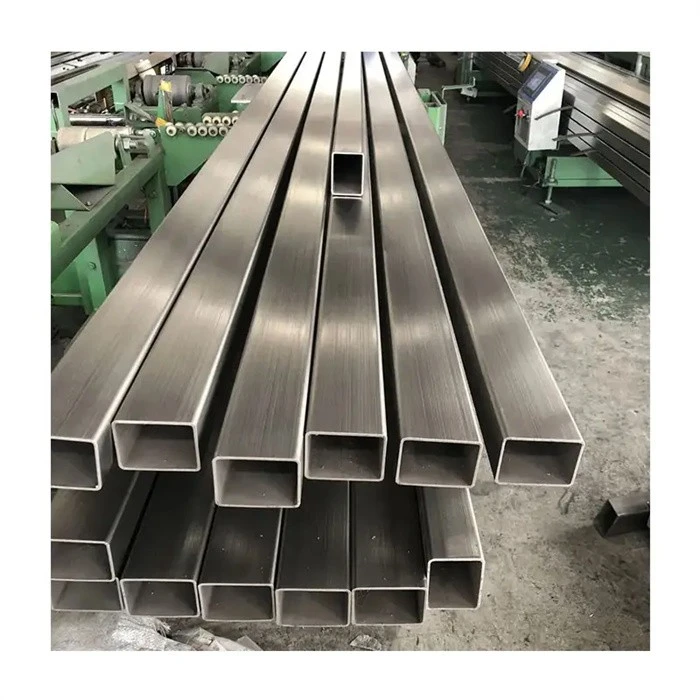
If you're unsure which stainless steel grade is best for your application, don't hesitate to consult with our technical experts. We have extensive experience in supplying stainless steel square pipes and can provide you with the guidance you need to make an informed decision. Explore our Stainless Steel Square Pipe 304 316 316L options for a wide range of grades suitable for different applications.
Conclusion
The coefficient of thermal expansion is an important property of stainless steel square pipes that can significantly impact their performance in various applications. By understanding the CTE and its influencing factors, engineers and designers can make informed decisions when selecting the right grade of stainless steel for their projects. At our company, we are committed to providing high-quality stainless steel square pipes that meet the specific requirements of our customers. Whether you're in the construction, automotive, or industrial sector, we have the expertise and products to meet your needs.
If you're interested in purchasing stainless steel square pipes or have any questions about our products, please feel free to reach out to us. We look forward to discussing your requirements and helping you find the perfect solution for your project.
References
- ASM Handbook, Volume 1: Properties and Selection: Irons, Steels, and High-Performance Alloys.
- "Stainless Steel: A Practical Guide" by George E. Totten and D. Scott MacKenzie.
- Technical literature from stainless steel manufacturers.


