AL-6XN vs. 254 SMO Stainless Steel: Key Differences & Selection Guide
Leave a message
Are you looking for AL-6XN or 254 SMO stainless steel suitable for extremely corrosive conditions? When engineers and procurement teams seek suppliers for AL-6XN or 254 SMO stainless steel piping (UNS N08367, UNS S31254, or 6Mo super austenitic stainless steel), they are typically looking for a material that can maintain performance in environments where standard 304/316L stainless steel falls short.
Many buyers face the question:Which is better, AL-6XN or 254 SMO?
Both AL-6XN (UNS N08367) and 254 SMO (UNS S31254 / EN 1.4547) belong to the 6% molybdenum (6Mo) super austenitic stainless steel family. The answer depends on the specific application environment, temperature, pressure requirements, corrosive media, and project technical specifications.
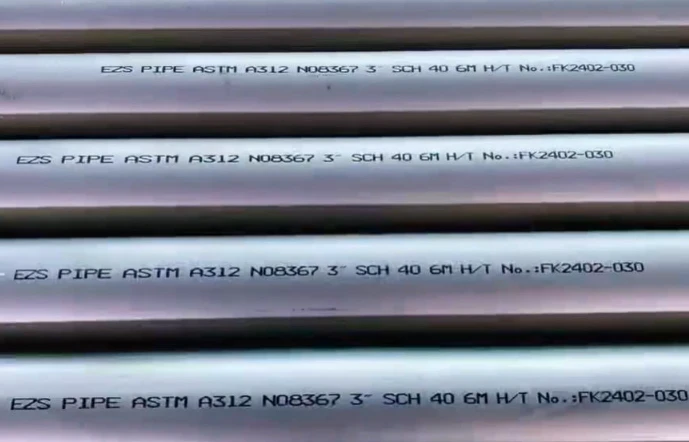
What is AL-6XN alloy?
AL-6XN® (UNS N08367) is a 6Mo super-austenitic stainless steel alloy specifically developed for environments involving extreme chloride corrosion. Its composition includes approximately 20%–22% chromium (Cr), 23.5%–25.5% nickel (Ni), 6%–7% molybdenum (Mo), and 0.18%–0.25% nitrogen (N), resulting in a Pitting Resistance Equivalent Number (PREN) of approximately 45 or higher. It exhibits excellent resistance to chloride pitting, crevice corrosion, and stress corrosion cracking, and is widely used in seawater systems, desalination plants, offshore engineering equipment, and the chemical processing industry.
What is 254 SMO stainless steel?
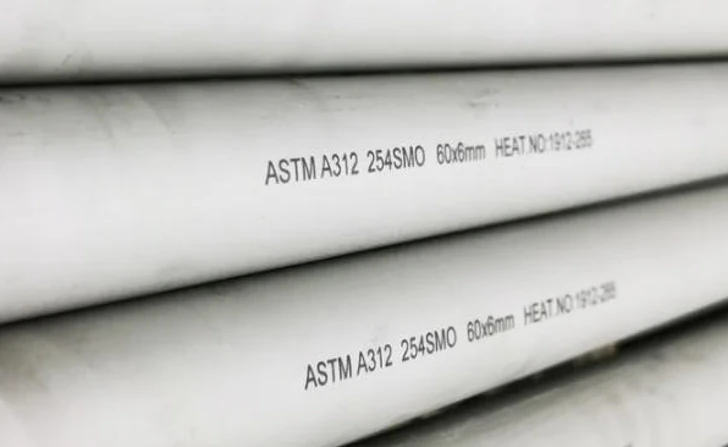
254 SMO (UNS S31254 / EN 1.4547) is a super-austenitic 6Mo stainless steel designed for highly corrosive environments where 316L stainless steel fails to provide adequate protection. It has a PREN (Pitting Resistance Equivalent Number) exceeding 42. Due to its exceptional resistance to chloride pitting, crevice corrosion, and seawater corrosion, the material is suitable for applications such as seawater desalination, marine engineering, chemical processing, flue-gas desulfurization (FGD) systems, and heat exchangers.
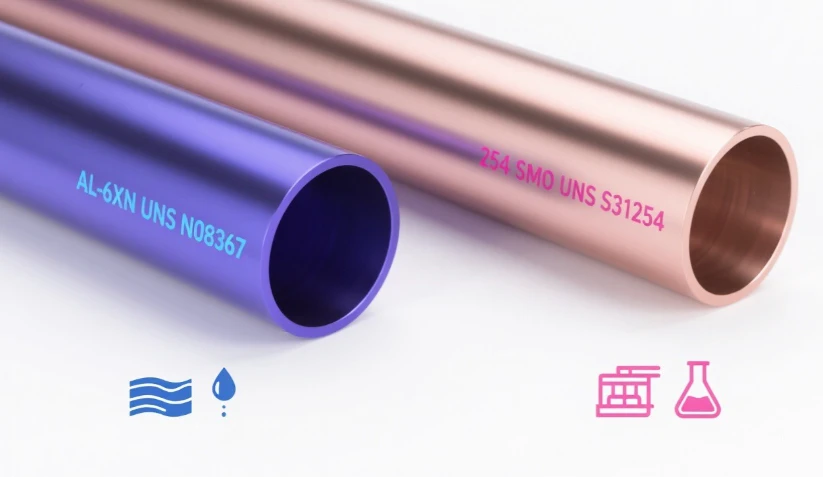
What is the main difference between AL-6XN and 254 SMO?
The main difference is nickel content: AL-6XN contains approximately 24% nickel while 254 SMO has about 18%. AL-6XN offers higher yield strength (310 MPa vs 300 MPa), better high-temperature austenite stability, superior chloride stress corrosion cracking resistance, and a slightly higher PREn (~45-48 vs ~42.5-43). 254 SMO has higher copper content (0.5-1.0% vs ~0.4%) for better reducing acid resistance and is generally 10-25% less expensive due to its lower nickel content.
What is the maximum service temperature for AL-6XN and 254 SMO?
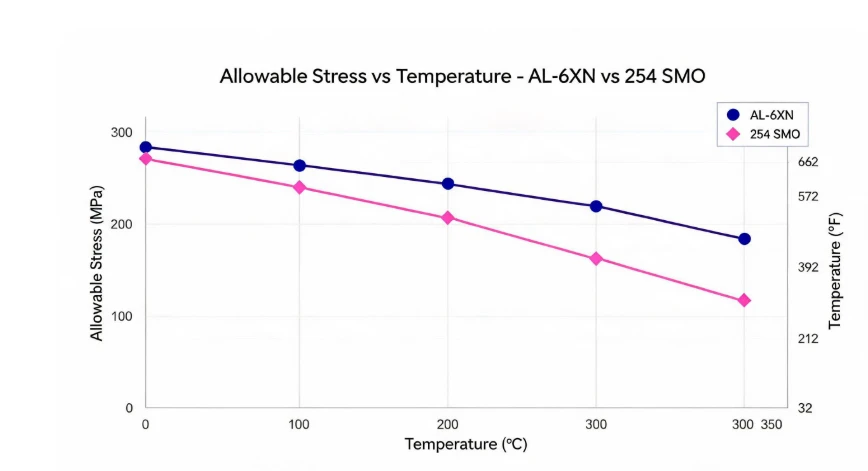
Both grades can be used at temperatures up to approximately 300-350°C (570-660°F) for continuous service in non-corrosive or mildly corrosive conditions. However, in chloride-containing environments, the maximum useful temperature is much lower - typically below 120-150°C (250-300°F) - because higher temperatures accelerate chloride stress corrosion cracking. For oxidation resistance in air, both can be used up to approximately 900°C (1650°F) intermittently, but they are rarely used for high-temperature oxidation applications. AL-6XN's higher nickel content provides slightly better stability at elevated temperatures.
Which standards apply to AL-6XN and 254 SMO?
Applicable standards for AL-6XN (UNS N08367) include ASTM B688 (plate/sheet/strip), ASTM B675/B676 (bar), ASTM B690 (welded pipe), ASTM B691 (seamless pipe), and ASTM A240/A240M. Applicable standards for 254 SMO (UNS S31254) include ASTM A240/A240M (plate/sheet/strip), ASTM A276/A479 (bar), ASTM A312 (seamless pipe), ASTM A358 (welded pipe), ASTM A182 F44 (forgings/flanges), and the European standard EN 1.4547.
AL-6XN vs. 254 SMO Stainless Steel: Chemical Composition
| Element | AL-6XN (UNS N08367) | 254 SMO (UNS S31254) |
|---|---|---|
| Carbon (C) | ≤ 0.03% | ≤ 0.02% |
| Manganese (Mn) | ≤ 2.0% | ≤ 1.0% |
| Silicon (Si) | ≤ 1.0% | ≤ 0.8% |
| Phosphorus (P) | ≤ 0.04% | ≤ 0.03% |
| Sulfur (S) | ≤ 0.03% | ≤ 0.01% |
| Chromium (Cr) | 20.0 – 22.0% | 19.5 – 20.5% |
| Nickel (Ni) | 23.5 – 25.5% | 17.5 – 18.5% |
| Molybdenum (Mo) | 6.0 – 7.0% | 6.0 – 6.5% |
| Copper (Cu) | ≤ 0.75% (nominally ~0.4%) | 0.5 – 1.0% |
| Nitrogen (N) | 0.18 – 0.25% | 0.18 – 0.22% |
PREn Formula: Pitting Resistance Equivalent Number = %Cr + 3.3 × %Mo + 16 × %N
AL-6XN: ~21 + 3.3×6.5 + 16×0.22 = 21 + 21.45 + 3.52 = ~45.97
254 SMO: ~20 + 3.3×6.25 + 16×0.20 = 20 + 20.625 + 3.2 = ~43.83
AL-6XN vs. 254 SMO Stainless Steel:Mechanical Properties
| Property (Annealed, Room Temp) | AL-6XN (N08367) | 254 SMO (S31254) | 316L (for Reference) | Test Method |
|---|---|---|---|---|
| 0.2% Yield Strength (min) | 310 MPa (45 ksi) | 300 MPa (43 ksi) | 170 MPa (25 ksi) | ASTM E8 / EN ISO 6892 |
| Tensile Strength (min) | 690 MPa (100 ksi) | 650 MPa (94 ksi) | 485 MPa (70 ksi) | ASTM E8 / EN ISO 6892 |
| Elongation (min) | 30% | 35% | 40% | ASTM E8 |
| Hardness (max) | 100 HRB / 220 HB | 96 HRB / 210 HB | 95 HRB | ASTM E18 / E10 |
| Modulus of Elasticity | ~200 GPa | ~196 GPa | 193 GPa | - |
| Poisson's Ratio | ~0.30 | ~0.30 | 0.30 | - |
AL-6XN vs. 254 SMO Stainless Steel:Physical Properties
| Physical Property | AL-6XN | 254 SMO |
|---|---|---|
| Density | 8.0 g/cm³ (0.289 lb/in³) | 8.0 g/cm³ (0.289 lb/in³) |
| Melting Point Range | 1370 – 1400°C (2500 – 2550°F) | 1320 – 1390°C (2410 – 2530°F) |
| Thermal Expansion (20–100°C) | 15.3 × 10⁻⁶/°C | 15.2 × 10⁻⁶/°C |
| Thermal Conductivity (100°C) | ~12.5 W/m·K | ~13.0 W/m·K |
| Specific Heat Capacity | ~450 J/kg·K | ~450 J/kg·K |
| Electrical Resistivity | ~0.85 μΩ·m | ~0.85 μΩ·m |
AL-6XN (N08367) vs. 254 SMO (S31254) vs. 316L: Corrosion Resistance
| Parameter | AL-6XN (N08367) | 254SMO (S31254) | 316L |
| PREN (Cr + 3.3Mo + 16N) | ~44 – 47 | ~43 | ~24 |
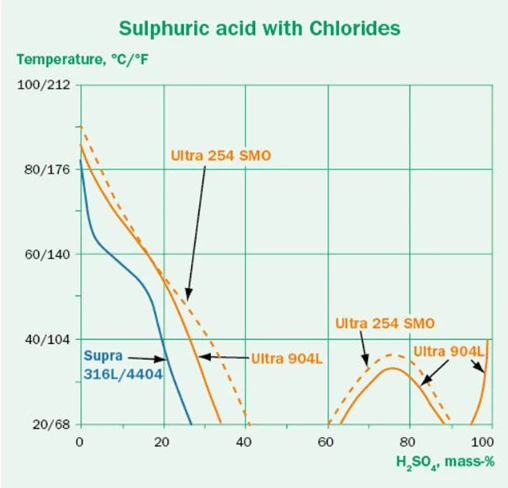
| CPT (Critical Pitting Temp, 3.5% NaCl) | 78°C (172°F) | 50°C (122°F) | ~25°C |
| CCCT (Crevice Corrosion Temp) | 54°C (130°F) | ~35°C (95°F) | ~10°C |
| Cl-SCC Resistance (60°C, 6% NaCl) | Excellent | Very Good | Poor |
Are AL-6XN and 254 SMO magnetic?
No, both AL-6XN and 254 SMO are essentially non-magnetic in the annealed condition, with relative magnetic permeability close to 1.0 (typically μr < 1.01). This is because both grades have a fully austenitic microstructure (FCC crystal structure), which is non-magnetic. Cold working can induce some martensite formation and increase magnetism, but both grades have sufficient nickel and nitrogen to maintain a stable austenitic structure during most fabrication operations.
How does the cost of AL-6XN compare to 254 SMO?
AL-6XN is generally 10-25% more expensive than 254 SMO. The primary reason is AL-6XN's higher nickel content (24% vs 18%), and nickel is one of the most expensive alloying elements in stainless steel. Both grades are significantly more expensive than standard 304 and 316L - typically 4-7 times the cost of 316L depending on market conditions. Because both grades are heavily tied to nickel and molybdenum prices, their costs fluctuate with commodity markets.
AL-6XN vs 254 SMO: Application Selection Guide
| Application | Recommended Material |
|---|---|
| Offshore seawater piping | AL-6XN / 254 SMO |
| Desalination equipment | AL-6XN |
| FGD scrubber systems | 254 SMO |
| Chemical processing | 254 SMO / AL-6XN |
| Marine heat exchanger | AL-6XN |
| General seawater equipment | 254 SMO |
Selection Summary
• Choose AL-6XN if your system operates at slightly higher temperatures (up to 800°F) or requires maximum resistance to chloride stress cracking and high-purity sanitary fabrication.
• Choose 254 SMO if you need robust seawater/chloride protection with a slight edge in specific reducing-acid environments or a more cost-effective 6Mo option.
If you can share your operating temperature, fluid composition (chlorides/acids), and product form needed (pipe, plate, or fittings), I can help you pick the exact grade and weld filler metal.
AL-6XN / 254 SMO Stainless Steel Suppliers
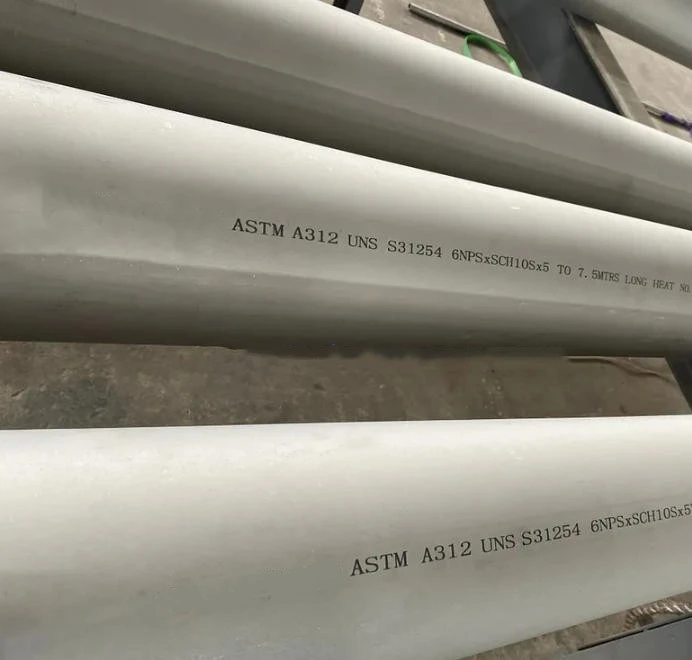
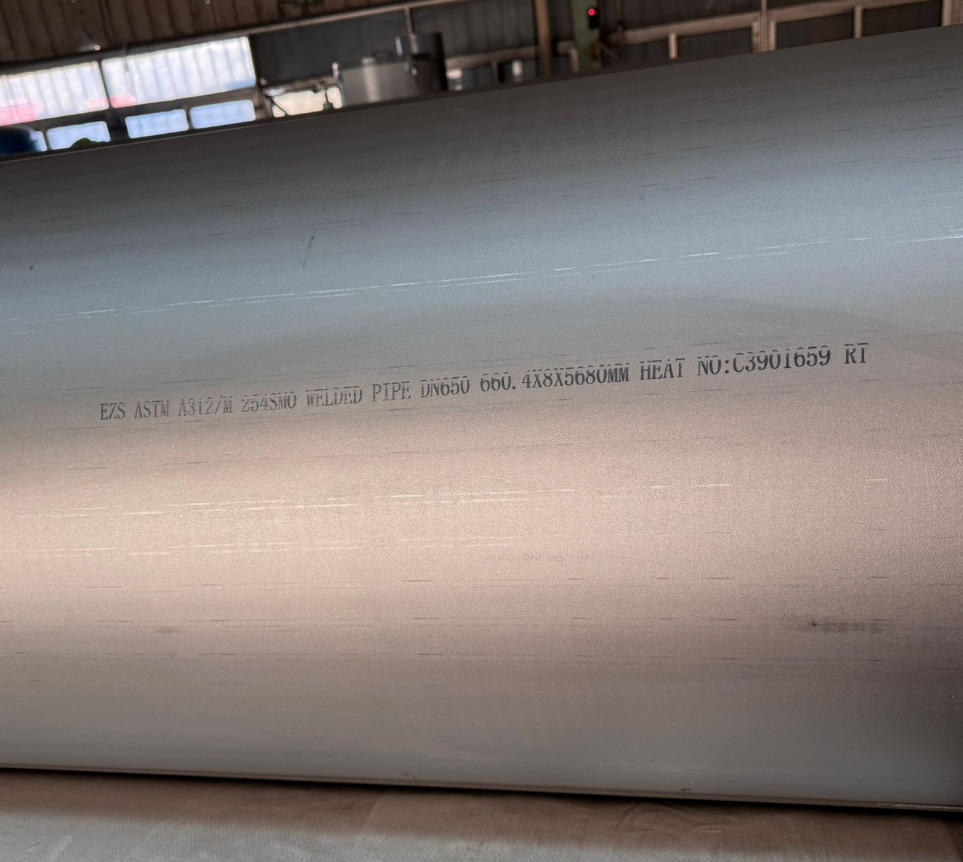
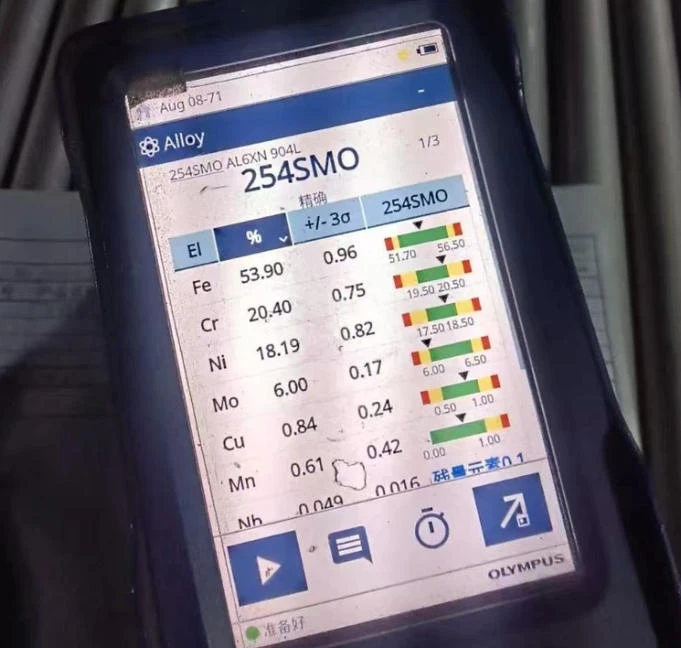
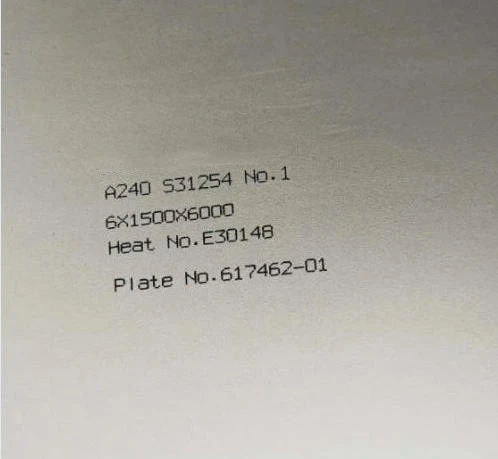
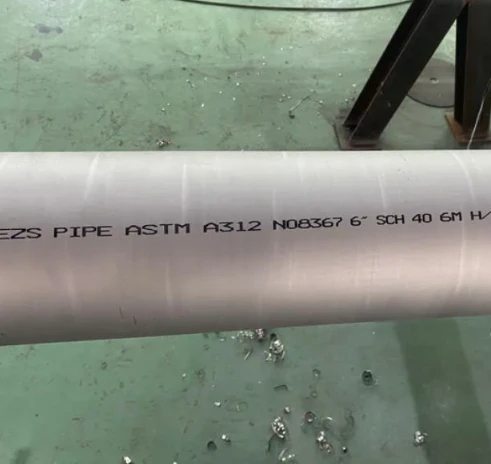
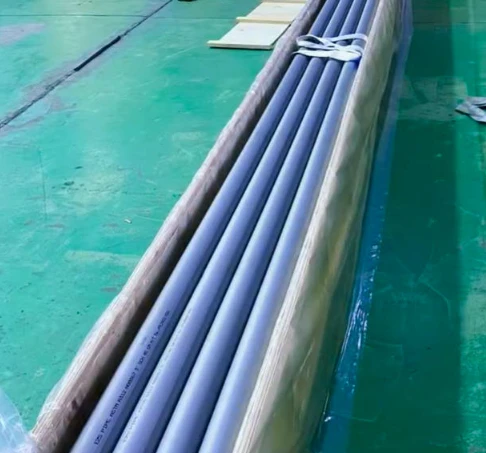
GNEE can provide both 254SMO (UNS S31254 / EN 1.4547) and AL-6XN (UNS N08367) products with full traceability, including heat number identification, chemical composition reports, mechanical testing, PMI verification, and third-party inspection support (SGS/BV/TÜV) according to project requirements.
Supply Capability
| Category | 254SMO (UNS S31254) | AL-6XN (UNS N08367) |
|---|---|---|
| Product Forms | Seamless Pipe, Welded Pipe, Heat Exchanger Tube, Plate, Bar, Flanges, Pipe Fittings | Seamless Pipe, Welded Pipe, Plate, Bar, Pipe Fittings |
| Applicable Standards | ASTM A312 / A213 / A240 / A269; EN 10216-5 | ASTM B688 / A312 / A240 / B675 |
| Material Certification | EN 10204 3.1 / 3.2 MTC + PMI Testing | EN 10204 3.1 / 3.2 MTC + PMI Testing |
| Stock Availability | Regular stock available (Seamless Pipe: 1/2"–8"; Plate: 3–20 mm) | Mainly available by order (Typical lead time: 45–60 days) |
| Delivery Time | Stock materials: 7–15 days; Customized production: 30–45 days | Approximately 45–60 days |
| Custom Processing Services | Cutting, Beveling, Pipe Bending, Pickling & Passivation, Internal Polishing | Cutting, Beveling, Pickling & Passivation |
How to Get a Quote?
Please provide the following information, and GNEE will reply within 24 hours with a technical and commercial quotation:
| Required Information | Example |
|---|---|
| Material Grade | 254SMO / AL-6XN |
| Product Form | Seamless Pipe / Welded Pipe / Plate / Pipe Fittings |
| Dimensions | Φ114.3 × 6.02 mm / Plate 10 × 1500 × 6000 mm |
| Applicable Standard | ASTM A312 TP31254 / ASTM B688 N08367 |
| Quantity | 30 Tons |
| Service Conditions | Seawater, 60°C, Flow Velocity 2 m/s |
| Destination Port | Jebel Ali, UAE |
To ensure an accurate quotation, please provide the application environment, pressure requirements, temperature, and corrosion conditions whenever possible. GNEE can recommend the most suitable material grade, product specification, and inspection requirements based on your project needs.