


SUS 430 Stainless Steel Foil (HD Finish)
Leave a message
If you are looking for stainless steel foil for applications in automotive components, electronic shielding, home appliances, decorative trim, or precision manufacturing, SUS430 stainless steel foil is an excellent choice.
What Is SUS 430 Stainless Steel Foil (HD Finish)?
SUS430 is a ferritic chromium stainless steel with a chromium content of 16%–18%, offering good corrosion resistance and dimensional stability. Its HD (High Definition/High Finish) surface treatment yields a smoother, more uniform surface, making it ideal for applications requiring a high-quality aesthetic finish or precision performance.
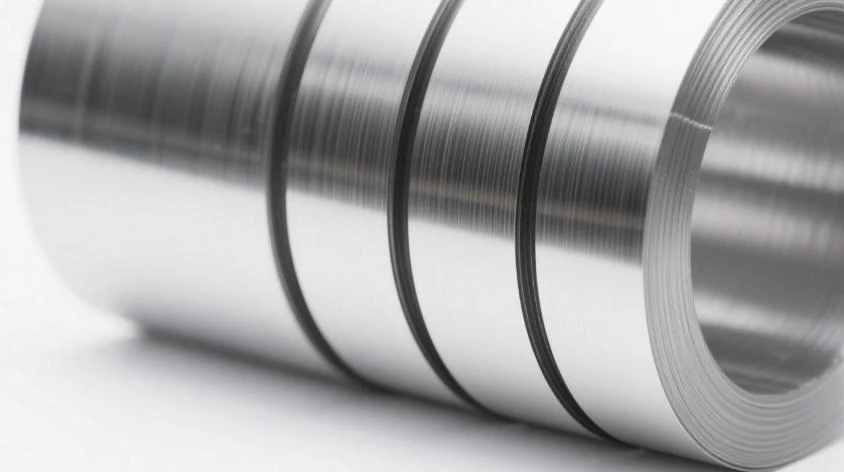
What is an "HD Finish"?
HD finish (Hairline Drawing finish) is a directional brushed surface finish produced by continuous grinding with abrasive belts along the rolling direction. It creates fine, parallel hairline-like textures on the surface with typical Ra values of 0.1-0.5 μm. Also called hairline (HL) finish in JIS terminology, it is commonly used for decorative applications, appliances, and architectural panels due to its premium appearance and ability to hide fingerprints and minor scratches.
Chemical Composition (JIS G4305 / ASTM A240)
Note: The "Ni ≤ 0.60%" in JIS is a residual limit, not an intentional addition. In practice, most 430 foil contains < 0.3% Ni from the melting process.
| Element | JIS SUS 430 | ASTM A240 Type 430 |
| C (Carbon) | ≤ 0.12% | ≤ 0.08% |
| Si (Silicon) | ≤ 0.75% | ≤ 1.00% |
| Mn (Manganese) | ≤ 1.00% | ≤ 1.00% |
| P (Phosphorus) | ≤ 0.040% | ≤ 0.040% |
| S (Sulfur) | ≤ 0.030% | ≤ 0.030% |
| Cr (Chromium) | 16.0 – 18.0% | 16.0 – 18.0% |
| Ni (Nickel) | ≤ 0.60% (residual) | ≤ 0.75% (residual) |
| Fe (Iron) | Balance | Balance |
Mechanical Properties (Annealed / Soft Condition)
SUS 430 foil mechanical properties depend on temper condition (annealed, quarter-hard, half-hard, full-hard, etc.) and foil thickness. Thinner foils generally have higher strength due to the cold working involved in rolling to thin gauges.
| Property | Annealed (Soft) | 1/4 Hard | 1/2 Hard | Full Hard | Test Standard |
|---|---|---|---|---|---|
| Tensile Strength (MPa) | 450 – 600 | 550 – 700 | 650 – 800 | ≥ 750 | JIS Z 2241 |
| Yield Strength (MPa) | 205 – 300 | 350 – 450 | 450 – 550 | ≥ 550 | JIS Z 2241 |
| Elongation (%) | ≥ 22 | ≥ 12 | ≥ 6 | ≥ 3 | JIS Z 2241 |
| Hardness (HV) | 150 – 180 | 180 – 220 | 220 – 280 | ≥ 280 | JIS Z 2244 |
| Formability | Excellent | Good | Moderate | Poor (for bending only) | - |
430 Foil Thickness & Size Specifications
Stainless steel foil is generally defined as material with thickness < 0.2 mm (0.008 in). SUS 430 foil is produced in a wide range of thicknesses and widths for various applications.
Standard Foil Thickness Range
| Thickness (mm) | Thickness (in) | Gauge (AWG) | Typical Application |
|---|---|---|---|
| 0.02 | 0.0008 | 34 | Ultra-thin: EMI shielding, flexible heaters |
| 0.03 | 0.0012 | 32 | Very thin: electronics, packaging |
| 0.05 | 0.0020 | 30 | Thin: nameplates, shims, gaskets |
| 0.08 | 0.0031 | 28 | Standard foil: decorative trim, stamping |
| 0.10 | 0.0039 | 26 | Common: kitchenware, automotive trim |
| 0.15 | 0.0059 | 25 | Heavy foil: deep drawing, structural |
| 0.20 | 0.0079 | 24 | Thickest foil / thinnest sheet: general purpose |
Coil & Width Specifications
| Parameter | Standard Range | Custom Range |
|---|---|---|
| Foil Width | 10 mm – 600 mm | Up to 1250 mm (special order) |
| Coil Inner Diameter | 76 mm (3") / 152 mm (6") | 300 mm (12") for large coils |
| Coil Outer Diameter | 300 – 600 mm | Up to 1000 mm |
| Coil Weight | 5 – 200 kg | Up to 1000 kg |
| Width Tolerance | ± 0.05 mm (slit) | ± 0.02 mm (precision) |
| Thickness Tolerance | ± 10% | ± 5% (premium grade) |
HD Finish vs. Other Common Finishes
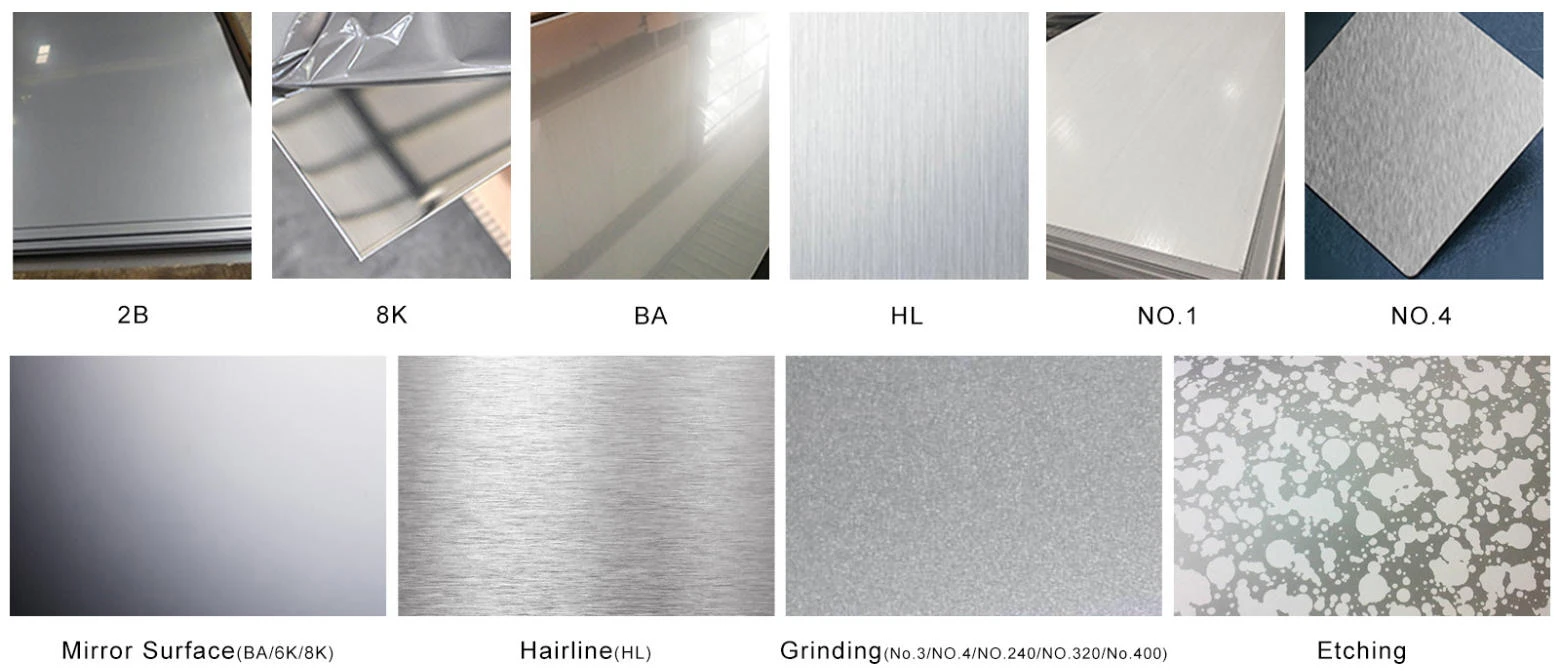
| Finish Code | Process | Surface Character | Typical Use |
| HD | Precision cold roll → anneal → skin pass | Uniform, bright, defect-free; Ra 0.1–0.5 μm | Appliance panels, PVD coating substrate, high-end consumer products |
| 2B | Cold roll → anneal → skin pass (standard) | Slightly matte, light reflection; Ra 0.4–0.8 μm | General appliance interiors, kitchenware |
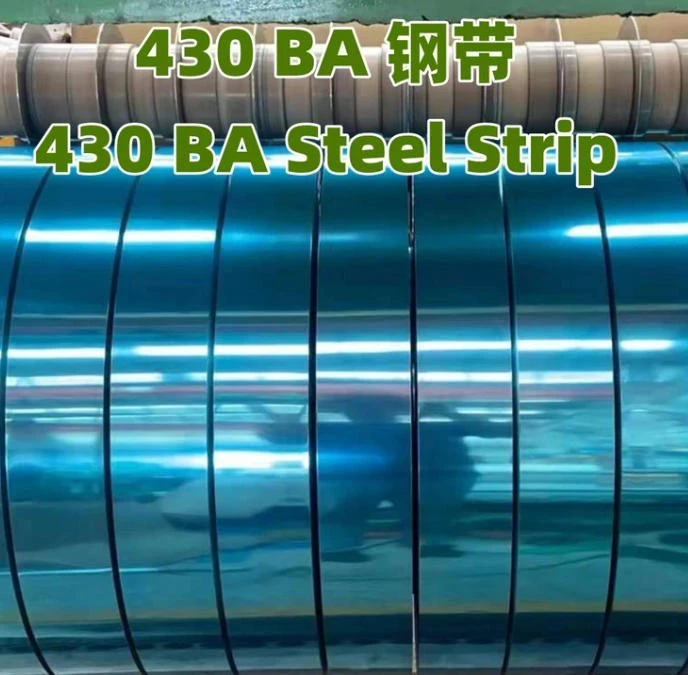
| BA (Bright Annealed) | Cold roll → anneal in protective atmosphere | Mirror-like, highly reflective; Ra < 0.1 μm | Premium appliance exteriors, decorative |
| No.4 (Brushed) | 2B → abrasive belt finishing | Directional grain, satin appearance | Range hoods, oven doors |
| No.1 (Hot Rolled) | Hot roll → descale/pickle | Rough, matte, visible scale pattern | Industrial, non-visible surfaces |
If you are looking for a specific application, could you tell me:
• What thickness or gauge do you need?
• What environment will the foil face (high heat, chemicals, or moisture)?
430 Folis HD Finish Manufacturing Process
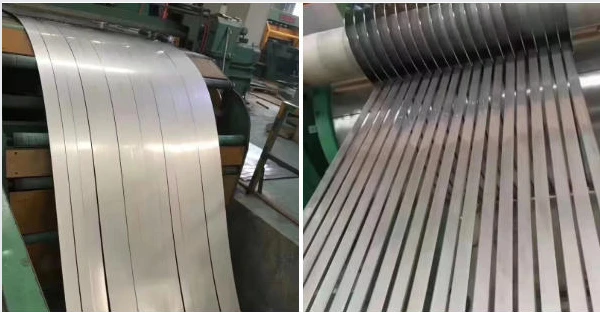
Base Material Preparation: Start with a 2B or BA finish foil as the base material. The surface must be flat and free of defects before brushing.
First Pass (Coarse Grit): Initial grinding with a coarser abrasive belt (typically 120–180#) to establish the basic hairline pattern and remove surface imperfections.
Second Pass (Finer Grit): Secondary grinding with a finer belt (220–320#) to refine the lines, reduce surface roughness, and produce the final hairline texture.
Cleaning & Degreasing: Thorough cleaning to remove grinding debris, abrasive particles, and residual oil from the surface.
Quality Inspection: Visual inspection for line uniformity, surface defects, and roughness measurement (Ra) using a profilometer.
Protective Film Application: Application of a peel-off protective film (typically PE or PVC) to prevent scratching during handling and fabrication.
Applications of SUS 430 HD Foil
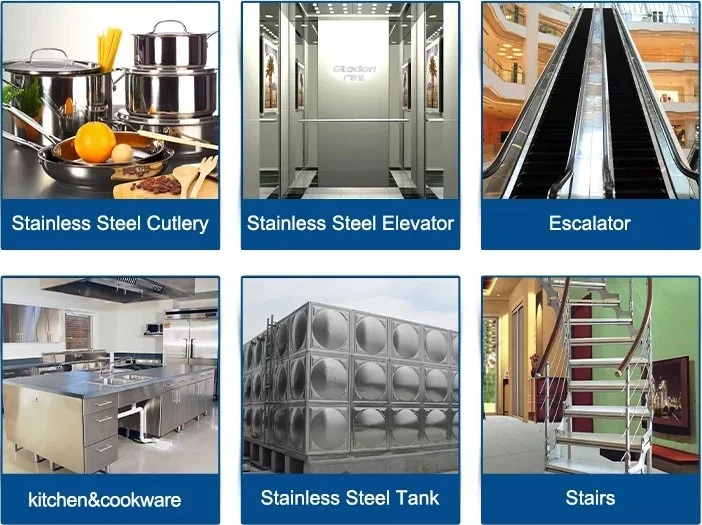
| Industry | Specific Applications |
| Home Appliances | Oven liners, refrigerator door panels, dishwasher interiors, range hood linings, microwave cavities, washing machine drums |
| Automotive | Interior trim panels, exhaust heat shields, sensor housings, decorative accents |
| Architecture | Elevator panels, interior cladding, handrails, decorative screens |
| Electronics | EMI/RFI shielding, battery casing, heat sinks, connector shells |
| Food Equipment | Baking trays, conveyor belts (non-critical), food storage lids |
| Consumer Products | Smartphone frames (interior), laptop chassis (interior), speaker enclosures |
SUS 430 Stainless Steel Foil (HD Finish) Supplier
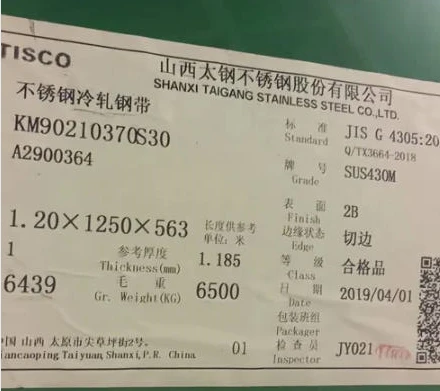
GNEE supplies SUS430 Stainless Steel Foil with precision rolling technology, strict surface control and complete traceability. Each batch is supplied with EN 10204 3.1 MTC, including chemical composition, mechanical properties and heat number tracking. With experience in stainless steel export, GNEE supports customized thickness, width, HD/BA/2B surface finishes, slitting and international packaging solutions for customers worldwide.
Our Products

HS Code of 430 Stainless Steel Foil
|
HS Code |
Description |
|---|---|
|
72199000 |
SUS430 cold-rolled stainless steel foil, 0.05 mm thick, 300 mm wide |
|
72199000 |
AISI 430 stainless steel foil, 0.1 mm × 500 mm, BA surface finish |
|
72199000 |
430 stainless steel precision foil, 0.03 mm × 200 mm, slit edge |
|
72199000 |
SUS430 stainless steel foil, 0.15 mm × 600 mm, 2B finish |
|
72199000 |
AISI 430 cold-rolled stainless steel foil, 0.2 mm × 1000 mm |
|
72199000 |
430 stainless steel foil coil, 0.08 mm thick, customized width |
|
72199000 |
SUS430 HD finish stainless steel foil, precision rolled, customized dimensions |
Note: HS code classification depends on foil thickness, width, product form, processing and the importing country's tariff schedule. The codes above are indicative examples, not verified customs rulings. Confirm the applicable code with your customs broker before shipment.
AISI 430 Stainless Steel Foil Price
|
Description |
Indicative Price |
|---|---|
|
SUS430 Stainless Steel Foil, Standard Quality |
US$1,200–1,800 / Ton |
|
430 Cold-Rolled Stainless Steel Foil, 0.1–0.3 mm |
US$1,300–2,000 / Ton |
|
SUS430 BA Finish Stainless Steel Foil |
US$1,500–2,200 / Ton |
|
430 HD Finish Precision Stainless Steel Foil |
US$1,600–2,500 / Ton |
|
SUS430 Ultra-Thin Stainless Steel Foil, 0.03–0.1 mm |
US$1,800–3,000 / Ton |
|
430 Stainless Steel Foil with Slit Edges |
US$1,400–2,200 / Ton |
|
SUS430 Half-Hard Stainless Steel Foil |
US$1,400–2,200 / Ton |
|
430 Stainless Steel Foil Coil, Customized Width |
US$1,300–2,100 / Ton |
|
SUS430 Precision Foil with Customized Surface Finish |
US$1,600–2,500 / Ton |
Price note: These figures are illustrative reference ranges for drafting purposes, not verified live market quotations. Actual prices depend on chromium and raw-material costs, thickness, width, temper, surface finish, order quantity, processing fees and delivery terms. Confirm current prices with suppliers before publishing.
If you are interested in SUS430 Stainless Steel Foil (HD Finish), GNEE can support customized thickness, width, surface finish, slit-edge processing and export packaging. Contact our team with your required specifications, quantity and destination port to request a tailored quotation and material documentation.
FAQ
What standards apply to SUS 430 stainless steel foil?
The production of SUS 430 stainless steel foil adheres to several standards, including JIS G4305 (Cold-rolled stainless steel plate, sheet, and strip), ASTM A240/A240M (Chromium and chromium-nickel stainless steel plate, sheet, and strip), and EN 10088-2 (Stainless steels – Technical delivery conditions for sheet/plate and strip).
What is the thickness of 430 stainless steel foil?
Stainless steel foil is generally defined as material with a thickness of less than 0.2 mm (0.008 inches). Common thickness ranges for SUS 430 foil are 0.03 mm (0.0012 inches) to 0.2 mm (0.008 inches). For specialized applications, ultra-thin foil can be as thin as 0.015–0.02 mm.
Is SUS 430 magnetic?
Yes, SUS 430 is magnetic at room temperature due to its ferritic (BCC) microstructure. This is a key distinction from austenitic stainless steels (such as 304 and 316, which are non-magnetic).
What is the difference between 430 and 304 stainless steel?
The main differences are: 430 is a ferritic stainless steel containing 16%–18% chromium and no nickel, whereas 304 is an austenitic stainless steel containing 18%–20% chromium and 8%–10.5% nickel. 304 offers superior corrosion resistance (especially in chloride environments) and is non-magnetic. 430 is magnetic and has lower corrosion resistance, but it is significantly less expensive (typically 30%–50% cheaper). For indoor decorative applications where the corrosive environment is mild, 430 offers excellent cost-effectiveness.
Can SUS 430 foil be used outdoors?
SUS 430 is suitable for use in mild outdoor environments-such as rural or suburban areas with low pollution and no exposure to de-icing salts. However, it is not recommended for use in coastal areas with high salinity or in heavily polluted industrial environments, as surface rusting may occur over time.


