


ASTM A213 vs. ASTM A312:TP316L pipe
Leave a message
When purchasing TP316L stainless steel pipes, many buyers receive quotations based on ASTM A213 TP316L and ASTM A312 TP316L. Although both products use the same 316L stainless steel grade (UNS S31603), they are not interchangeable standards. Choosing the wrong specification can lead to installation problems, failed inspections, unnecessary costs, or project delays.
This guide explains the technical differences between ASTM A213 TP316L Tube and ASTM A312 TP316L Pipe, helping EPC contractors, heat exchanger manufacturers, refineries, and industrial buyers make the correct purchasing decision.
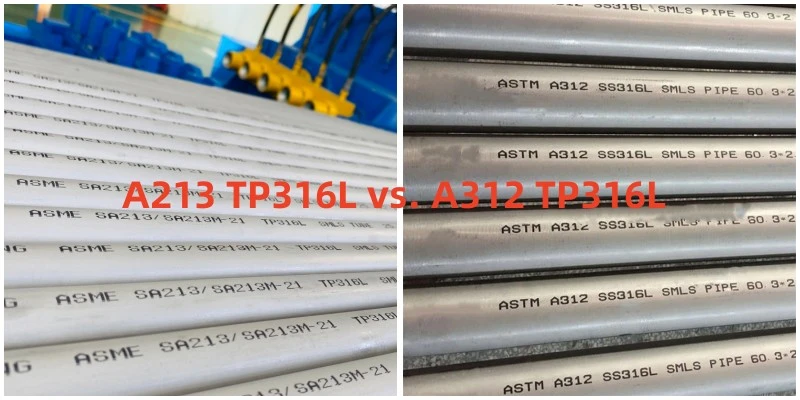
What is the difference between ASTM A213 and ASTM A312?
ASTM A213 covers seamless tubes intended for use in boilers, superheaters, and heat exchangers-specifically seamless, thin-walled tubes designed for high-temperature, high-pressure heat transfer equipment; in contrast, ASTM A312 covers seamless, welded, and cold-worked welded austenitic stainless steel pipes intended for process piping and general corrosive service.
What is the ASTM A213 TP316L material?
ASTM A213 TP316L is a standard specification for seamless austenitic stainless steel tubing intended for high-temperature and corrosive environments, such as boilers, superheaters, and heat exchangers. The "L" in the grade designation stands for "Low Carbon"; the extremely low carbon content (maximum 0.035%) enables the metal to resist sensitization, ensuring the material does not lose its corrosion resistance. Additionally, the upper limit for continuous service temperature is approximately 870°C (1,598°F).
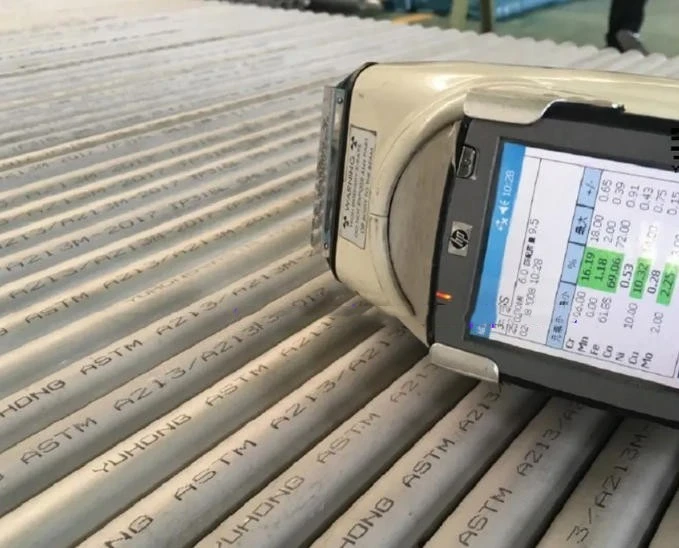

What is ASTM A312 TP 316L material?
ASTM A312 TP316L is a standard material specification for seamless, welded, and heavily cold-worked austenitic stainless steel pipes. The "L" designation stands for "Low Carbon," indicating a composition that prevents harmful carbide precipitation during welding, thereby eliminating the need for post-weld annealing. With a minimum tensile strength of 485 MPa (70,000 psi) and a minimum yield strength of 170 MPa (25,000 psi), this grade is widely used in the petrochemical, chemical processing, pharmaceutical, and marine industries.
ASTM A213 TP316L vs. ASTM A312 TP316L :Manufacturing Method
ASTM A213: Exclusively seamless. Tubes are extruded or drawn from a solid billet without any welded joints.
ASTM A312: Can be seamless, welded, or heavily cold-worked. If welded, no filler metal is added during the welding process.
ASTM A213 TP316L vs. ASTM A312 TP316L :Stainless Steel Tubes Dimensions Tolerances
| Standard | Outside Diameter Tolerance(mm) | Thickness Tolerance | Length Tolerance (mm) | |||
| ASTM A213 | D<25.4 | ±0.1 | D≤38.1 | +20%/-0% | D≤50.80 | +3/-0 |
| [25.4~38.1] | ±0.15 | |||||
| (38.1~50.8) | ±0.2 | D>38.1 | +22%/-0% | D>50.8 | +5/-0 | |
| [50.8~63.5) | ±0.25 | |||||
| [63.5~76.2) | ±0.30 | |||||
| [76.2~101.6] | ±0.38 | |||||
| (101.6~190.5] | +0.38/-0.64 | |||||
| (190.5~228.6] | +0.38/-1.14 | |||||
| ASTM A312 |
[10.29~48.26] | +0.4/-0.8 | 10.3~73 | +20% / -12.5% | +6/-0 | |
| 88.9~457 T/D≤5% | +22.5%/-12.5% | |||||
| (48.26~114.30] | ±0.80 | 88.9~457 T/D>5% | +15%/-12.5% | |||
| (114.30~219.08] | +1.6/-0.8 | 508above T/D<5% | +22.5%/-12.5% | |||
| (219.08~457.20] | +2.4/-0.8 | 508above T/D>5% | +15%/-12.5% | |||
ASTM A213 TP316L vs. ASTM A312 TP316L :Testing Requirements
ASTM A213: Requires specific heat-transfer and tube-focused mechanical testing, such as flaring, flattening, and hardness tests, plus mandatory hydrostatic or non-destructive electrical testing.
ASTM A312: Requires pipe-oriented tests like transverse or longitudinal tension tests, flattening tests, and hydrostatic or electric testing.
ASTM A213 TP316L vs. ASTM A312 TP316L :Hardness
ASTM A213 specifies a maximum hardness limit (192 HBW / 90 HRB) to ensure the forming performance and resistance to stress corrosion cracking of the tubing in boiler applications. ASTM A312 generally does not set a mandatory maximum hardness limit for TP316L material.
ASTM A213 TP316L vs. ASTM A312 TP316L: Applications
ASTM A213 TP316L steel pipe should be selected for heat transfer equipment (such as boilers and heat exchangers) requiring seamless construction and precise outside diameter (OD) and wall thickness dimensions; ASTM A312 TP316L steel pipe should be selected for general fluid and gas transport in piping systems based on Nominal Pipe Size (NPS) and wall thickness schedule standards.
To help narrow down your specification, could you tell me:What specific fluid or gas are you transporting or heating?What are the operating temperature and pressure ranges of your system?Is this for an ASME-certified boiler/pressure vessel or a standard industrial piping run?
ASTM A213 / ASTM A312 TP316L Pipe Supplier and Manufacturer
We utilize high-quality mother pipes or billets sourced from top-tier steel mills (such as Tsingshan, TISCO, and Baosteel) to ensure stable chemical composition (Ni: 10–14%, Mo: 2–3%) and offer a range of surface finishes: annealed and pickled (AP), bright annealed (BA), or mechanically polished (grit 180–600).
ASTM A213 / ASTM A312 TP316L Pipe Specification
| ASTM A213 Tubes | ASTM A312 Pipes | |
| Primary Form | Seamless Tubing | Seamless & Welded Piping |
| Manufacturing Methods | Seamless (Hot-finished or Cold-drawn) | Seamless (SMLS), Welded (WLD), or Heavily Cold Worked (HCW) |
| Standard Shapes | Straight Tubes, U-Bent Tubes (for Heat Exchangers) | Straight Pipes |
| End Finishes | Plain Ends, Square Cut (usually for tube sheet expansion) | Plain Ends (PE), Beveled Ends (BE) for welding, or Threaded Ends (TE) |
| Surface Finishes | Annealed & Pickled (AP), Bright Annealed (BA), or Polished (Grit 180, 240, 320, 400) | Annealed & Pickled (AP), Passivated, or Mill Finish |
| Heat Treatment | Solution Annealed & Quenched (Mandatory) | Solution Annealed & Quenched (Mandatory) |


Furthermore, we provide comprehensive documentation-including Mill Test Certificates (MTC) compliant with EN 10204 3.1 or 3.2 standards-enabling full traceability from the heat number to the final product.

High-quality sea freight packaging
End Protection: Each pipe is fitted with plastic end caps (open or closed type) to prevent internal contamination and damage to the end edges.
Surface Protection: Pipes can be individually sleeved in plastic film or bundled in a hexagonal shape and wrapped in woven bags to prevent surface scratches during loading.
Wooden Case Packaging: Plywood or solid wood cases are used-suitable for LCL shipments or high-precision A213 pipes-to ensure no deformation occurs during transit.
Marking/Labeling: Each pipe bears clear inkjet markings (standard, steel grade, specifications, heat number), and outer packaging displays waterproof shipping marks.


