ASTM A276 Stainless Steel Bars: Specification Guide
Leave a message
What Is ASTM A276?
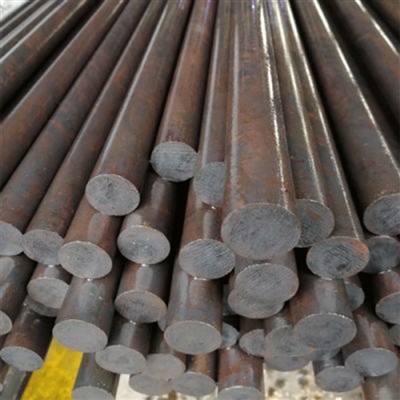
ASTM A276/A276M is the Standard Specification for Stainless Steel Bars and Shapes. It applies to hot-finished or cold-finished bars in round, square, hexagonal and flat cross-sections, produced from stainless grades across the austenitic, ferritic, martensitic and duplex families. The standard defines, for each grade, the chemical composition, the required heat-treatment condition (where applicable), tensile and yield strength, elongation and hardness, plus dimensional tolerances and marking requirements. Bars supplied to A276 are intended for structural, mechanical and general-purpose use, not for pressure-vessel internals. Bars for forging or re-forging, and free-machining grades, are excluded from A276: free-machining stainless bars are covered by ASTM A582, and pressure-service bars by ASTM A479.
Grades Covered by ASTM A276
A276 lists dozens of grades; the most commonly specified include:
Austenitic: 304, 304L, 316, 316L, 321, 310S, 317L, 347 - general corrosion service, shafts, structural members.
Ferritic: 430, 446 - magnetic components, mild environments, heat-resisting parts.
Martensitic: 410, 420, 440A/440B/440C - hardenable bars for shafts, valve trim, cutlery and bearings.
Duplex: UNS S31803, S32205, S32750 - high-strength bars for chloride and seawater service.
Precipitation-hardening and high-alloy grades are covered where listed, e.g., 17-4PH (S17400).
Chemical Composition Example: UNS S31803
UNS S31803 is a duplex stainless steel with a mixed austenite-ferrite structure. Its composition per ASTM A276:
| Element | Range (weight %) |
|---|---|
| Carbon | ≤0.03 |
| Chromium | 21.0-23.0 |
| Nickel | 4.5-6.5 |
| Molybdenum | 2.5-3.5 |
| Nitrogen | 0.08-0.20 |
| Manganese | ≤2.00 |
| Silicon | ≤1.00 |
Mechanical Properties of A276 Bars
Typical minimum requirements for S31803 duplex bar in the solution-annealed condition:
| Property | Minimum value |
|---|---|
| Tensile strength | 620 MPa (90 ksi) |
| Yield strength (0.2% offset) | 450 MPa (65 ksi) |
| Elongation in 50 mm | 25% |
For comparison, annealed 304 bar requires 515 MPa tensile and 205 MPa yield, which is why duplex S31803 is chosen where design strength drives section size. Heat treatment for duplex grades is solution annealing followed by water quenching, and the A276 edition in force must be stated in the purchase order because requirements evolve between revisions.
ASTM A276 vs ASTM A479
| Feature | ASTM A276 | ASTM A479 |
|---|---|---|
| Product forms | Bars and shapes | Bars, forgings and wire |
| Typical application | Structural, mechanical, general | Pressure vessels, heat exchangers, boiler internals |
| Heat treatment | Condition-dependent, often optional | Mandatory for many grades |
| Testing and documentation | Standard mechanical tests | Code-grade testing, tighter traceability |
| ASME counterpart | None (SA-479 exists) | ASME SA-479 adopted for code work |
If the bar will be machined into a pressure-containing or high-temperature component, ASTM A479 (or SA-479) is the appropriate specification; A276 remains correct for structural, mechanical and general-purpose bar.
Equivalents for A276 S31803
EN 10088-3: 1.4462 (X2CrNiMoN22-5-3), the European bar equivalent.
UNS S32205: the refined duplex grade with tighter composition control, often dual certified with S31803.
DIN designation X2CrNiMoN22-5-3 (historical German designation of 1.4462).
AFNOR Z2CND22.05Az (French designation).
ISO 15510: 22Cr-5Ni duplex family; the ISO designation system maps to the same chemistry.
GB/T 1220: 022Cr22Ni5Mo3N, the Chinese bar equivalent in the duplex family.
Common Misconceptions
"A276 covers all stainless bars." It excludes forging stock, free-machining grades (ASTM A582) and pressure-service bars (ASTM A479); check the end use before ordering.
"A276 and A479 bars are interchangeable." They share many grades, but A479 adds mandatory heat treatment and code-grade traceability; substituting A276 in pressure service risks non-compliance.
"Duplex S31803 and S32205 are the same." S32205 tightens the composition windows and is generally considered the refined version; many mills dual certify bars to both.
"Hardness is the only acceptance criterion for A276." Each grade has specific tensile, yield, elongation and heat-treatment requirements; hardness alone does not certify the bar.
"All A276 304 bar is identical." Diameter tolerance, straightness, surface condition (black, bright, peeled, ground) and heat-treatment condition are all specified separately and affect both price and machining.
FAQ
What shapes does ASTM A276 cover?
Round, square, hexagonal and flat bars, in hot-finished or cold-finished condition. It does not cover wire, sheet, plate or tube, which fall under their own ASTM specifications.
Is ASTM A276 the same as ASME SA-276?
There is no SA-276 for general structural bars; the ASME code edition applies to pressure-service bar as SA-479. For non-code applications, A276 is the governing document.
Which A276 grade should I use for a high-strength seawater shaft?
Duplex UNS S31803/S32205 gives roughly double the yield strength of 304 with strong chloride stress-corrosion resistance; for higher loads or deeper immersion, super duplex S32750 is the next step.
Can 440C bar be supplied to A276?
Yes. 440C (UNS S44004) is listed in A276 with its chemistry and mechanical requirements; the bar is typically supplied annealed and hardened later during component manufacture.
How is duplex bar heat treated?
Solution annealing in the range of 1020-1100°C followed by rapid cooling (water quench) is required to preserve the balanced austenite-ferrite structure and corrosion resistance; slow cooling must be avoided.
What documentation should accompany A276 bars?
A mill test certificate per EN 10204 3.1 showing heat number, chemical analysis, mechanical test results, heat-treatment condition and the A276 edition, plus surface condition and dimensional inspection records.