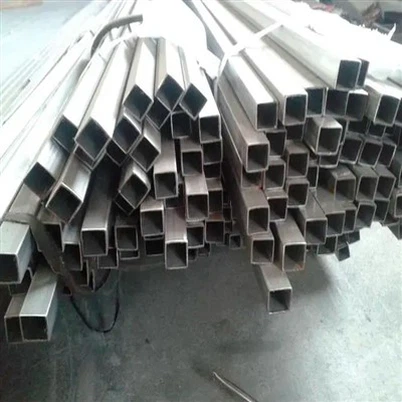
Is SS 316 better than SS 409 for exhaust pipes?
Leave a message
When selecting materials for automotive exhaust systems, buyers often ask:"Is stainless steel 316 better than 409 for exhaust pipes?"The short answer is: it depends on the application. While SS316 offers excellent corrosion resistance, SS409 is specifically designed for cost-effective, high-temperature automotive environments. This guide compares both materials to help you make the right sourcing decision.
SS 316 vs. SS 409: Which Is Better for Exhaust Pipes?
Corrosion Resistance:
316 stainless steel pipe contains molybdenum, which significantly improves the resistance to chloride, salt spray and pitting corrosion, and is suitable for coastal areas, saline road environments, ship vehicles and harsh chemical environments. While SS 409 pipe has lower corrosion resistance and may develop surface rust over time, it will form a protective oxide layer to prevent corrosion.
Heat resistance:
409 ferritic stainless steel, continuous use temperature 650℃ (intermittent 815℃), tensile strength drops to 183MPa at 800℃, thermal expansion coefficient 12.6×10⁻⁶/℃.
316 austenitic steel can work continuously at 870℃ (intermittent 925℃), tensile strength below 871℃ is 515-720MPa, thermal expansion coefficient reaches 16.3-21.5×10⁻⁶/℃.
Cost Efficiency
SS316 stainless steel exhaust pipes are significantly more expensive - costing 2-3 times as much as 409 stainless steel. For production exhaust systems, 409 stainless steel offers the best balance between performance and cost. SS316 is better suited for high-end aftermarket, marine grade or custom systems.
SS 316 vs.SS 409 stainless steel:Chemical Composition
| Element | SS 316 (AISI 316 / 1.4401) | SS 409 (AISI 409 / 1.4512) |
|---|---|---|
| Carbon (C) | ≤ 0.08% | ≤ 0.03% |
| Chromium (Cr) | 16.0 – 18.0% | 10.5 – 12.5% |
| Nickel (Ni) | 10.0 – 14.0% | ≤ 0.5% |
| Molybdenum (Mo) | 2.0 – 3.0% | - |
| Manganese (Mn) | ≤ 2.0% | ≤ 1.0% |
| Silicon (Si) | ≤ 1.0% | ≤ 1.0% |
| Nitrogen (N) | ≤ 0.10% | ≤ 0.03% |
| Titanium (Ti) | - | Stabilized (≥6×C, typically ~0.15%) |
SS 316 vs.SS 409 stainless steel:Mechanical Properties
| Property | SS 316 | SS 409 |
|---|---|---|
| Yield Strength (MPa) | ≥ 205 | ≥ 170 |
| Tensile Strength (MPa) | 515 – 690 | 380 – 550 |
| Elongation (% in 50 mm) | ≥ 40 | ≥ 20 |
| Hardness (HBW) | ≤ 217 | ≤ 200 |
| Density (g/cm³) | ~8.00 | ~7.75 |
| Thermal Expansion (μm/m·K) | 16.0 | 11.0 |
| Magnetic | Non-magnetic (austenitic) | Magnetic (ferritic) |
In summary, 409 stainless steel exhaust pipes are more suitable for withstanding repeated high-temperature start-stop conditions, especially in the mid-section exhaust pipe and muffler.
If you are looking for 409 stainless steel pipes, we can provide you with high temperature corrosion resistant materials that meet international standards and are widely used in automotive exhaust systems, industrial exhaust ducts and other fields.
we supply both SS409 stainless steel pipes for global exhaust system manufacturers. We serve OEM, aftermarket, and engineering clients in 30+ countries.
Our Advantages:
Full range of TP409 pipe stock
EN 10204 3.1 certificates & third-party inspection
Custom bending, perforation & welding