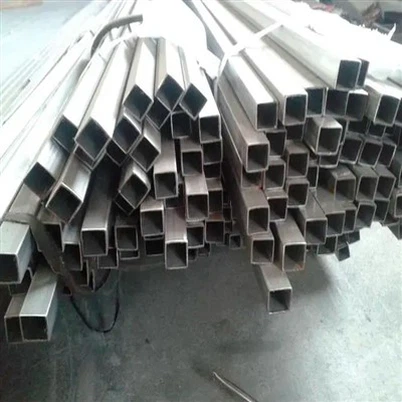
Maintenance-free for ten years! 316 stainless steel is the first choice for marine engineering!
Leave a message
I. The Ultimate Challenge in Marine Environments: Chloride Ions & High-Humidity Corrosion
Marine engineering applications-including ships, offshore platforms, and seawater desalination equipment-are exposed long-term to harsh environments characterized by high salinity (Cl⁻ ≥ 10,000 ppm), high humidity, and intense UV radiation.
Common steels (e.g., carbon steel, 304 stainless steel) are prone to chloride-induced passive film breakdown, leading to pitting, crevice corrosion, or even structural failure. In such conditions, annual maintenance costs can reach 15–20% of the initial investment.
However, 316 stainless steel (1.4401), thanks to the unique role of molybdenum (Mo), is the only material capable of delivering "10-year maintenance-free" performance.
II. The Core Technical Support Behind 316 Stainless Steel's "Maintenance-Free" Advantage
Molybdenum (Mo)–Enhanced Chloride Resistance
Contains 2–3% Mo, which, combined with 16–18% Cr and 10–14% Ni, forms a Cr₂O₃–MoO₃ composite passive film only 5–10 nm thick.
This film effectively blocks chloride ion penetration, offering over 3x the pitting resistance of 304 stainless steel (1.4301):
Pitting potential increases from +200 mV (304) to +500 mV (316), per ASTM G61 test.
In ASTM B117 salt spray tests, untreated 316 stainless steel shows no visible corrosion after 1,000 hours, compared to white rust on 304 after 500 hours and visible rust on carbon steel within 24 hours.
Structural Stability & Long-Term Durability
No intergranular corrosion risk: Low-carbon variant 316L (1.4404) contains ≤0.03% carbon, preventing Cr carbide precipitation in heat-affected weld zones, ensuring uniform corrosion resistance.
Excellent low-temperature toughness: In cold marine environments (e.g., polar regions, –40°C), it maintains elongation ≥40% and 5× the impact resistance of carbon steel, reducing cracking risks due to stress concentration.
III. Typical Marine Engineering Applications
| Application Scenario | Advantages of 316 Stainless Steel | Drawbacks of Traditional Materials |
|---|---|---|
| Ship Seawater Piping | Seawater corrosion resistance; no internal coating required; 10+ years leak-free | Carbon steel requires yearly epoxy coating; 304 needs replacement every 5 years |
| Offshore Platform Frames | Salt spray and atmospheric corrosion resistance; coating-free; reduces high-altitude maintenance risk | Galvanized carbon steel fails after 5 years; requires repeated sandblasting and recoating |
| Desalination Equipment | Withstands high-salinity brine (Cl⁻ ≥ 35,000 ppm) and high-pressure; lifespan matches equipment | Common stainless steels prone to pitting at scale deposits in evaporators |
| Tidal Power Components | Resists seawater erosion and wet-dry cycling; leaves no rust residue | Anodized aluminum films fail after 3 years; frequent replacement needed |
IV. Life-Cycle Cost Comparison: Higher Upfront, Lower Long-Term
Initial Cost
316 Stainless Steel Pipes: ¥80–100/kg
Carbon Steel: ¥20/kg
304 Stainless Steel: ¥60/kg
(316 is ~4× more expensive than carbon steel, ~1.5× that of 304)
Maintenance Cost (10-Year Cycle)
Carbon Steel / 304 Stainless Steel:
Annual anti-corrosion coating maintenance (~¥15–20/m²)
10-year cumulative cost = 80–100% of initial investment
316 Stainless Steel:
Only requires initial surface passivation (<5% of total cost)
Maintenance over 10 years is virtually zero
Overall Efficiency
Using 100 meters of DN100 pipe as an example, total life-cycle cost for 316 stainless steel is:
30% lower than carbon steel
15% lower than 304 stainless steel