

How does bending affect the integrity of a perforated plate?
Leave a message

Hey there! As a supplier of perforated plates, I've seen firsthand how important it is to understand how bending affects the integrity of these plates. In this blog post, I'll share some insights on this topic based on my experience and knowledge in the industry.
First off, let's talk about what perforated plates are. Perforated plates are sheets of metal with holes punched or drilled through them. They're used in a wide range of applications, from filtration and screening to architectural and decorative purposes. Different materials can be used to make perforated plates, such as stainless steel, aluminum, and carbon steel. For example, we offer SUS 904L Stainless Steel Perforated Plate, SUS 321 Stainless Steel Perforated Plate, and 317 Stainless Steel Perforated Plate, each with its own unique properties and advantages.
Now, when it comes to bending perforated plates, things can get a bit tricky. Bending is a common process used to shape the plates into the desired form, but it can have a significant impact on the plate's integrity. The holes in the plate can weaken its structure, making it more prone to cracking, tearing, or deformation during the bending process.
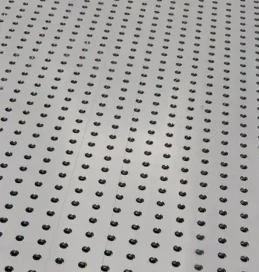
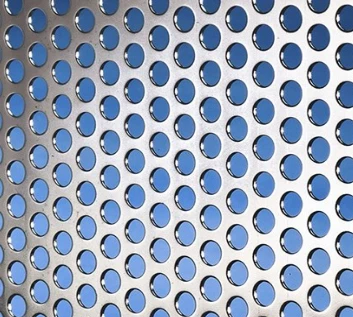
One of the key factors that affect how bending impacts the integrity of a perforated plate is the hole pattern. Plates with larger holes or a higher hole density are generally more difficult to bend without causing damage. This is because the holes create stress concentration points in the plate, which can lead to cracks forming when the plate is bent. For instance, if the holes are too close together, the material between them may not be able to withstand the stress of bending, resulting in fractures.
The material of the perforated plate also plays a crucial role. Different metals have different levels of ductility, which is the ability of a material to deform without breaking. Stainless steel, for example, is known for its good ductility, making it more suitable for bending compared to some other metals. However, even stainless steel perforated plates need to be bent carefully to avoid compromising their integrity.
Another important consideration is the bending method. There are several ways to bend perforated plates, such as press braking, roll bending, and rotary draw bending. Each method has its own set of advantages and disadvantages, and the choice of method depends on factors like the plate's thickness, the desired bend radius, and the complexity of the shape. Press braking is a common method for making simple bends, but it can put a lot of stress on the plate, especially near the holes. Roll bending, on the other hand, is more suitable for creating curved shapes, but it requires careful control to ensure that the plate doesn't get distorted.
To minimize the negative effects of bending on the integrity of a perforated plate, there are several steps that can be taken. First, it's important to carefully design the hole pattern. This may involve adjusting the hole size, spacing, and arrangement to reduce stress concentration. For example, using a staggered hole pattern can help distribute the stress more evenly across the plate.
Pre - treatment of the plate can also be beneficial. Annealing, a heat - treatment process, can improve the ductility of the material, making it more resistant to cracking during bending. Additionally, proper lubrication during the bending process can reduce friction and stress on the plate.
Quality control is essential throughout the bending process. Regular inspections should be carried out to check for any signs of damage, such as cracks or excessive deformation. Non - destructive testing methods, like ultrasonic testing or dye penetrant inspection, can be used to detect hidden flaws in the plate.
In some cases, it may be necessary to reinforce the perforated plate before bending. This can be done by adding stiffeners or using a backing plate. Stiffeners can help distribute the stress of bending more evenly, while a backing plate can provide additional support to the perforated plate.
Let's take a closer look at how these concepts apply in real - world scenarios. In the construction industry, perforated plates are often used for architectural features, such as facades or decorative screens. These plates need to be bent into various shapes to fit the design requirements. If the bending process isn't done correctly, the integrity of the plate may be compromised, leading to a shorter lifespan and potential safety issues. For example, a facade made of a perforated plate that has been bent poorly may start to develop cracks over time, which could affect its aesthetic appeal and structural stability.
In the manufacturing of filtration equipment, perforated plates are used to separate solids from liquids or gases. Bending these plates to fit into the filtration system is a common step. However, if the integrity of the plate is damaged during bending, it can lead to leaks or reduced filtration efficiency. This could result in costly repairs and downtime for the equipment.
As a perforated plate supplier, I understand the importance of providing high - quality products that can withstand the bending process without losing their integrity. That's why we work closely with our customers to understand their specific requirements and offer customized solutions. Whether it's choosing the right material, designing the optimal hole pattern, or recommending the best bending method, we're here to help.
If you're in the market for perforated plates and need them to be bent into specific shapes, don't hesitate to reach out. We have the expertise and experience to ensure that you get a product that meets your quality and performance expectations. Whether you're working on a small - scale project or a large - scale industrial application, we can provide the right perforated plates and support throughout the process. Contact us to start a discussion about your needs, and let's work together to find the best solution for your project.
In conclusion, bending a perforated plate is a complex process that requires careful consideration of many factors to maintain the plate's integrity. By understanding the impact of hole pattern, material, bending method, and taking appropriate measures to minimize damage, we can ensure that the perforated plates perform well in their intended applications.
References
- "Metals Handbook: Properties and Selection: Irons, Steels, and High - Performance Alloys", ASM International
- "Manufacturing Engineering & Technology", Serope Kalpakjian and Steven Schmid


