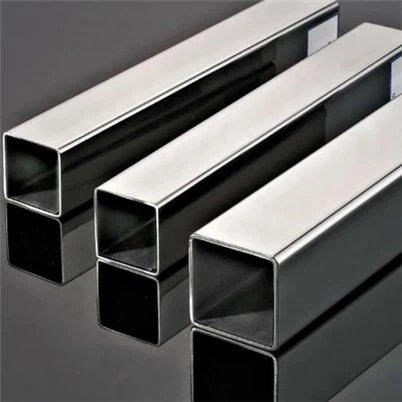
304 vs 321 stainless steel exhaust pipe
There are significant differences between stainless steel 321 and 304 in many aspects, which are mainly reflected in chemical composition, physical properties, corrosion resistance and high temperature resistance, and application areas. The following is a detailed explanation of these differences:
1. Chemical composition
304 stainless steel pipe contains about 18% chromium and 8% nickel, which are the key components to ensure its good corrosion resistance. In addition, it also contains small amounts of carbon, silicon, manganese, phosphorus and sulfur.
321 stainless steel pipe is similar to 304 stainless steel, but with the addition of about 0.3% titanium. The addition of titanium not only improves the high temperature resistance of stainless steel, but also effectively controls the formation of chromium carbide, thereby improving the resistance to intergranular corrosion. At the same time, the chromium and nickel content in 321 stainless steel is slightly different, with a chromium content of about 17% and a nickel content of about 9%.
2. Physical properties
Tensile strength: 321 stainless steel seamless pipes usually have higher tensile strength than 304 stainless steel due to the addition of titanium. This makes 321 stainless steel exhibit better mechanical properties when subjected to large loads.
Processing performance: In comparison, the processing performance of 304 stainless steel seamless pipe is superior. Since 321 stainless steel has higher hardness and strength, it may require greater cutting force and more complex processing technology during processing.
3. Corrosion resistance and high temperature resistance
Corrosion resistance: Under normal conditions, both 304 and 321 stainless steels show excellent corrosion resistance. However, under high temperature or highly corrosive environments, 321 stainless steel shows better resistance to intergranular corrosion due to the addition of titanium.
High temperature resistance: The high temperature resistance of 321 stainless steel pipe is better than that of 304 stainless steel. Under high temperature conditions, 321 stainless steel can maintain more stable mechanical properties and corrosion resistance, so it is more suitable for applications under high temperature conditions.

304 vs 321 Stainless Steel pipe
| Performance Indicator | 304 Stainless Steel | 321 Stainless Steel |
|---|---|---|
| Chemical Composition | 18Cr-8Ni (no stabilization element) | 18Cr-9Ni-Ti (titanium-stabilized) |
| High-Temperature Resistance | Continuous service ≤ 870°C | Continuous service ≤ 980°C |
| Intergranular Corrosion Resistance | Post-weld heat treatment required (high sensitization risk) | Titanium suppresses carbide precipitation; no post-weld heat treatment needed |
| Cost | Low (~ $2.5–3.5/kg) | High (~ $3.5–5.0/kg) |
Material standards:
304: ASTM A240 (304/304L), EN 1.4301/1.4307.
321: ASTM A240 (321/321H), EN 1.4541.
Test requirements:
Salt spray test: Coastal areas need to pass 1000 hours of neutral salt spray test (ISO 9227).
High temperature cycle test: simulate 500-900°C cycle 500 times, no cracks or deformation.