ASTM A358 vs A312
Leave a message

What is ASTM A358 stainless steel EFW pipe?
ASTM A358 covers Electric-Fusion-Welded (EFW) austenitic chromium-nickel stainless steel pipe, conforming to ASME B36.19M specifications, with nominal sizes ranging from NPS 16 to NPS 48 (and above). Manufactured using electric-fusion or Submerged Arc Welding (SAW) processes, it includes high-performance grades such as TP304, TP304L, TP347, TP347H, TP316, TP316L, and TP321. These pipes are extensively utilized in high-temperature sectors, including chemical and petrochemical plants, desalination units, high-temperature heat exchanger systems, and the pulp and paper industry.
What is ASTM A312 stainless steel pipe standard?
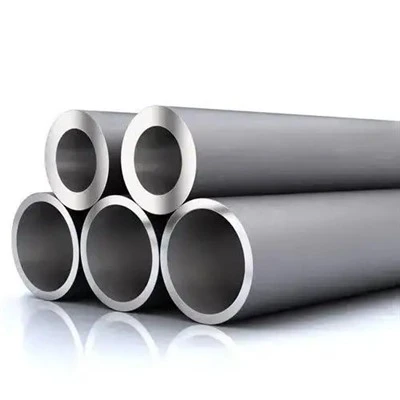
ASTM A312 is the Standard Specification for austenitic stainless steel pipe intended for high-temperature and general corrosive service. The standard covers three primary manufacturing forms: Seamless (SMLS), Welded (WLD), and Heavily Cold-Worked (HCW) pipes, including high-demand grades such as TP304, TP304L, TP304H, TP316, TP316L, TP317, TP321, TP347, and TP310S. These pipes are widely utilized in petrochemical fluid conveyance, high-temperature boiler tubing, and corrosive media transport systems, providing exceptional durability in demanding industrial environments.

ASTM A358 vs. A312: Key Differences
| Feature | ASTM A312 | ASTM A358 |
| Primary Scope | Standard for Seamless and Welded pipes for general corrosive and high-temp service. | Standard for Electric-Fusion-Welded (EFW) pipes for high-temp and heavy-duty service. |
| Manufacturing Method | Seamless (SMLS), Automatic Welded (WLD), or Heavily Cold-Worked (HCW). | Electric-Fusion-Welded (EFW) using Filler Metal and Submerged Arc Welding (SAW). |
| Size Range (NPS) | Typically NPS 1/8 to NPS 30. Focuses on small to medium diameters. | Typically NPS 16 to NPS 48 (and larger). Focuses on large-diameter piping. |
| Wall Thickness | Standard Schedules (Sch 5S, 10S, 40S, 80S). | Covers heavy wall thicknesses and custom plate-formed thicknesses. |
| Weld Classes | No specific classes. Welded without addition of filler metal. | Classes 1, 2, 3, 4, 5 (Defined by weld passes and Radiographic Testing). |
| Filler Metal | Not allowed for welded (WLD) pipe during the automatic welding process. | Required. Welding is performed using added filler metal to ensure joint strength. |
| Radiographic Testing (RT) | Not mandatory for standard WLD pipes (unless specified). | Mandatory for Class 1 and Class 2; depends on the class selected. |
ASTM A358 VS. ASTM A312: How to Choose?
For standard process piping requiring high strength and seamless integrity (typically for sizes NPS 24 and below), ASTM A312 is the preferred specification. This standard is extensively utilized in oil refineries, natural gas pipelines, and general corrosive media conveyance scenarios.
For large-diameter and heavy-wall pipe applications, ASTM A358 stainless steel pipe is the ideal selection. Manufactured using the Electric-Fusion-Welding (EFW) process with the addition of filler metal, it offers the flexibility to meet custom large-bore requirements. With its rigorous testing protocols, ASTM A358 is perfectly suited for high-stress systems that demand specific joint efficiency factors (E) and structural reliability.
What is the difference between ASTM A358 and ASTM A376?
The primary difference is that ASTM A358 covers Electric-Fusion-Welded (EFW) pipes (typically large-diameter and thick-walled), while ASTM A376 covers seamless austenitic steel pipes used strictly for high-temperature central-station service.
What is the difference between ASTM A312 and ASTM A376?
The core difference is that ASTM A312 covers seamless, welded, and heavily cold-worked pipes for general corrosive services, whereas ASTM A376 is strictly for seamless pipes designated for high-temperature, high-pressure central station power plant service.
Supplier of ASTM A312 and A358 Stainless Steel Pipes
GNEE Stainless Steel specializes in the manufacture of large-diameter and heavy-wall piping, capable of meeting the requirements of diverse non-standard projects. Our production facilities hold ISO 9001:2015, PED (Pressure Equipment Directive), and AD2000 certifications, ensuring compliance with international safety standards. We provide comprehensive technical documentation, including Mill Test Reports (MTRs) compliant with EN 10204 3.1 or 3.2 standards.
ASTM A312 And A358 Stainless Steel Pipes Specification
| Feature | ASTM A312 Specification | ASTM A358 Specification |
| Manufacturing Type | Seamless (SMLS), Automatic Welded (WLD) | Electric-Fusion-Welded (EFW) |
| Nominal Size (NPS) | 1/8" to 30" | 8" to 100" (Large Bore Specialist) |
| Wall Thickness | Sch 5S, 10S, 40S, 80S, 160, XXS | Sch 5S to Sch 160 & Custom Plate Thickness |
| Available Grades | TP304/304L, TP316/316L, TP321, TP347, TP310S | TP304/304L, TP316/316L, TP321, TP310S |
| Welding Method | Autogenous (No filler metal) | EFW with Filler Metal (Classes 1–5) |
| Surface Finish | Annealed & Pickled (A&P), Polished, BA | Annealed & Pickled (A&P), Sand Blasted |
| Joint Efficiency | 0.85 (Welded) / 1.0 (Seamless) | 1.0 (Class 1 & 3 with 100% X-Ray) |


Quality Control and Testing
Radiographic Testing (RT): 100% X-ray inspection of ASTM A358 Class 1 pipes to ensure defect-free welds.
Hydrostatic Testing: Pressure testing of each pipe to verify leak-tightness.
PMI Testing: Verification of chemical composition (e.g., Cr, Ni, Mo content) prior to shipment.
Ultrasonic Testing (UT) and Eddy Current Testing: Detection of internal defects or surface irregularities.


Seaworthy Packaging
Pipe End Protection: Use of plastic end caps or bevel protectors to prevent damage to pipe ends.
Surface Protection: Each pipe is wrapped in polyethylene (PE) bags or bundled using waterproof materials.
Marking: Clear stenciling of material grade, dimensions, heat number, and applicable standards (ASTM A312/A358) on each pipe to ensure full traceability.