Differences between 316 / 316L / 316H
Leave a message
When choosing between 316, 316L, or 316H stainless steel, buyers often struggle to determine which grade best suits their application in terms of corrosion resistance, weldability, and high-temperature strength. Although all three are molybdenum-containing austenitic stainless steels, their carbon content differs, directly impacting their performance in various applications.
What Are 316, 316L, and 316H Stainless Steel?

What is 316 Stainless Steel?
316 stainless steel, commonly known as marine stainless steel, is a high-grade austenitic stainless steel that typically contains 16-18% chromium, 10-14% nickel, and 2-3% molybdenum, as well as small amounts of carbon, manganese, and silicon. 316 stainless steel retains its strength better at high temperatures than 304. It performs well at temperatures up to 870°C (1600°F), and its strength retention is even better in the 800-304°C range compared to 500.
What is AISI 316L Stainless Steel?
316L is a grade of stainless steel, belonging to the American ASTM standard system. Its corresponding grade in the Chinese GB standard system is 022Cr17Ni12Mo2, and its unified numerical designation is S31603. It is non-magnetic and cannot be strengthened by heat treatment; its strength can only be improved through cold working. It has good plasticity and toughness at both room and low temperatures, is easy to form, and has good weldability. Its products include plates, bars, pipes, strips, wires, and forgings.
What is 316H Stainless Steel?
316H stainless steel is a high-carbon austenitic stainless steel with higher high-temperature strength. It is a variant of standard 316 stainless steel, and its higher carbon content (0.04%–0.10%) makes it suitable for applications such as power generation, chemical industry, and petrochemical industry that require excellent creep strength at high temperatures.
Chemical Composition %
| Grade | C | Si | P | S | Cr | Mn | Ni | Cu | Mo | Ti | Fe |
| Alloy 316 | 0.08 max | 0.75 max | 0.045 max | 0.030 max | 16.0 - 18.0 | 2.0 max | 10.0 - 14.0 | - | 2.0 - 3.0 | - | Remainder |
| Alloy 316L | 0.03 max | 0.75 max | 0.045 max | 0.030 max | 16.0 - 18.0 | 2.0 max | 10.0 - 14.0 | - | 2.0 - 2.0 | - | Remainder |
| Alloy 316H | 0.04 - 0.10 | 0.75 max | 0.045 max | 0.030 max | 16.0 - 18.0 | 2.0 max | 10.0 - 14.0 | - | 2.0 - 3.0 | - | Remainder |
| Alloy 316Ti | 0.08 max | 1.0 max | 0.040 max | 0.030 max | 16.0 - 18.0 | 2.0 max | 10.0 - 14.0 | 0.075 max | 2.0 - 3.0 | 5 x (C+N) – 0.07 | Remainder |
Mechanical Properties
| Grade | Tensile Strength (ksi) | 0.2% Yield Strength (ksi) | Elongation% in 2 inches |
| 316 / 316H / 316Ti | 75 | 30 | 40 |
| 316L | 70 | 25 | 40 |
Physical Properties
| Units | Temperature in °C | |
| Density | 7.99 g/cm³ | Room |
| Specific Heat | 0.12 Kcal/kg.C | 22° |
| Melting Range | 1371 - 1421 °C | - |
| Modulus of Elasticity | 193 KN/mm² | 22° |
| Electrical Resistivity | 74 µΩ.cm | Room |
| Coefficient of Expansion | 16.0 µm/m °C | 20 - 100° |
| Thermal Conductivity | 16.2 W/m -°K | 100° |
Corrosion Resistance
Types 316 and 316L Stainless Steels display preferable corrosion resistance over Type 304. They provide superb pitting resistance and very good resistance to most chemicals involved in textile, the paper and photographic industries.
Why is 316L stainless steel better suited for welding than 316 stainless steel?
316L stainless steel is better suited for welding than 316 stainless steel because its lower carbon content (maximum 0.03%) significantly reduces the risk of carbide precipitation (also known as sensitization) in the heat-affected zone. This prevents weld corrosion, which reduces corrosion resistance at the weld grain boundaries. Therefore, 316L does not require post-weld heat treatment to restore its corrosion resistance, making it the preferred material for welding applications.
Is 316 or 316H stainless steel magnetic?
No, neither 316 nor 316H stainless steel is magnetic in its annealed state, but they can become magnetic after certain processes. Both are austenitic stainless steels which are non-magnetic, but they may develop a weak magnetic attraction if cold-worked (like being bent or hammered) or when welded, as these processes can cause a phase transformation.
What is the difference between 316L and 316H?
The main difference lies in the carbon content. 316L has a lower carbon content (maximum <0.03%), while 316H has a higher carbon content (maximum 0.04-0.10%). Due to this difference in carbon content, 316L is more suitable for welding applications because it has a lower rate of intergranular corrosion after welding. In contrast, the higher carbon content of 316H gives it higher strength at high temperatures, making it more suitable for high-temperature applications.
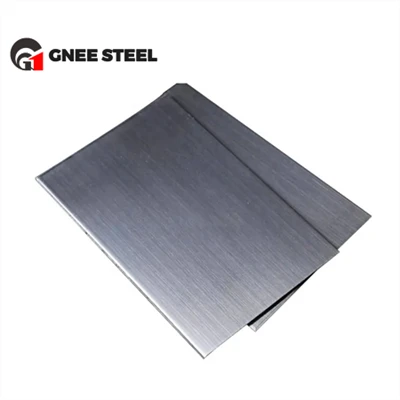
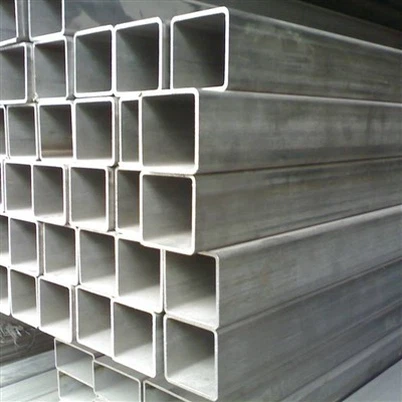
GNEE currently offers a stock of 316/316L/316H stainless steel products, including: plates, sheets, coils, strips, tubes, bars, and wires. In addition, we provide a variety of surface treatments for your selection, such as: No. 1, 2B, 2D, BA, No. 3, No. 4, HL, No. 8, sandblasting, etc.
ASTM Specifications
| Pipe / Tube (SMLS) | Sheet / Plate | Bar | Forging | Fitting |
| A 213, A 249 | A 167, A 240 | A 276 | A 182 | A 403 |
Click to get the 316 stainless steel material list
We guarantee 100% quality. We will never deliver any defective products to our customers. Please contact us to customize your product specifications, including shape, condition, surface treatment, and processing technology.