


ASTM A268 Standard Specification.pdf
Leave a message
What is ASTM A268 Standard Specification?
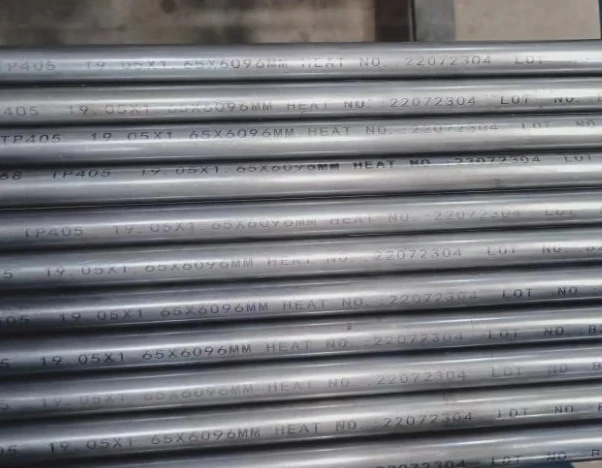
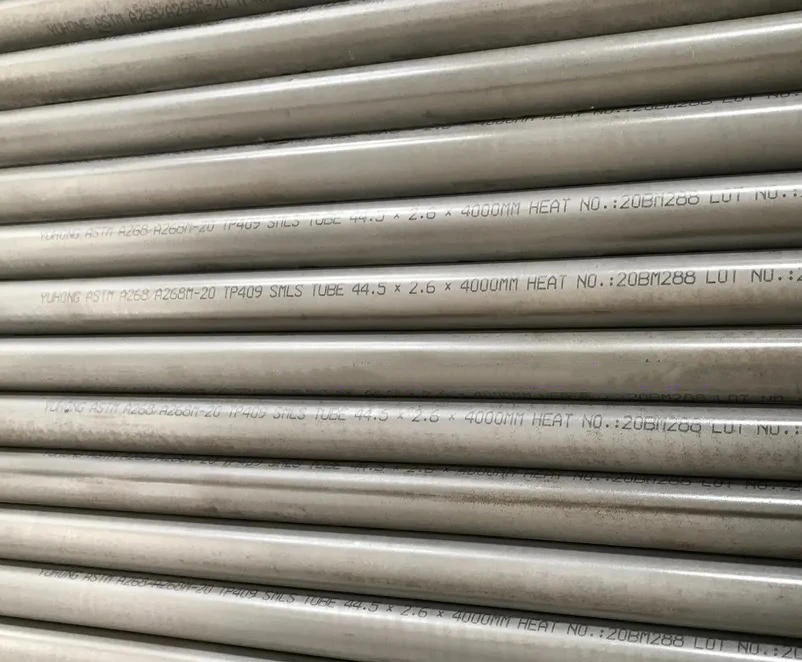
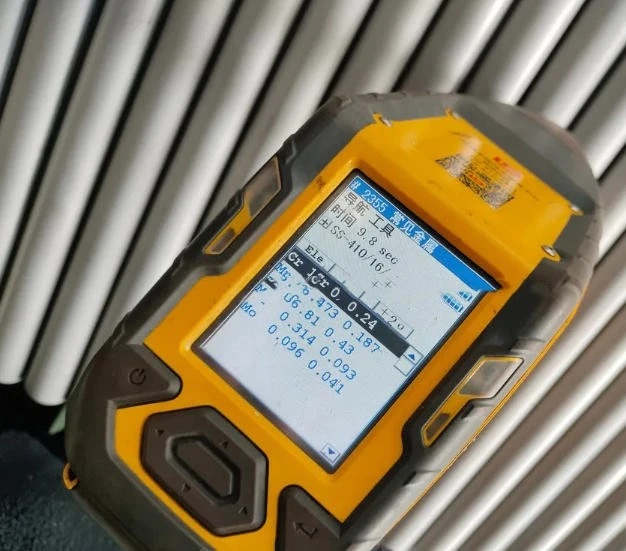
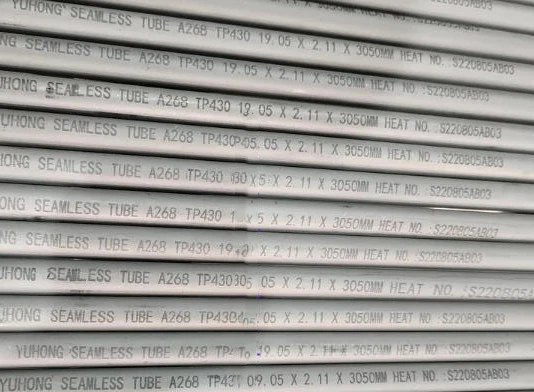
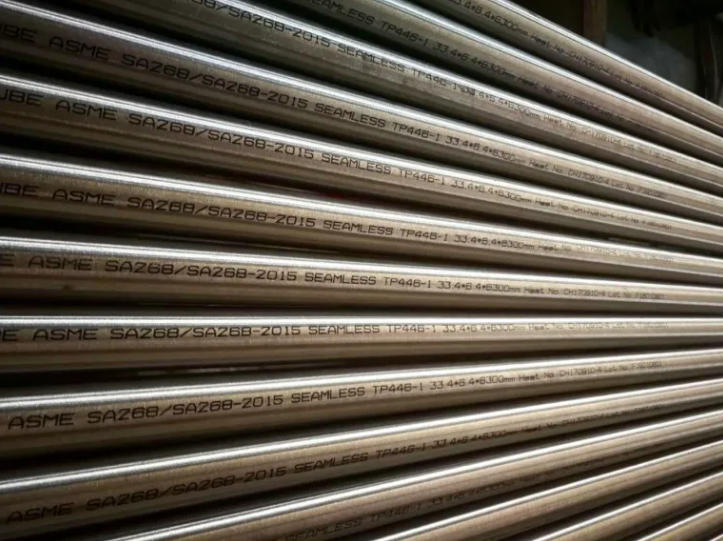
ASTM A268 covers stainless steel tubing in various nominal wall thicknesses for general corrosion-resistant and high-temperature service. Most grades covered by this specification are commonly referred to as "straight-chromium" stainless steels, which are characterized by their ferromagnetic properties. Among these grades, TP410 and UNS S41500 can be hardened by heat treatment. In addition, high-chromium ferritic alloys are susceptible to notch brittleness when slowly cooled to room temperature. These characteristics should be carefully considered when using these materials. Grade TP439 is primarily used in hot water storage tanks and can prevent corrosion in the heat-affected zone without requiring post-weld heat treatment.
Click to download the ASTM A268 technical specification

ASTM A268 Material Chemical Composition
| Grade | UNS | C, max | Mn, max | P, max | S, max | Si, max | Cr | Ni | Al | Ti | Cu | N |
|---|---|---|---|---|---|---|---|---|---|---|---|---|
| TP405 | S40500 | 0.08 | 1.00 | 0.040 | 0.030 | 1.00 | 11.5–14.5 | … | … | 0.10–0.30 | … | … |
| TP410 | S41000 | 0.15 | 1.00 | 0.040 | 0.030 | 1.00 | 11.5–13.5 | … | … | … | … | … |
| TP429 | S42900 | 0.12 | 1.00 | 0.040 | 0.030 | 1.00 | 14.0–16.0 | … | … | … | … | … |
| TP430 | S43000 | 0.12 | 1.00 | 0.040 | 0.030 | 1.00 | 16.0–18.0 | … | … | … | … | … |
| TP443 | S44300 | 0.20 | 1.00 | 0.040 | 0.030 | 1.00 | 18.0–23.0 | … | … | … | … | 0.90–1.25 |
| TP446‑1 | S44600 | 0.20 | 1.50 | 0.040 | 0.030 | 1.00 | 23.0–27.0 | … | … | 0.25 | … | … |
| TP446‑2 | S44600 | 0.12 | 1.50 | 0.040 | 0.030 | 1.00 | 23.0–27.0 | … | … | 0.25 | … | … |
| TP409 | S40900 | 0.08 | 1.00 | 0.045 | 0.030 | 1.00 | 10.5–11.7 | … | … | 6 × C min; 0.75 max | … | … |
ASTM A268 Material Mechanical Properties
| Grade and UNS Designation | Tensile strength, min, ksi [MPa] | Yield strength, min, ksi [MPa] | Elongationᴬ in 2 in. or 50 mm, min, % |
|---|---|---|---|
| TP405S40500 | 60 [415] | 30 [205] | 20 |
| S40800 | 55 [380] | 30 [205] | 20 |
| TP410S41000 | 60 [415] | 30 [205] | 20 |
| TP429, TP430, and TP430Ti S429000, S43000, and S43036 | 60 [415] | 35 [240] | 20 |
| TP443 S44300 | 70 [485] | 40 [275] | 20 |
| TP446‑1 S44600 | 70 [485] | 40 [275] | 18 |
| TP446‑2 S44600 | 65 [450] | 40 [275] | 20 |
| TP409 S40900 | 55 [380] | 25 [170] | 20 |
| TP439 S43035 | 60 [415] | 30 [205] | 20 |
| S41500 | 115 [795] | 90 [620] | 15 |
| TP XM‑27 S44627 | 65 [450] | 40 [275] | 20 |
| TP XM‑33 S44626 | 68 [470] | 45 [310] | 20 |
| TP468 S46800 | 60 [415] | 30 [205] | 22 |
Number of Tubes in a Lot Heat Treated by the Continuous Process
| Size of Tube | Size of Lot |
|---|---|
| 2 in. [50.8 mm] and over in outside diameter and 0.200 in. [5.1 mm] and over in wall thickness | not more than 50 tubes |
| Less than 2 in. [50.8 mm] but over 1 in. [25.4 mm] in outside diameter or over 1 in. [25.4 mm] in outside diameter and under 0.200 in. [5.1 mm] in wall thickness | not more than 75 tubes |
| 1 in. [25.4 mm] or less in outside diameter | not more than 125 tubes |
ASTM A268 Standard Minimum Elongation Values
| Wall Thickness | Elongationᴬ in 2 in. or 50 mm, min, % | |||
|---|---|---|---|---|
| in. | mm | TP446‑1 and S44735 | S41500 | All Other Grades |
| 5⁄16 [0.312] | 8 | 18 | 15 | 20 |
| 9⁄32 [0.281] | 7.2 | 17 | 14 | 19 |
| ¼ [0.250] | 6.4 | 16 | 14 | 18 |
| 7⁄32 [0.219] | 5.6 | 15 | 13 | 17 |
| 3⁄16 [0.188] | 4.8 | 14 | 12 | 16 |
| 5⁄32 [0.156] | 4 | 13 | 11 | 15 |
| ⅛ [0.125] | 3.2 | 13 | 11 | 14 |
| 3⁄32 [0.094] | 2.4 | 12 | 10 | 13 |
| 1⁄16 [0.062] | 1.6 | 11 | 9 | 12 |
| 0.062–0.035, exd | 1.6–0.9 | 10 | 8 | 12 |
| 0.035–0.022, exd | 0.9–0.6 | 10 | 8 | 11 |
| 0.022–0.015, incl | 0.6–0.4 | 10 | 8 | 11 |
ASTM A268 Standard Hardness Requirements
| Grade | UNS Designation | Brinell Hardness, max | Rockwell Hardness, B Scale, max |
|---|---|---|---|
| TP405 | S40500 | 207 | 95 |
| … | S40800 | 207 | 95 |
| TP410 | S41000 | 207 | 95 |
| TP429, TP430, and TP430 Ti | S42900, S43000, and S43036 | 190 | 90 |
| TP443 | S44300 | 207 | 95 |
| TP446‑1 and TP446‑2 | S44600 | 207 | 95 |
| TP409 | S40900 | 207 | 95 |
| TP439 | S43035ᴬ | 190 | 90 |
| … | S41500 | 295ᴮ | 32 |
| TPXM‑33 and TPXM‑27 | S44626 and S44627 | 241 | 100 |
| 18CR‑2Mo | S44400 | 217 | 95 |
| 29‑4 and 29‑4‑2 | S44700 and S44800 | 207 | 100 |
Footnotes: ᴬ Editorially corrected October 2000. ᴮ Rockwell hardness, C scale.
ASTM A268 Standard Permissible Variations in Dimensions
| Group | Size, Outside Diameter, in. [mm] | Permissible Variations in Outside Diameter, in. [mm] | Permissible Variations in Wall Thickness,ᴬ % | Permissible Variations in Cut Length, in.ᴮ [mm] | Thin‑Walled Tubesᶜ | |
|---|---|---|---|---|---|---|
| Over | Under | |||||
| 1 | Up to ½ [12.7], exd | ±0.005 [0.13] | ±15 | ⅛ [3] | 0 | … |
| 2 | ½ to 1½ [12.7 to 38.1], exd | ±0.005 [0.13] | ±10 | ⅛ [3] | 0 | less than 0.065 in. [1.6 mm] nominal |
| 3 | 1½ to 3½ [38.1 to 88.9], exd | ±0.010 [0.25] | ±10 | ³⁄₁₆ [5] | 0 | less than 0.095 in. [2.4 mm] nominal |
| 4 | 3½ to 5½ [88.9 to 139.7], exd | ±0.015 [0.38] | ±10 | ³⁄₁₆ [5] | 0 | less than 0.150 in. [3.8 mm] nominal |
| 5 | 5½ to 8 [139.7 to 203.2], incl | ±0.030 [0.76] | ±10 | ³⁄₁₆ [5] | 0 | less than 0.150 in. [3.8 mm] nominal |
ᴮ These tolerances apply to cut lengths up to and including 24 ft [7.3 m]. For lengths greater than 24 ft [7.3 m], the above over tolerances shall be increased by ¼ in. [3 mm] for each 10 ft [3 m] or fraction thereof over 24 ft, or ½ in. [13 mm], whichever is lesser.
ᶜ Ovality provisions of 12.2 apply.
ASTM A268 Standard Quality Control Requirements
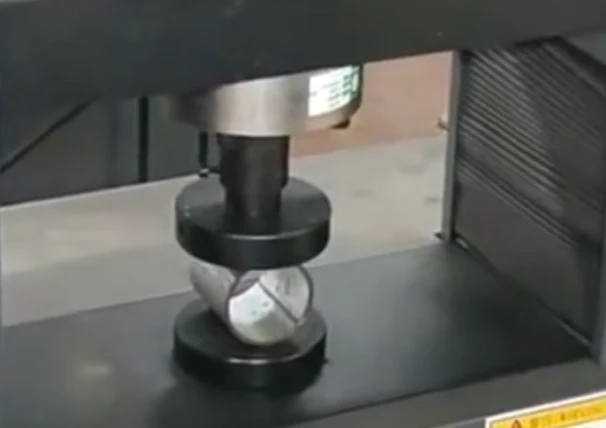
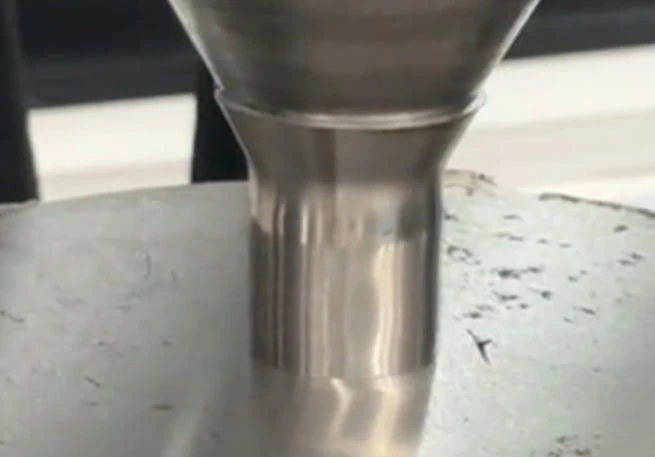
For tubes exceeding 24 ft [7.3 m] in length, a flattening test may be performed in lieu of a flanging test, unless otherwise specified in the purchase order.
The type of test shall be at the option of the manufacturer, unless otherwise specified in the purchase order.
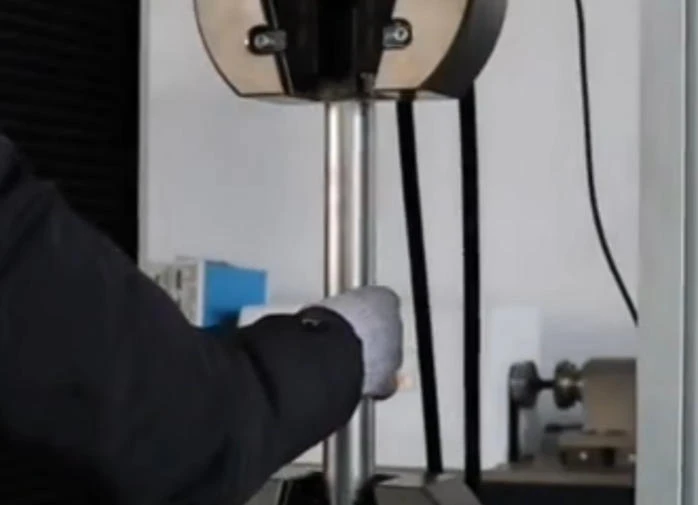
Hardness Test - Specimens for Brinell or Rockwell hardness testing shall be taken from two tubes from each lot (Note 4).
When multiple heats are involved, the requirements for tension, flaring, flanging, and hardness tests shall apply to each heat.
Reverse Flattening Test - For welded tubes, a specimen shall be taken from every 1500 ft (450 m) of finished tubing for a reverse flattening test.
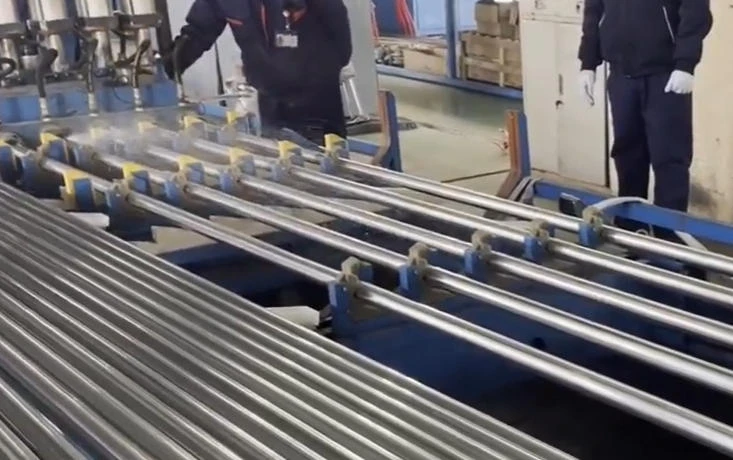
Each tube, whether seamless or welded, shall be subjected to a nondestructive electric test or a hydrostatic test. The type of test shall be at the option of the manufacturer, unless otherwise specified in the purchase order.
In addition to the markings described in Specification A 1016/A 1016M, the markings shall also indicate whether the tube is seamless or welded.

FAQ
Q: What is the difference between ASTM A268 and ASTM A269?
A: The fundamental difference lies in their metallurgical microstructures:
ASTM A268: Specifically covers ferritic and martensitic stainless steel tubing (primarily the 400 series, which is magnetic).
ASTM A269: Specifically covers austenitic stainless steel tubing (such as 304, 316, and 321, which are generally non-magnetic), primarily for general corrosion-resistant and high- and low-temperature service.
Q: Are ASTM A268 stainless steel tubes magnetic?
A: Yes. Since this specification covers ferritic and martensitic stainless steels, their crystal structures differ from those of austenitic stainless steels (300 series). Therefore, ASTM A268 stainless steel tubes are generally magnetic in both annealed and processed conditions.
Q: What are the heat treatment requirements for ASTM A268 stainless steel tubes?
A: All tubes must undergo heat treatment before delivery:
Ferritic stainless steels (such as TP430 and TP444): Generally require annealing followed by rapid cooling to prevent embrittlement (such as 475°C embrittlement) and restore ductility.
Martensitic stainless steels (such as TP410): Generally require quenching and tempering (or full annealing) to achieve the specified mechanical strength and hardness.
Q: What are the main applications of ASTM A268 stainless steel tubes?
A:Petrochemical and Power Generation: Heat exchanger and condenser tubes requiring resistance to stress corrosion cracking (particularly TP439/TP444).
Automotive Industry: Components for automotive exhaust systems.
Industrial Furnace Manufacturing: Furnace tubes and thermocouple protection tubes made from materials such as TP446, which offer high-temperature oxidation resistance.
Household Appliances and General Machinery: Heat exchange tubes for water heater tanks and mechanical components such as shafts and sleeves (TP410).
Q: What is the weldability of ASTM A268 stainless steel tubes?
A: Welding is generally more challenging than with conventional 300-series austenitic stainless steels:
Ferritic stainless steels (such as TP430): The heat-affected zone (HAZ) is prone to grain coarsening at high welding temperatures, resulting in reduced toughness. Low heat input is recommended. In some cases, ultra-low-carbon or Ti/Nb-stabilized grades (such as TP439) should be selected.
Martensitic stainless steels (such as TP410): These grades have a high hardening tendency and are highly susceptible to cold cracking after welding. Preheating before welding and post-weld heat treatment (PWHT) for stress relief are generally required.


